BTW - speaking about China - have you seen their daily infection rates? The numbers are ridiculously low…
I was considering trying out some delivery services like Coop at home or Migros leShop. Not just because of social distancing, but simply to save time. If I had a fixed list of groceries that I need every week, I could have them run on schedule and bring me my food. This could save 1+ hours per week, if done right. The concerns that I have would be regarding the quality of “non-fungible” items like meat, vegetables, fruit. Not sure if I would get the freshest pick.
But as we know, these services were totally booked out during the first wave. Not sure how it is now.
Maybe they forgot to unweld the doors? OK, sorry for that joke 
4 Likes
It is because they act really fast when they have a handful of cases.
They seem to understand how the virus spreads and that 0 cases are the only way to get back to normal for now.
1 Like
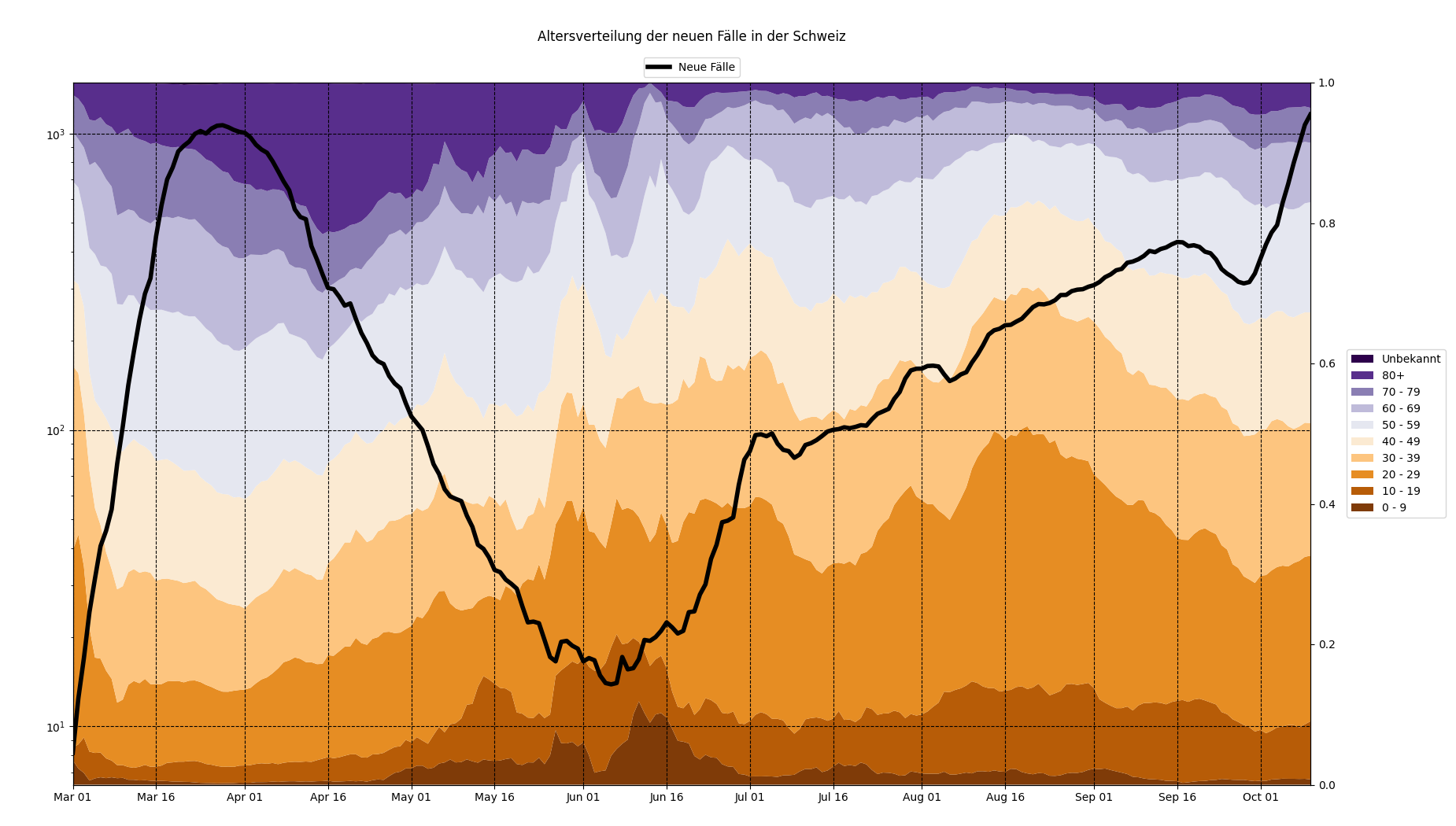
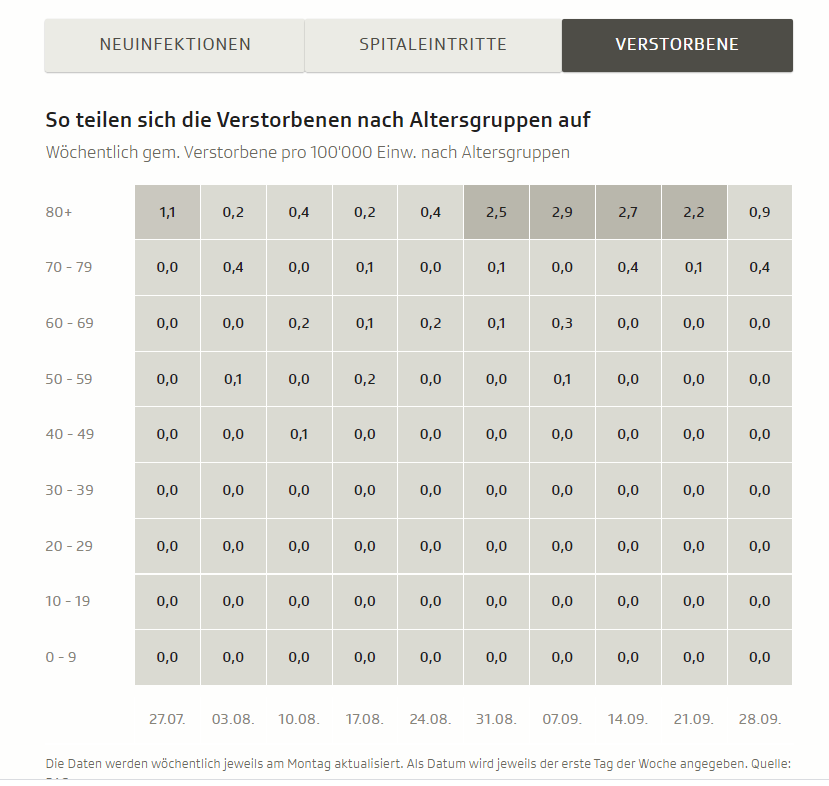
Well, until we only focus on the new infections, this nightmare will never end. But at least people are not really dying on this right now in Switzerland. What was the WHO saying - 4-5% death rates? Well, make the calculation yourselves.
Source:
https://www.srf.ch/news/schweiz/coronavirus-so-entwickeln-sich-die-corona-zahlen-in-der-schweiz
At the moment it’s fine. We had to use it two weeks ago and delivery was available the day after ordering.
I’m curious if there is a correlation with the “Wild-Saison” and older people going to restaurants/out more often to eat their share of venison and game.
1 Like
IFR was estimated to be between 0.5% and 4% as early as February. The best estimate for it is still between 0.5% to 1%.
Remember that at the start of the lockdown, death rates in Switzerland were also in the single digits per day and daily new hospitalizations were around twice as high as right now.
Daily new hospitalizations peaked at around 200 at the end of March. Right now we are at around 25, so about 3 doublings away from the peak, but cases are doubling every 5-6 days at the moment and new measures take around 10 days to have an effect.
I can only hope that people have changed their behavior last week. Otherwise I don’t really see how this wave will cause less harm than the first one.
1 Like
There is something like a Great Barrington Declaration, which is interesting. Shows the threats and some alternative ways to handle the Covid19 situation.
1 Like
There is not really much evidence that they present. If they want to be taken seriously, then they should publish some papers and show them.p
There are now countless examples that show that it is not really possible to protect the 25% of the population that is at risk.
Furthermore we still don’t know how long immunity lasts and how frequent long term complications even with mild cases are.
NYC has around the same population as Switzerland and had 27’000 excess deaths due to Covid, they don’t have reached herd immunity levels.
Instead of lockdown everybody (like in Madrid again) and have the massiv colleteral damage in all directions (not only economic, but also medical), we should protect the weakest (older people) as best possible and let the young people participate to the normal world again. When you check the deatch number in Switzerland by age, it tells exactly that story.
1 Like
Again, that sounds good in theory, but it isn’t really possible to implement it in any feasible way.
25% of the population is at risk. How do you think it is possible to isolate them from the rest? Who should care for the elderly?
What about long term effect of covid? There are countless reports of people who are not in a risk group that have quality of life diminishing symptoms months after the infection. What is the economic cost of that?
Good article by Ed Young about the long term illness caused by covid:
1 Like
Side Note: Ed Yong is an amazing writer. I highly recommend reading his book (I contain multitudes) or read / listen(soundcloud) to this article Immunology Is Where Intuition Goes to Die
1 Like
There are some problems as well with the Great Barrington declaration:
1 Like
My impression is that most countries that do localized lockdown want to avoid it, and it’s based on projection of hospital capacity.
I think if you project you’ll run out in a few weeks there aren’t many options (most other measures slow down spread only slightly and are effective when it’s mostly under control. If it’s propagating quickly you need a firebreaker)
Contact Tracing doesn’t seem to function well in Switzerland and the people in power are not able to provide some simple statistics about the effectiveness of contact tracing even though the national science task force repeatedly asked them to provide this data:

source:
1 Like
To me it is pretty saddening, that even the scientists cannot reach a consensus on the best course of action. It would seem like not a very complex thing to do: assess the number of people with long-term complications and take it into account. In the end, I think, the decision should be based on an economic/mathematical model. A value of human life, number of deaths or serious health problems, costs of isolating the vulnerable on one hand, and all the collateral damage of a lockdown on the other hand. Only using intuition will not let us reach consensus.
1 Like
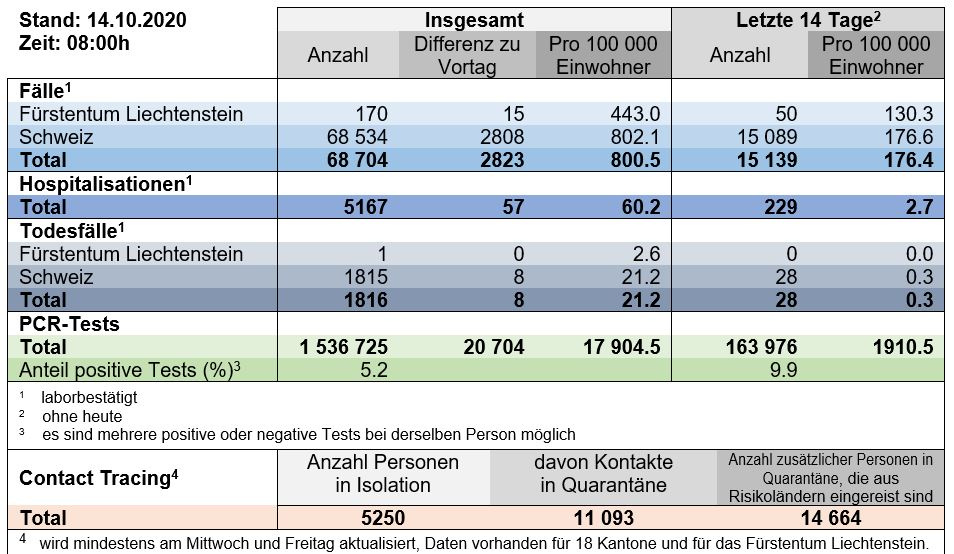
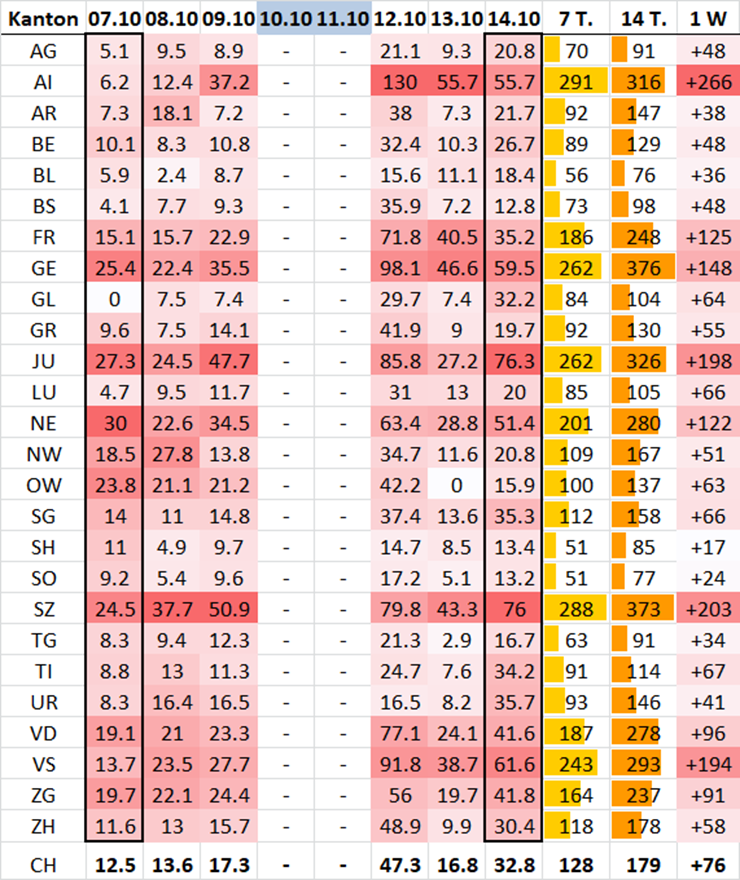
sources?
I check the GD of zurich (shitty page) and corona-data.ch but the latter seems now just a showcase on how to draw graphs . 