Nestlé is facing leadership turmoil but remains financially strong. Analysts expect the company to maintain and even raise its dividend in 2026, continuing a tradition of uninterrupted increases since 1995. Although net debt has risen sharply due to large share buybacks, strong cash flow and valuable assets like its L’Oréal stake make the debt manageable. Overall, Nestlé’s financial position is solid, and concerns in the market are seen as exaggerated.
Summary
Nestlé is experiencing leadership turmoil after the sudden dismissal of its CEO, Laurent Freixe, due to a concealed relationship with a subordinate. This marks the second CEO change within a year, raising questions about the company’s stability.
Despite this, analysts emphasize that Nestlé remains highly profitable and its dividend appears secure. Nestlé has never cut its dividend since 1959 and has increased it annually since 1995. Analysts expect this tradition to continue, as failing to raise the dividend would send a negative signal to investors. With strong free cash flow (over CHF 8 billion in 2025 and projected CHF 10 billion in 2026), the company can comfortably cover the dividend payout of about CHF 7.8 billion.
Concerns focus on rising debt: net debt grew from CHF 12 billion in 2014 to CHF 56 billion in 2024, while equity halved to CHF 37 billion. This was mainly due to large share buybacks totaling CHF 53 billion since 2017. The debt ratio is now around three times EBITDA, higher than Nestlé’s target of 2–3 times. Still, analysts view it as manageable thanks to strong cash flow and lower interest rates.
Nestlé also holds substantial hidden reserves, including a 20% stake in L’Oréal worth about CHF 40 billion (booked at only CHF 8.7 billion). Selling even part of this stake or other planned divestitures (e.g., parts of the water and vitamins businesses) could easily reduce debt and strengthen the balance sheet.
Overall, analysts argue that Nestlé’s financial position remains solid, and investor concerns are exaggerated. The dividend is seen as safe and likely to increase again in 2026.
I wish their dividend was higher. I’d be ready to back up the truck …
Instead (due to the low dividend of just 2%) I’ll buy a smaller tranche as even if they stayed at their current multiple you could look at an over 12% CAGR over the next couple of years.
Former colleague who knows basically nothing about finance and investments just joined, they asked me if they should get stock as they get it on discount. I said “depends on the discount”. They didn’t know yet and I have no feel for the discount rate. Looking at this graph I’m in mind to say “if you can get it below $150 go for it”, any views?
Since it’s a capital intensive business looking at Operating Cash Flow might be better to value the business, but the OCF FASTgraph doesn’t look much better.
well, there’s that juicy yield … they could lower their dividend 10% or 20% or 30% – heck! 50% – and it would still be an attractive yield.[$]
This is really only an income vehicle, not a dividend growth stock that I usually prefer.
they have a modern fleet of 13 Liquefied Natural Gas Carriers (LNGCs) and my macro theory best guess is that Natural Gas consumption will increase with e.g. Europe buying from the US or so.
they have 55 years of minimum charter backlog (84 years with charterer’s options)
no debt maturities prior 2029 and capex liabilities are limited to drydock of the fleet
they state that their earnings belong to the shareholder (how quaint a thought in today’s markets …)
Always hard to advise other people on investing, at least for me, as their goals, risk tolerance, time horizon, etc differ from mine. With that out of the way:
ABBV
fair value is about $173 at the moment ($180 at year end) with regard to “fair” being a 15 multiple given the company’s earnings growth
I’d prefer to buy with a margin of safety, so below the fair multiple of 15, but then again Goofy’s a chicken.
If you’re going to hold for, say, 10 years, buying at the fair multiple now (without a margin of safey) won’t matter that much in 10 years.
the normal multiple for this company has historically been lower than the fair multiple for this company (the blue line in your graph) and only in the last couple of years has the stock price been above the fair multiple.
I believe that’s heavily influenced by that Humira patent cliff we discussed last week or so, so maybe that’s a one-off that dominated the normal multiple but it’s not the normal normal multiple.
Nobody knows with these biotech companies …
Certainly “if you can get it below $150 go for it” makes sense. I would add at $150 if I didn’t have a full position already. It’s even below the normal multiple of $160 that would apply at the end of 2025 based on current earnings estimates.
Thank you, I thought my eyeballing of the chart wouldn’t be far off.
Overall they came to me for general investment advice because they don’t know anyone else “investing”, to which I said “we need to book some proper time, stay the hell away from banks and insurance companies until we talk” - I know insurance and banks are like vultures and will spot someone joining a big multinational firm, after which they’ll start circling them with “offers”. I’ll give the overall spiel of “low cost, broadly diversified index funds”, “time in the market beating timing the market” etc and they can take it from there.
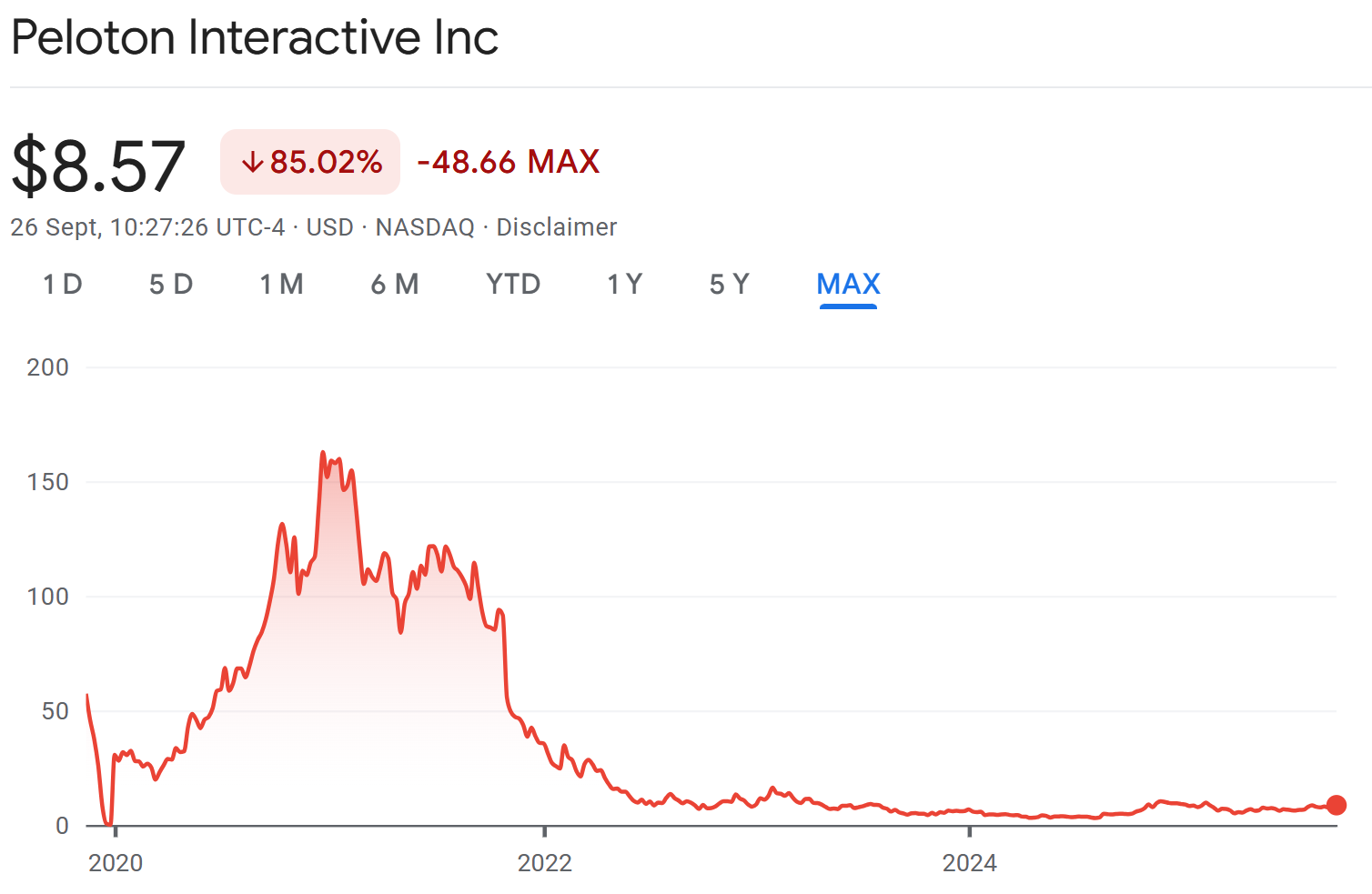
Sorry, that’s private equity. We don’t mark that to the market until we have to.
Oh, wait …
It’s softly mechanised, rubber band and duct tape holding together a Tinguely-like machine, occasionally emitting a white puff as a buy signal and occasionally some grease burning with black smoke as a sell signal.
Let’s suppose I’m tired of my gambling with options and I want to put the corresponding $60,000 in one large US stock that pays little to no dividends and will hold relatively well when the tech/AI bubble finally pops. A stock I don’t have to monitor constantly because I intend to hold it forever and that is not crazily overvalued today.
I would at least do minimal yearly checks. Even the oldest company (I think some construction company in Japan) went bankrupt after hundreds of years. Times-they-are-a-changing. Change is the only permanent thing!
I like to hold for very long periods, decades. But when the risks rise I sell, even if my heart bleeds. Motto: hold as long as possible… but not longer.
BRK.B is my own lifetime pick, too. If I’d pick a handful of US stocks it’d be J&J + MSFT (both are the only US companies with AAA credit rating), and BRK.B, but you don’t want divvies so maybe BRK.B?
I wouldn’t lump sum (but we’ve discussed this elsewhere on this forum) just for psychological reasons. Same for distributing $60k into several companies instead of just one.
Can’t really help with the “little to no dividends” requirement as I am on the opposite end of the spectrum, but gun to my head:
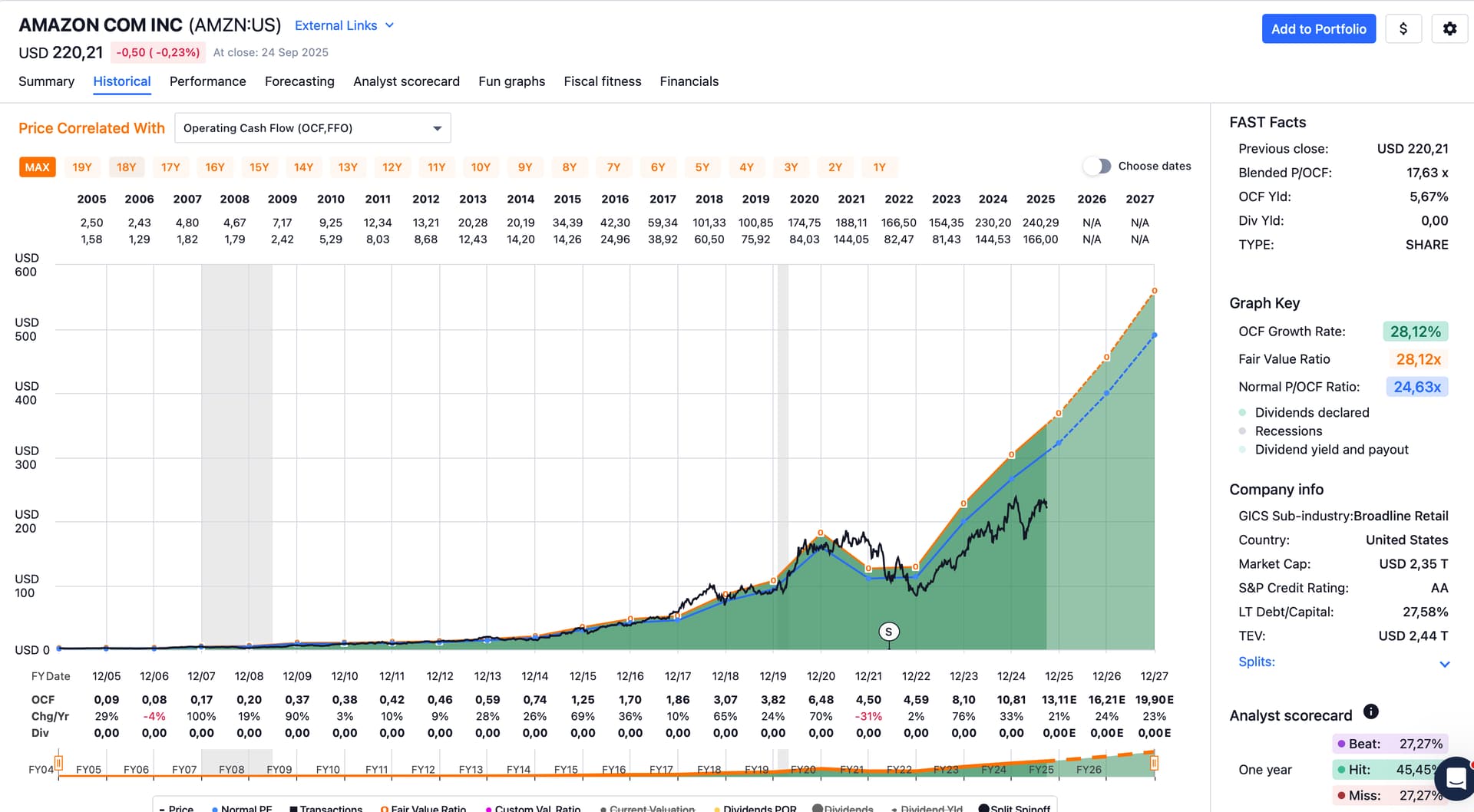
AMZN: from my “junior portfolio” (which I manage for my son who is also not interested in dividends). Some correlation to AI through their cloud business where customers want Nvidia and its ecosystem (see also GOOG).[$]
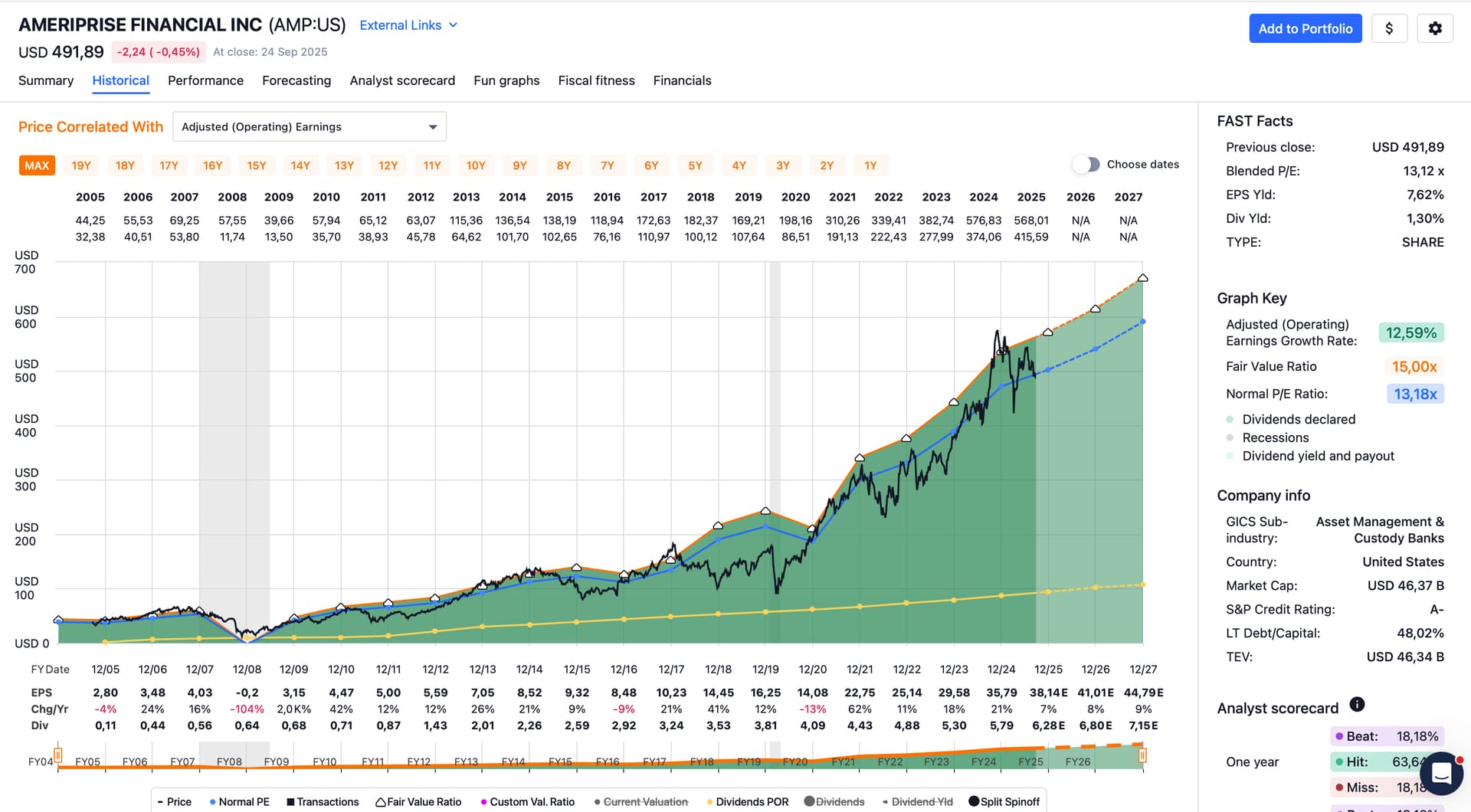
AMP: from my “junior portfolio” (which I manage for my son). Probably almost no correlation to AI.[$$]
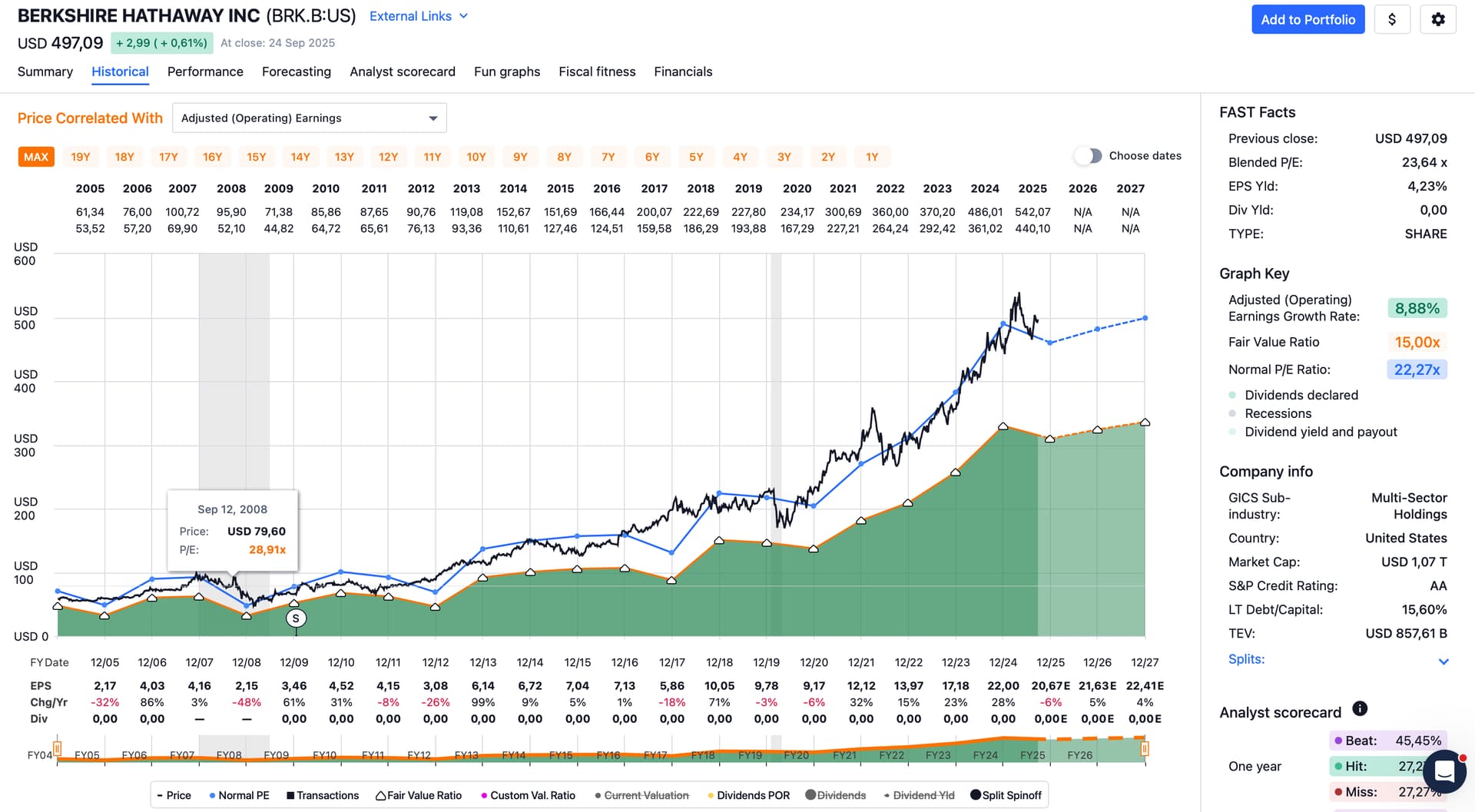
BRK.B: probably fine, a tad overvalued even compared to its normal valuation (but isn’t it almost always?). Probably almost no correlation to AI.[$$$]
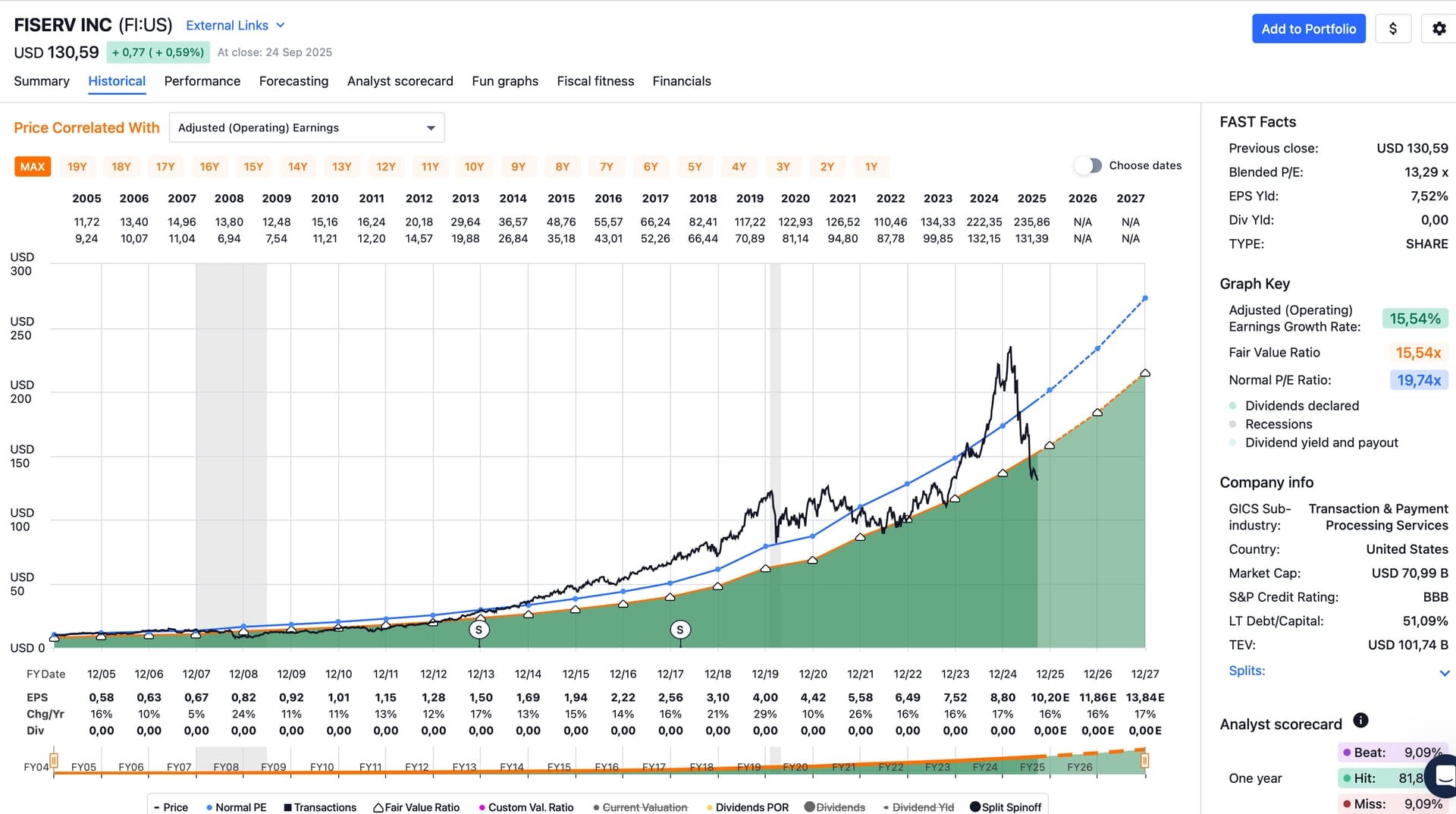
FI: from my “junior portfolio” (which I manage for my son). Not sure about their correlation to AI.[$$$$]
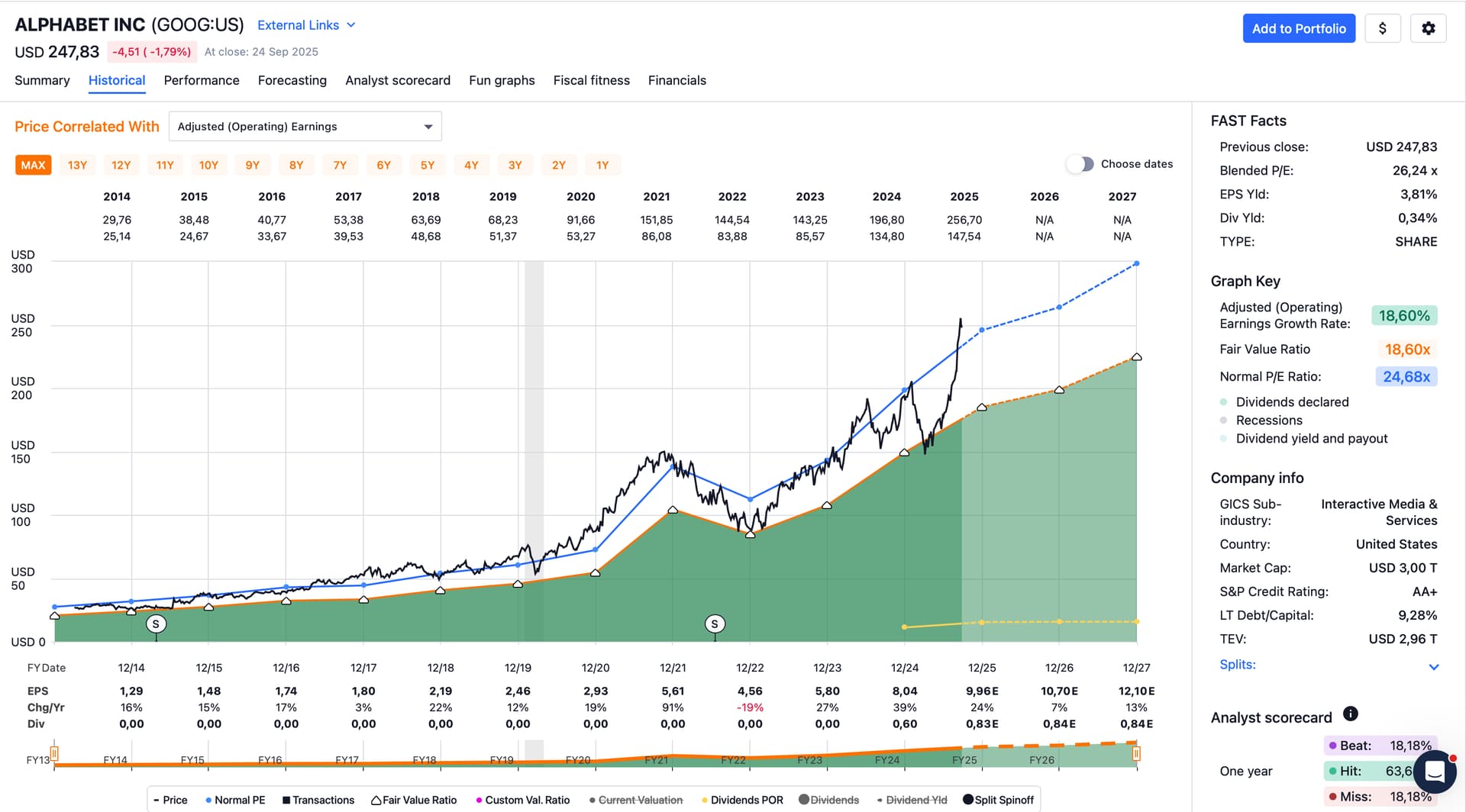
GOOG: IMO fairly tied to AI: for their own offering (Gemini) they’re independent as they’ve developed their own custom silicon (TPUs), but for their cloud offering their customers want Nvidia and its ecosystem.[$$$$$]
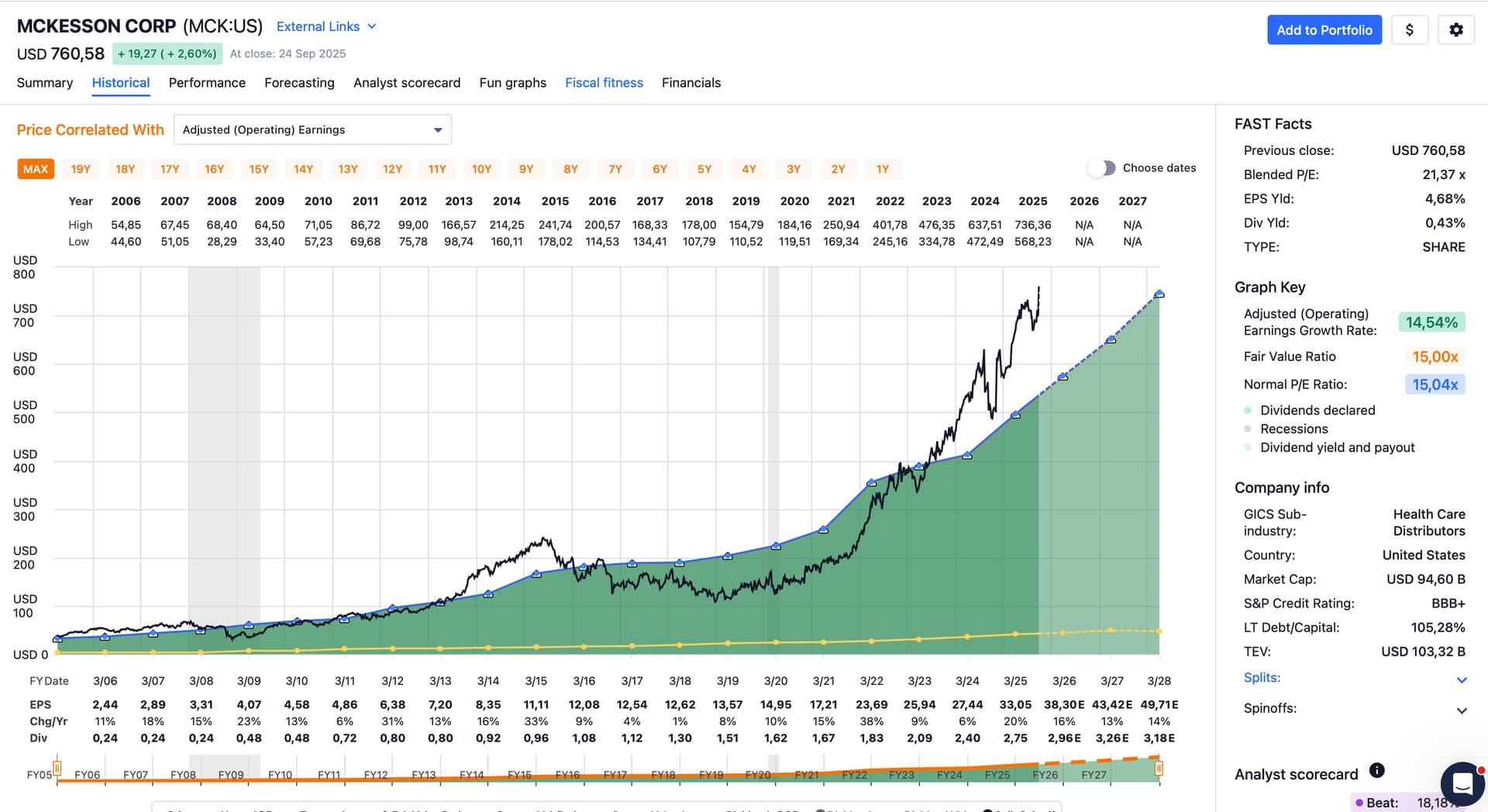
MCK: from my “junior portfolio” (which I manage for my son). A little overvalued at the moment; probably only little correlation to AI.[$$$$$$]
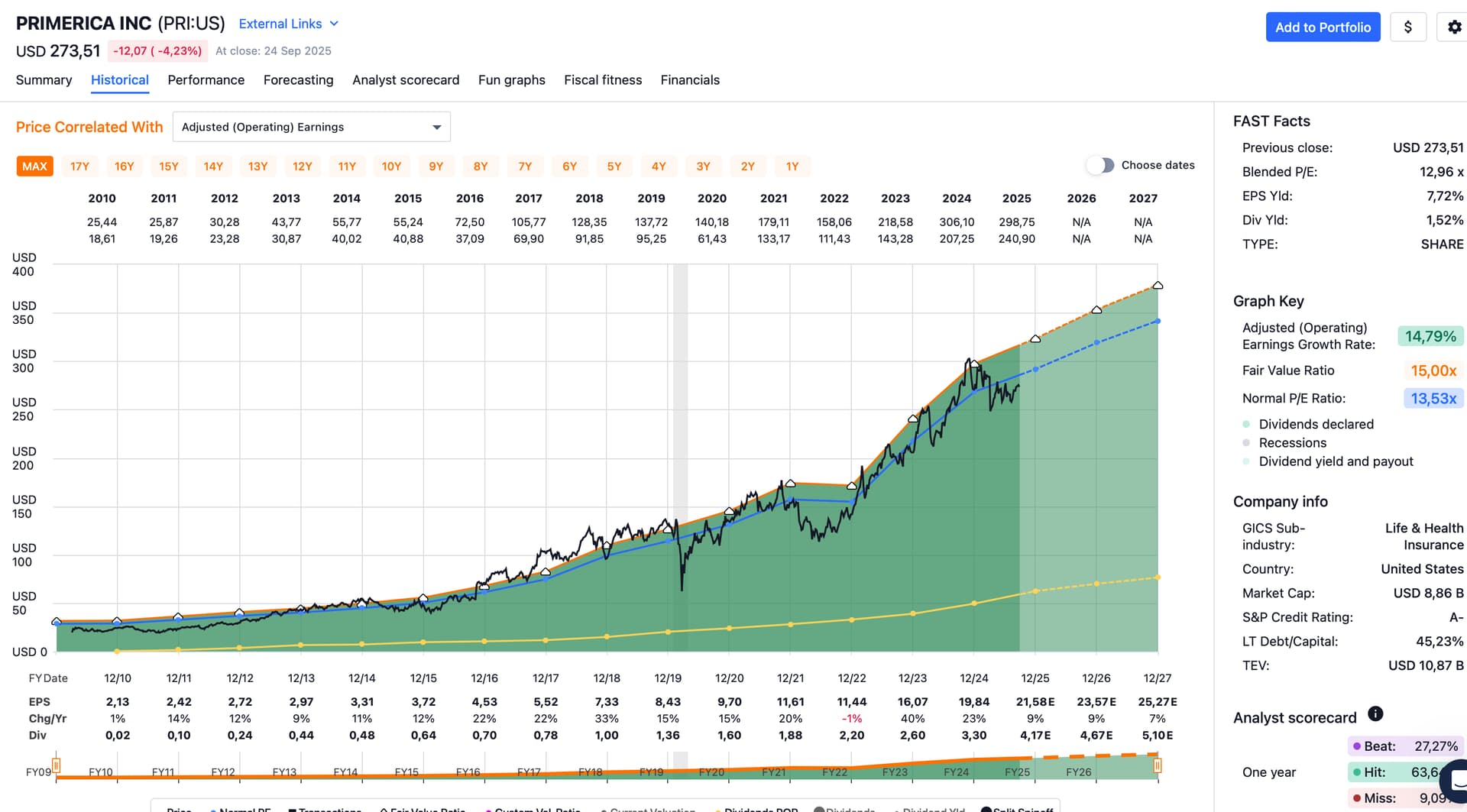
PRI: from my “junior portfolio” (which I manage for my son). Fairly valued at the moment; probably only little correlation to AI.[$$$$$$$]
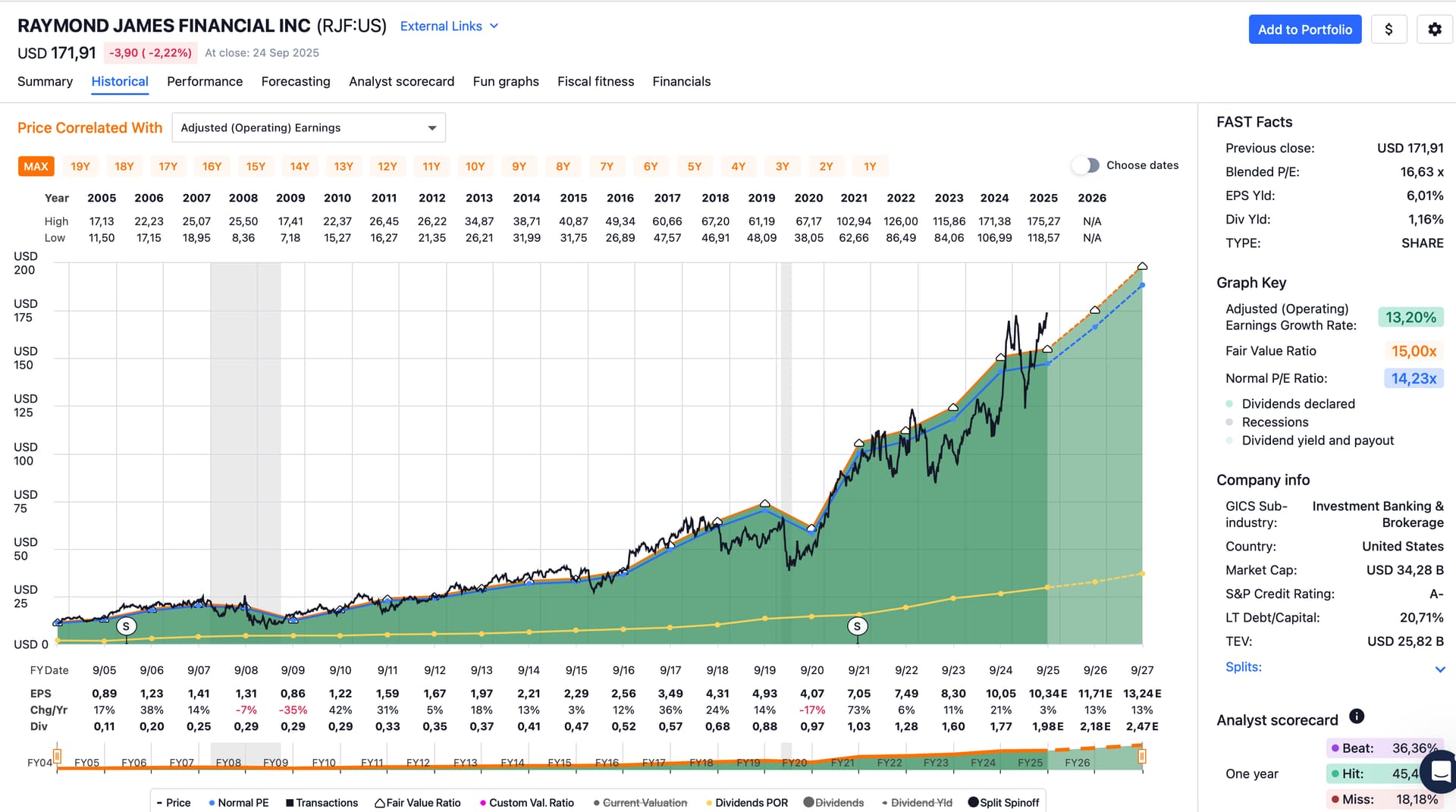
RJF: from my “junior portfolio” (which I manage for my son). Tad overvalued at the moment; probably only little correlation to AI.[$$$$$$$$]
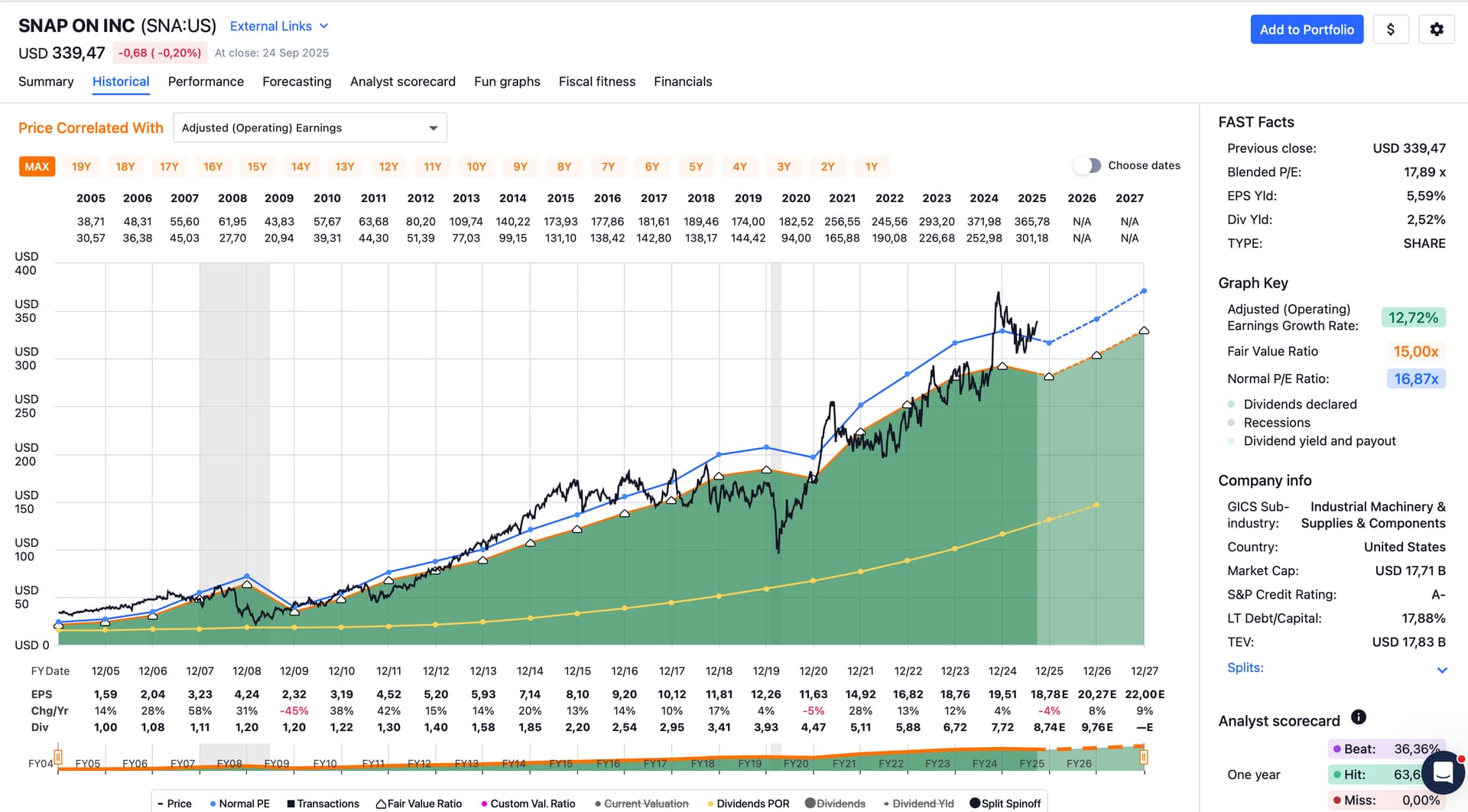
SNA: from my “junior portfolio” (which I manage for my son). Tad overvalued at the moment; probably only little correlation to AI. Perhaps on the upper end of dividend payout for what you are looking for.[$$$$$$$$$]
By reading and partipating to this forum, you confirm you have read and agree with the disclaimer presented on http://www.mustachianpost.com/
En lisant et participant à ce forum, tu confirmes avoir lu et être d'accord avec l'avis de dégagement de responsabilité présenté sur http://www.mustachianpost.com/fr/
Durch das Lesen und die Teilnahme an diesem Forum bestätigst du, dass du den auf http://www.mustachianpost.com/de/ dargestellten Haftungsausschluss gelesen hast und damit einverstanden bist.