Eh, they (Merck) will and does everything to drag out the protection as much as possible, like AbbVie does. That said biosims are a tad harder to get right than generics (=of small molecules) and pts/drs often have preferences. In any case generics/biosimilars are a GOOD thing - they increase equality. Dunno, don’t have a view into pembro generics. I was once paid to write an article FOR generics, and some months later an article AGAINST. Consultants are…concubines at times…though I’d stand by either article as well-researched and supported by evidence-based medicine, it’s just how you spin it.
2 Likes
Out of curiosity, any insights on Chinese pharma / biotech companies? The country does have the brainpower for R&D, manufacturing capacity and government sponsorship (which may or may not be helpful, but that’s another topic). Anything investible? Or already hyped and over-farmed?
1 Like
I don’t know about investable, BeiGene (now BeiOne) is one I know being the most western, but there are many local pharmas. I think that soon we will be seeing quality innovative drugs out of China.
3 Likes
Looking at that chart, I don’t feel my decision to sell was a bad one. It went maybe a little out of value but as always, stocks can keep on going up for a lot longer than you expect. A continued decline in earnings in 2025 would make things look very different.
1 Like
Wasn’t quite sure where to post this, but since it’s about active investors, I’ve settled for posting in this topic.
If our beloved mods know of a better place, please move it accordingly.
For those with time on their hands (55 pages often dense!) and interest in how professional active investors deal with managing Other People’s Money, this is a fascinating paper to read:
Exploiting Myopia: The Returns to Long-Term Investing by Kalash Jain, Dian Jiao :: SSRN
It dives into the reality of active institutional investors and how they deal with redemption pressure where many fund/ETF managers let go of weakly performing companies, resulting in relatively short holding periods. They hypothize that this results in systematic underinvestment in firms that require longer holding periods to realize value. They then construct a factor – Horizon – that is a proxy for the holding period of individual stocks and derive that funds/ETFs with larger Horizon (holding periods for individual stock) tend to have significantly better returns.
It’s at first almost obvious that – big if: for fundamentally sound companies – the longer you hold the company the more you benefit from the compounding, but it was new to me that you can systematically and rigorously show that even active institutional managers suffer from selling too early the fundamentally strong but recently weakly performing companies because the investors in their fund want out because of recent weak performance of the fund and then the fund managers sell the wrong companies too early for a bunch of reasons that are rational from the portfolio manager’s perspective, but that hurt the performance of the portfolio.
This is an edge we have as retail / individual active investors. I won’t sell a company I have conviction in, even if it performs poorly for many years.
It thus lines up with my own experience where some of my positions need 3 to 5 years to realize their value even if it seems obvious to me at accumulation time that the company is mispriced.
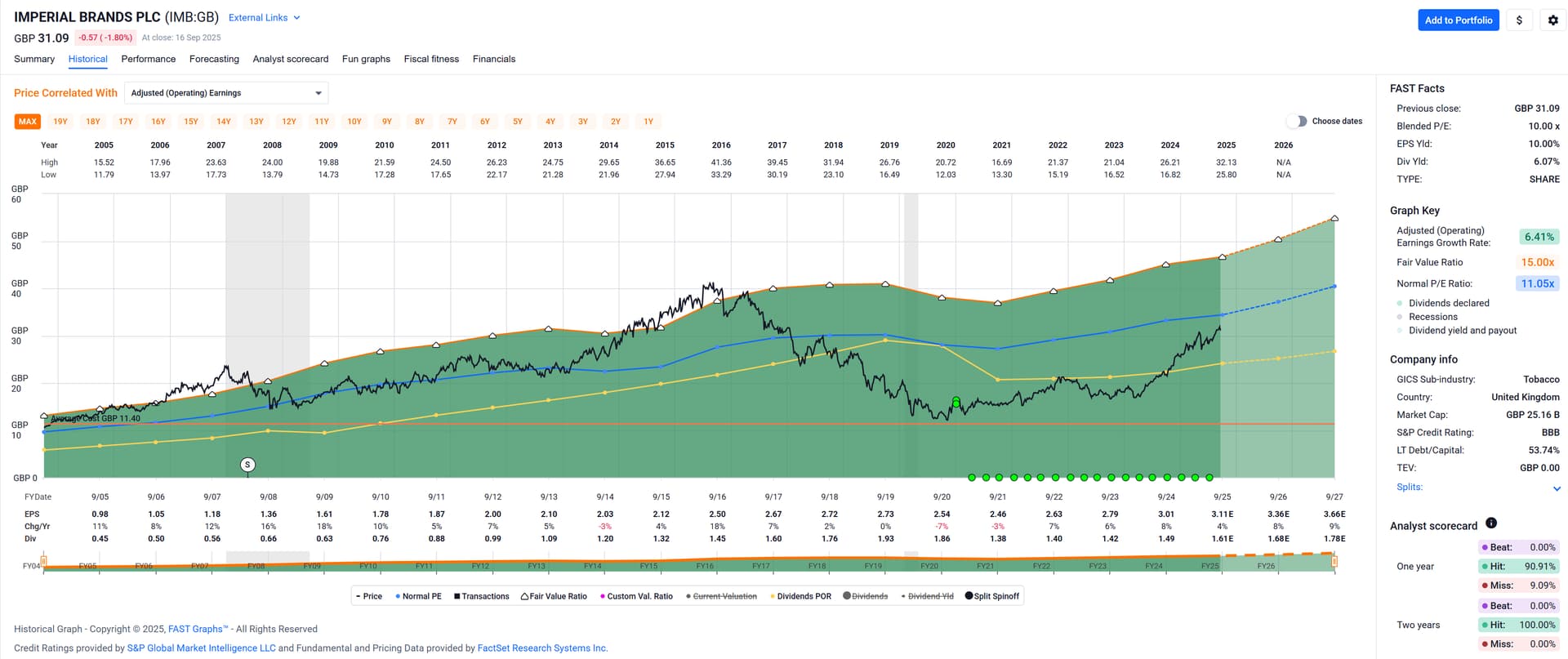
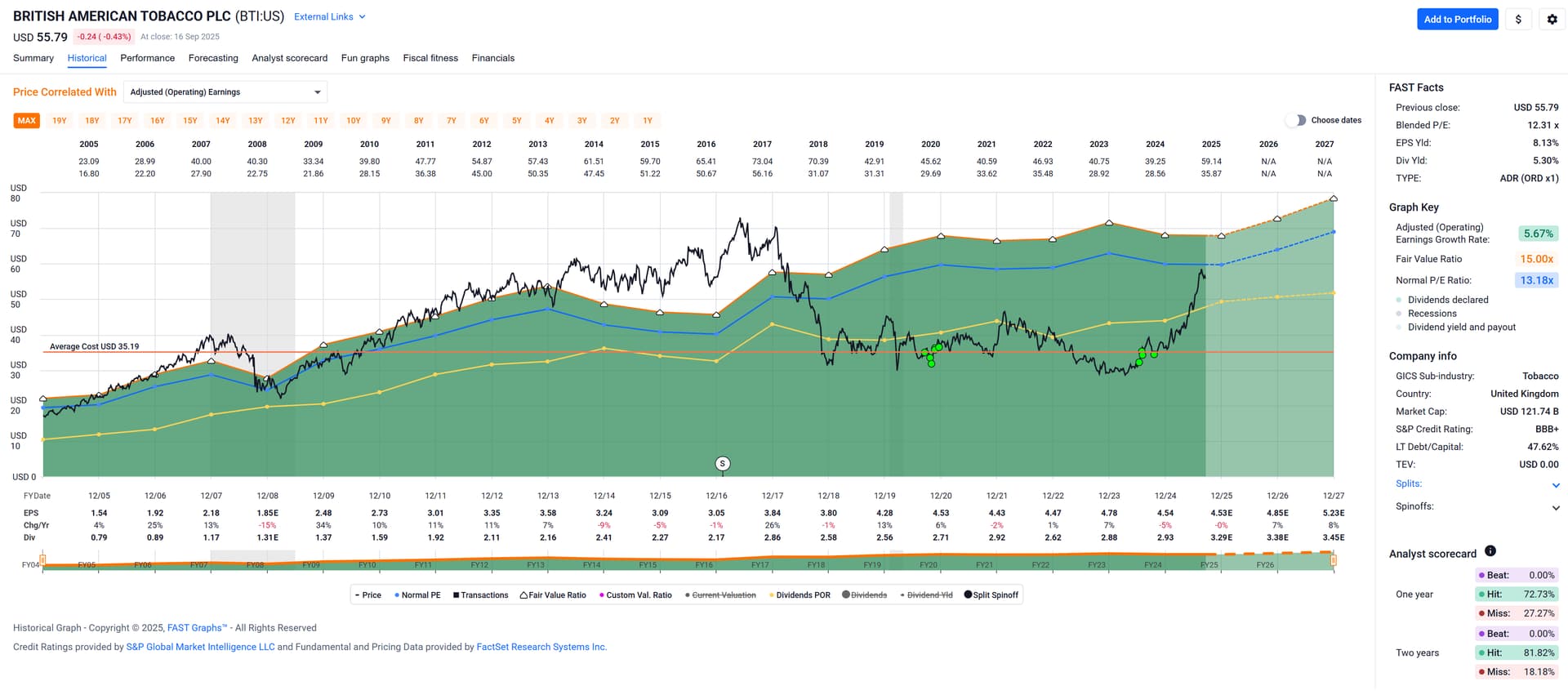
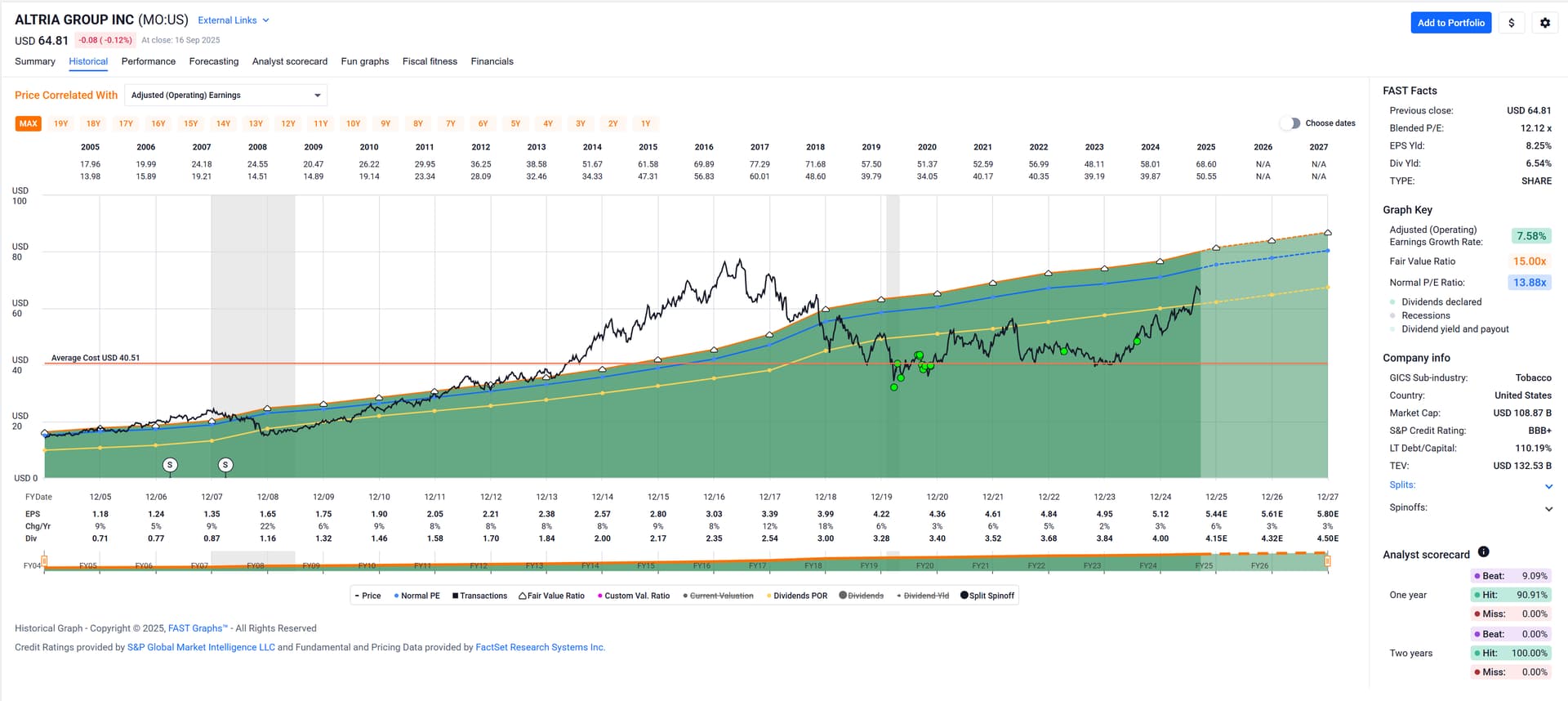
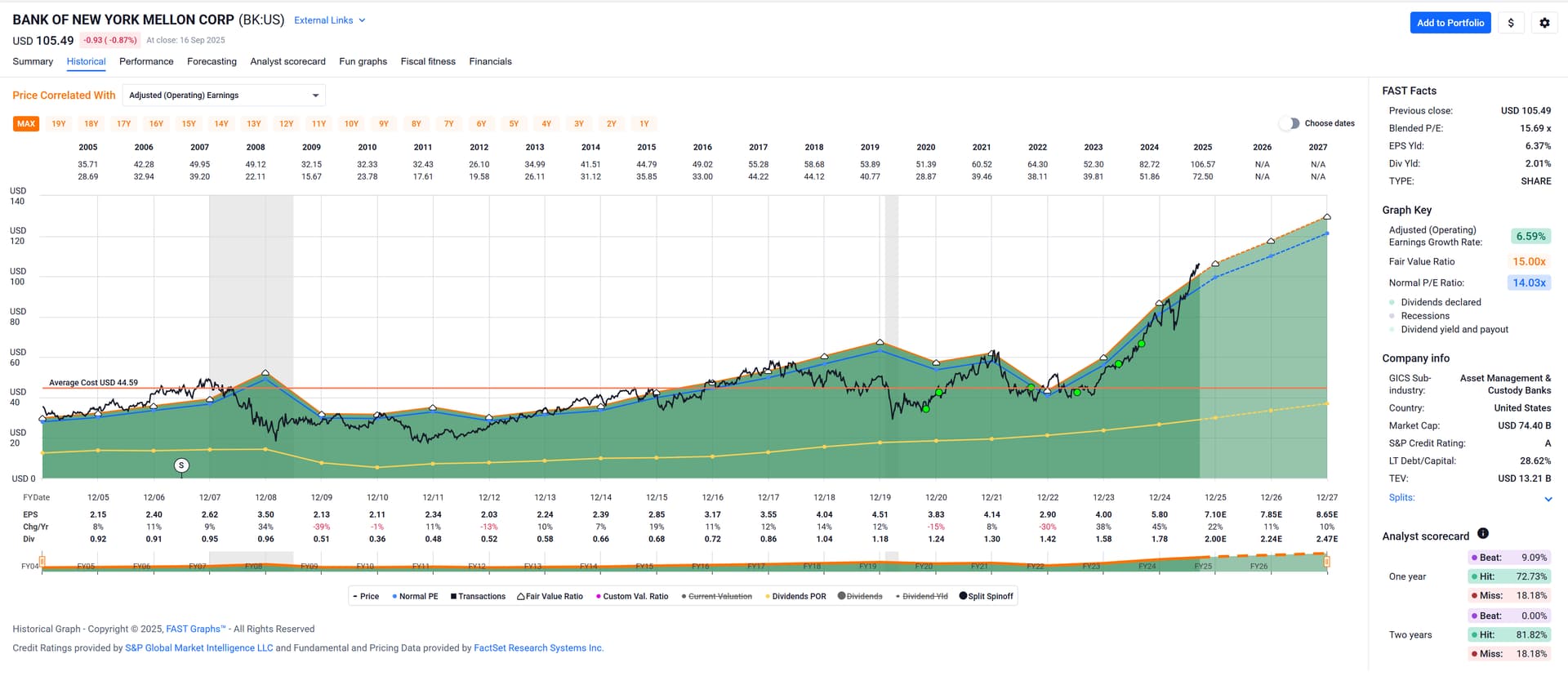
E.g. most tobacco companies (Imperial Brands,[1] British Americal Tobacco,[2], Altria[3]), but also financials (Bank of New York Mellon[4]) and many many others.
Anyway, if you’ve built the conviction that you’re buying a good or great company, the market will sometimes test your conviction for more than just a couple of months, maybe even more than a couple of years, but 3 or even 5 years until your returns will realize.
It helps if that waiting period is cushioned with dividends, at least in my case.
1 Imperial Brands
2 British American Tobacco
3 Altria
4 Bank of New York Mellon
Edit: Looks like I edited an earlier reply instead of creating a new post. Don’t quite know how to untangle this, but the earlier reply wasn’t that important anyhow, so I’ll leave this as it is.
Beside BeiGene which is definitely the most known for Europeans, I have worked with Zai Labs (ZLAB) but looking on their share price performance it’s not ideal. I was also thinking several times now to buy the KURE ETF but my buy order have never been filled. Looking at the performance now that is to bad. All in all a quiet challenging market as it’s unknown what the goal of these companies is (China forces only or globally, independence, etc)
NZZ article (paywalled) on Nestlé.
Summary by Chat-GPT:
Exec Summary
Nestlé is facing leadership turmoil but remains financially strong. Analysts expect the company to maintain and even raise its dividend in 2026, continuing a tradition of uninterrupted increases since 1995. Although net debt has risen sharply due to large share buybacks, strong cash flow and valuable assets like its L’Oréal stake make the debt manageable. Overall, Nestlé’s financial position is solid, and concerns in the market are seen as exaggerated.
Summary
Nestlé is experiencing leadership turmoil after the sudden dismissal of its CEO, Laurent Freixe, due to a concealed relationship with a subordinate. This marks the second CEO change within a year, raising questions about the company’s stability.
Despite this, analysts emphasize that Nestlé remains highly profitable and its dividend appears secure. Nestlé has never cut its dividend since 1959 and has increased it annually since 1995. Analysts expect this tradition to continue, as failing to raise the dividend would send a negative signal to investors. With strong free cash flow (over CHF 8 billion in 2025 and projected CHF 10 billion in 2026), the company can comfortably cover the dividend payout of about CHF 7.8 billion.
Concerns focus on rising debt: net debt grew from CHF 12 billion in 2014 to CHF 56 billion in 2024, while equity halved to CHF 37 billion. This was mainly due to large share buybacks totaling CHF 53 billion since 2017. The debt ratio is now around three times EBITDA, higher than Nestlé’s target of 2–3 times. Still, analysts view it as manageable thanks to strong cash flow and lower interest rates.
Nestlé also holds substantial hidden reserves, including a 20% stake in L’Oréal worth about CHF 40 billion (booked at only CHF 8.7 billion). Selling even part of this stake or other planned divestitures (e.g., parts of the water and vitamins businesses) could easily reduce debt and strengthen the balance sheet.
Overall, analysts argue that Nestlé’s financial position remains solid, and investor concerns are exaggerated. The dividend is seen as safe and likely to increase again in 2026.
2 Likes
About a week ago, I was looking at Siltronic AG and thinking. Wow. This seems quite low. Should I buy some more? Nah, position size is big enough.
1 week later. BOOM. up >40% went from nowhere to my #11 position.
1 Like
Pls send this article to the market with a #PYPL remark 
FASTgraphs scrolling through my holdings I often pause at Cigna.
Textbook earnings graph.[$]
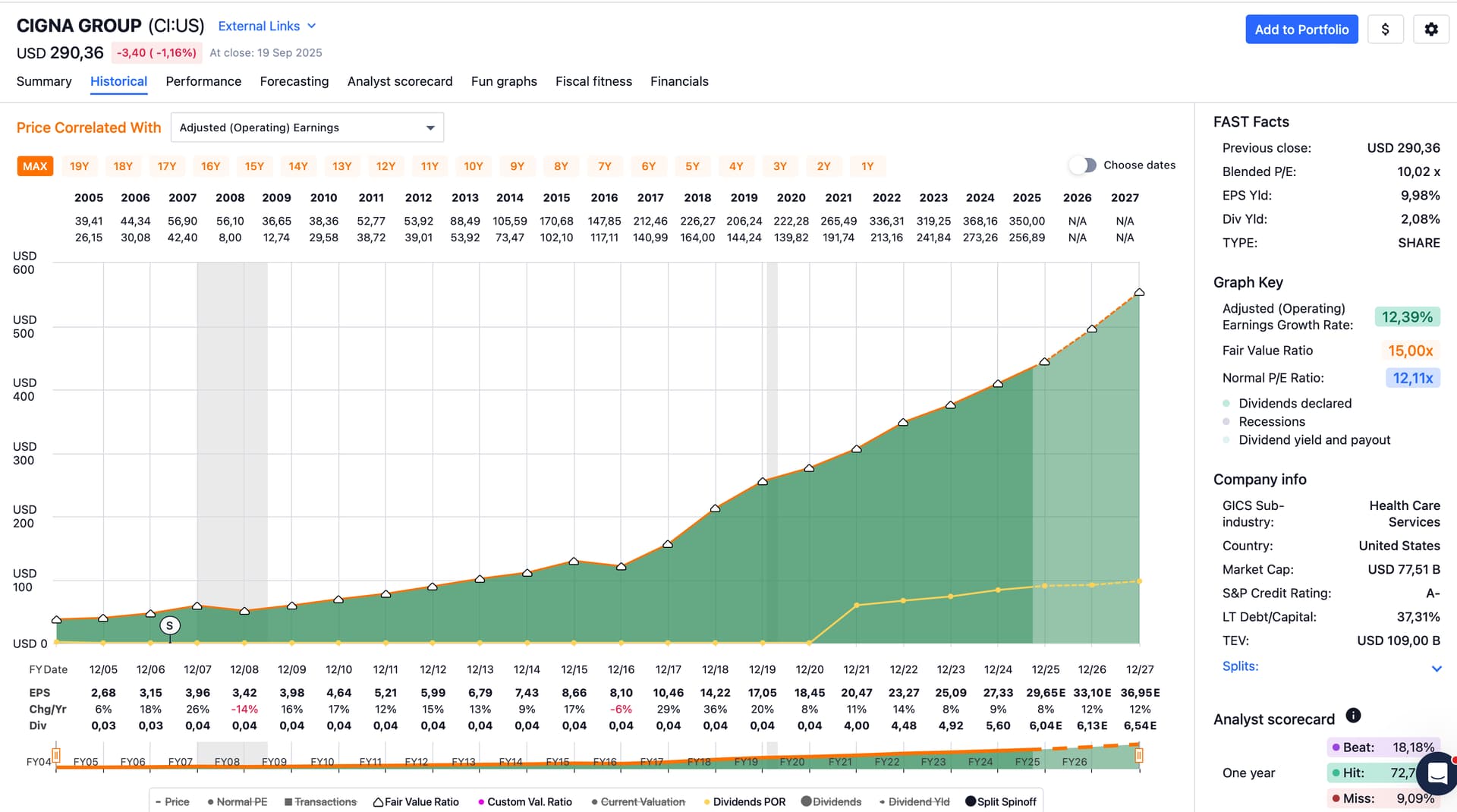
Only two down years in the past 20 years (2008 and 2016). Earnings growing at over 12% over the past 20 years. A- credit rating, acceptable debt.
Yet price continues to be depressed with a multiple of currently 10xPE.
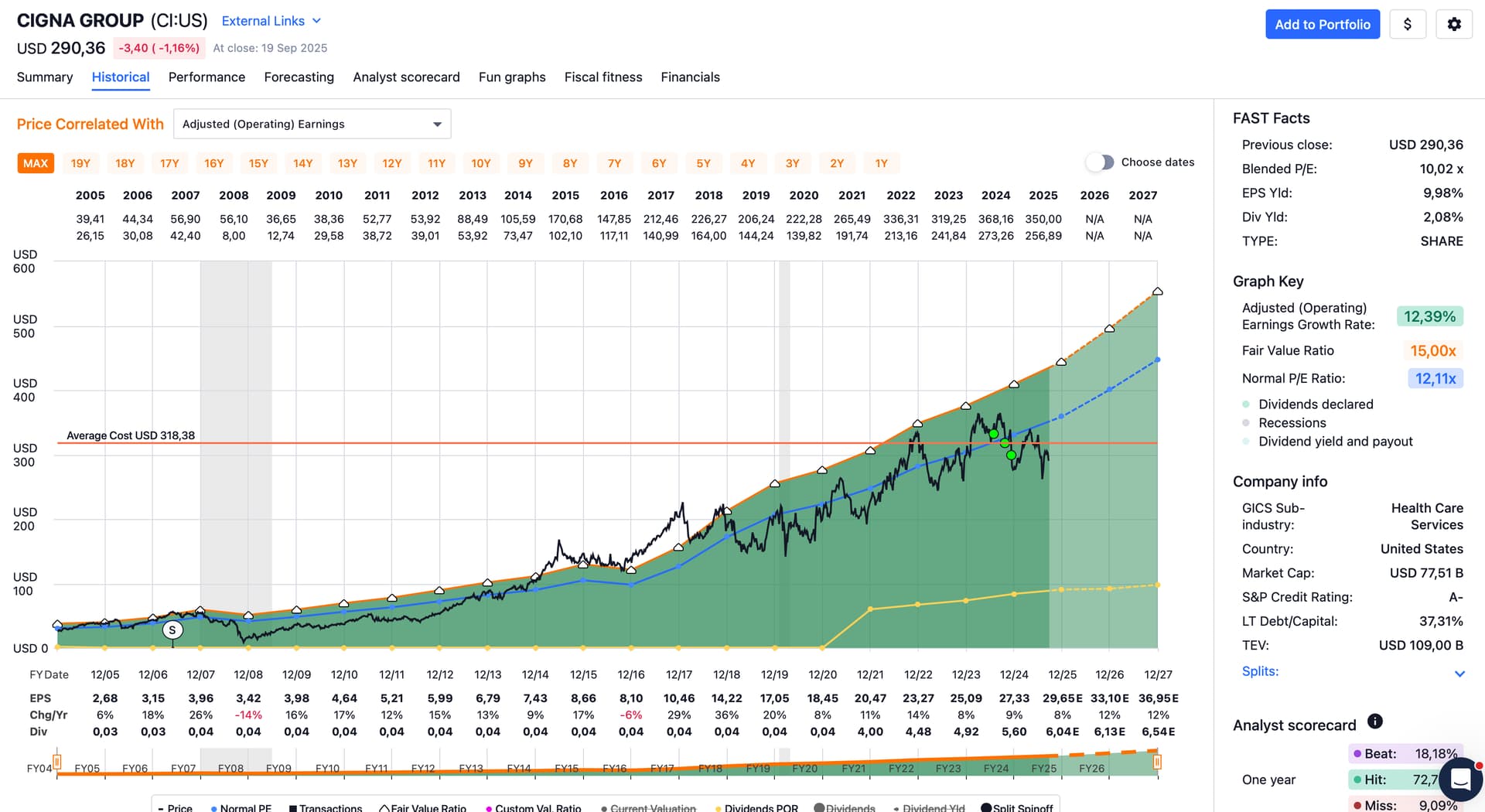
I wish their dividend was higher. I’d be ready to back up the truck …
Instead (due to the low dividend of just 2%) I’ll buy a smaller tranche as even if they stayed at their current multiple you could look at an over 12% CAGR over the next couple of years.
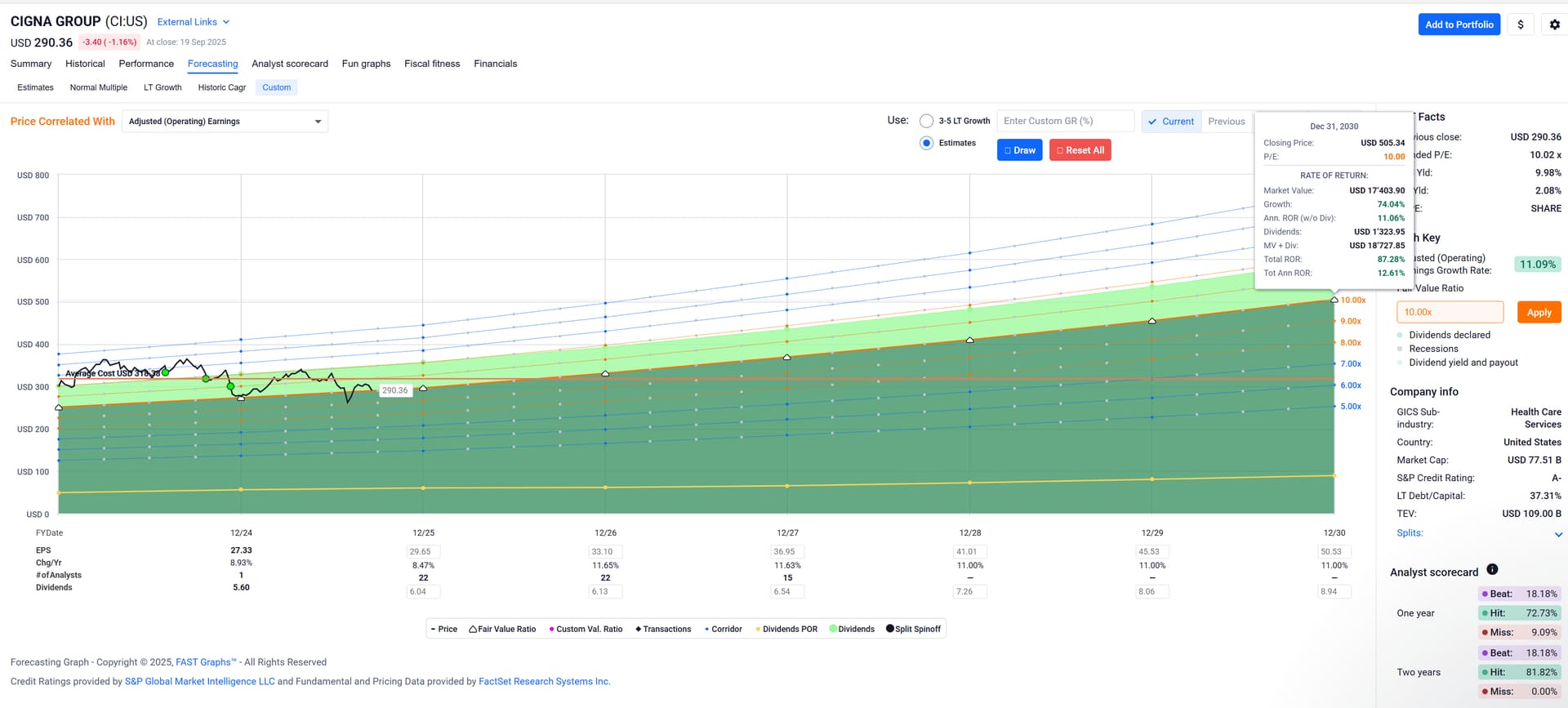
(y’all may call me a capital gains speculator now …
)
I also like that their earnings estimates haven’t come down over the past 6 months.
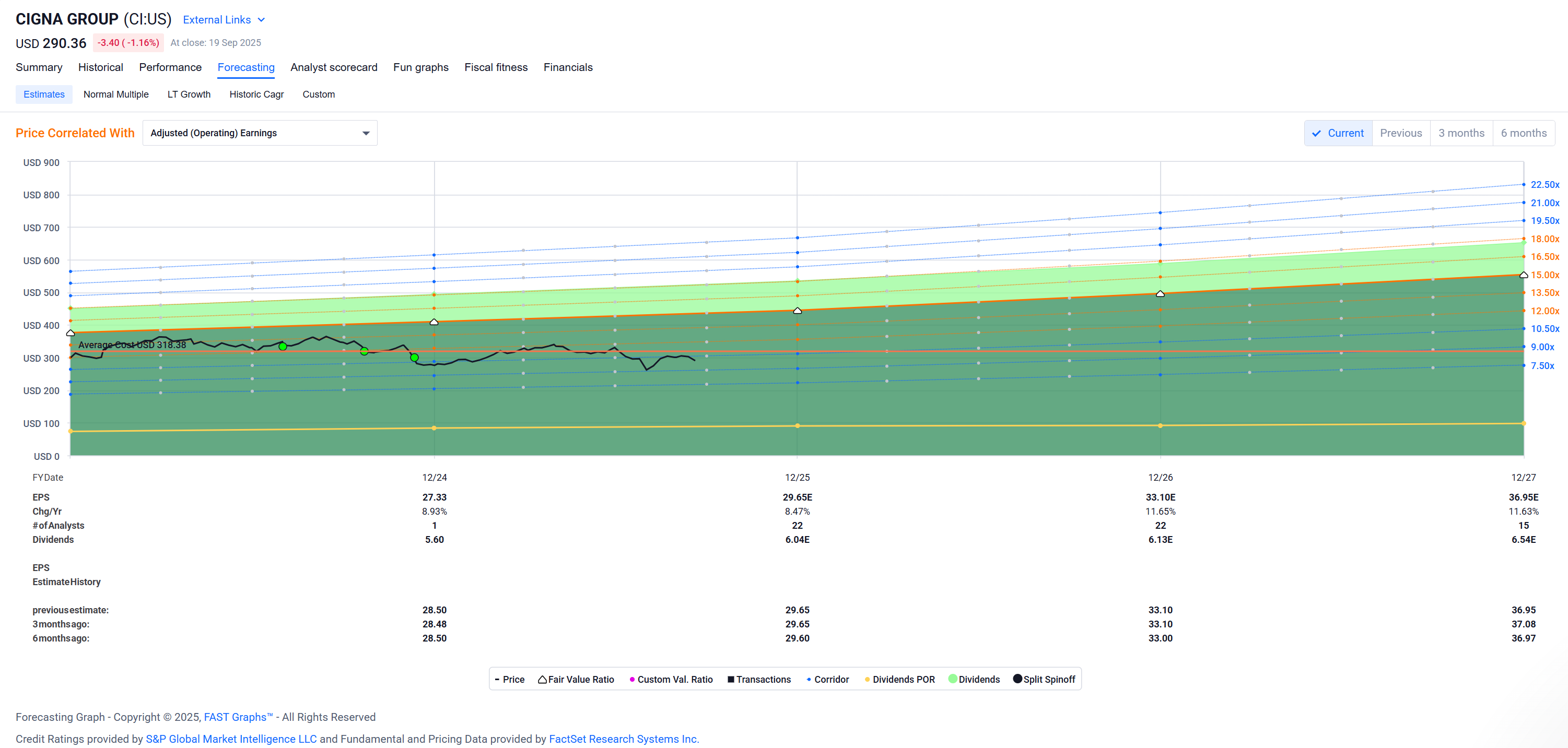
Anyway, thought I’d share.
$ Their Free Cash Flow is a little more cyclical, but still plenty of cash coming in (for e.g. covering the dividend).
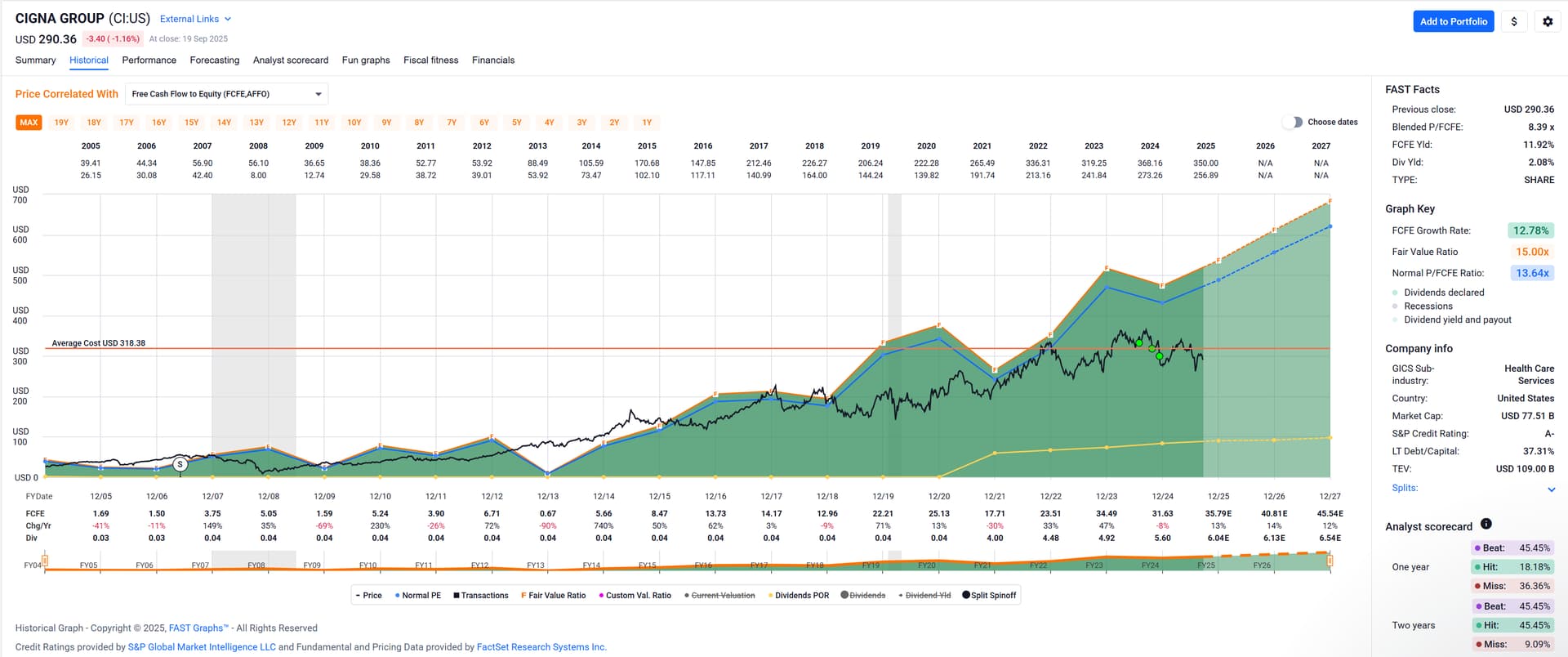
5 Likes
Former colleague who knows basically nothing about finance and investments just joined, they asked me if they should get stock as they get it on discount. I said “depends on the discount”. They didn’t know yet and I have no feel for the discount rate. Looking at this graph I’m in mind to say “if you can get it below $150 go for it”, any views?
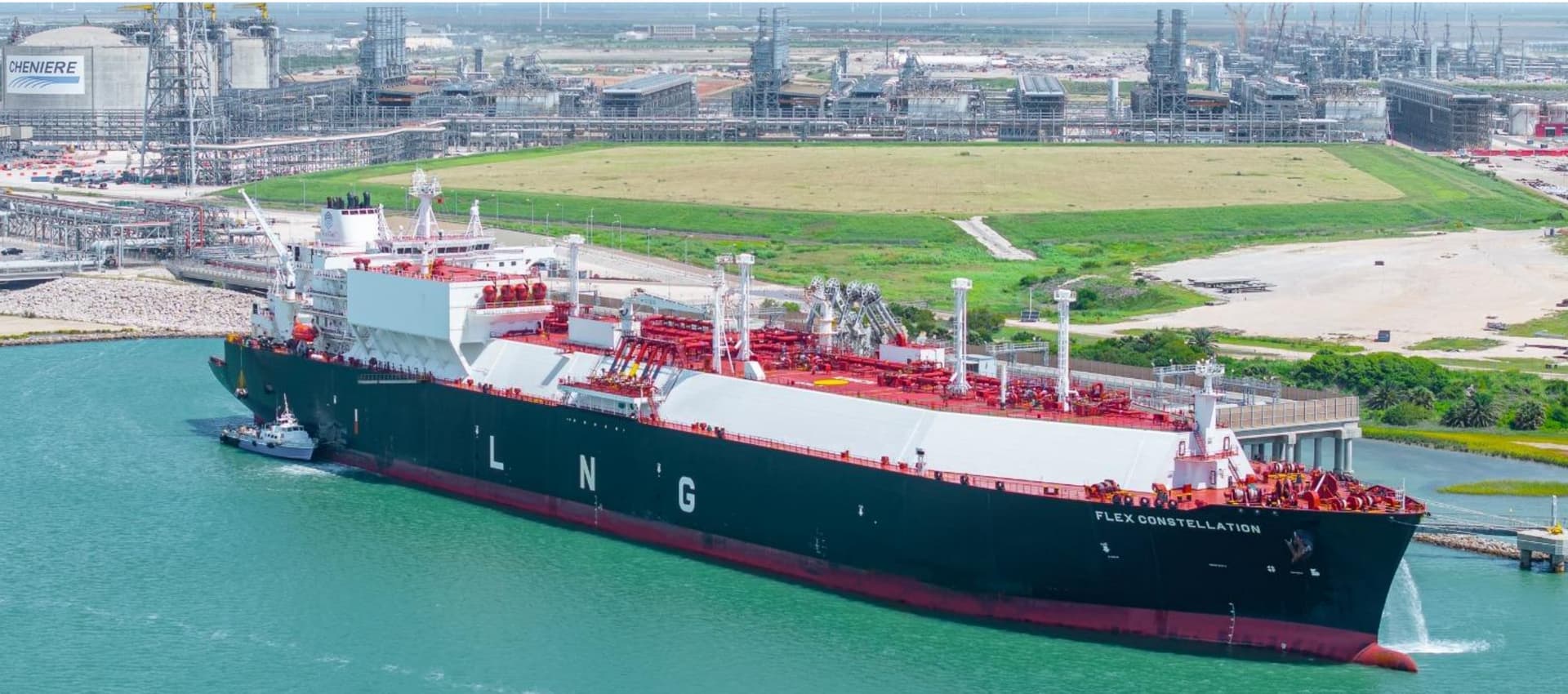
Another one that gives me pause is FLNG. It’s not your typical Goofy stock pick …
In fact, it looks like a sinking ship value trap with its 11.56% yield, 66% debt and sinking earnings since 2021.
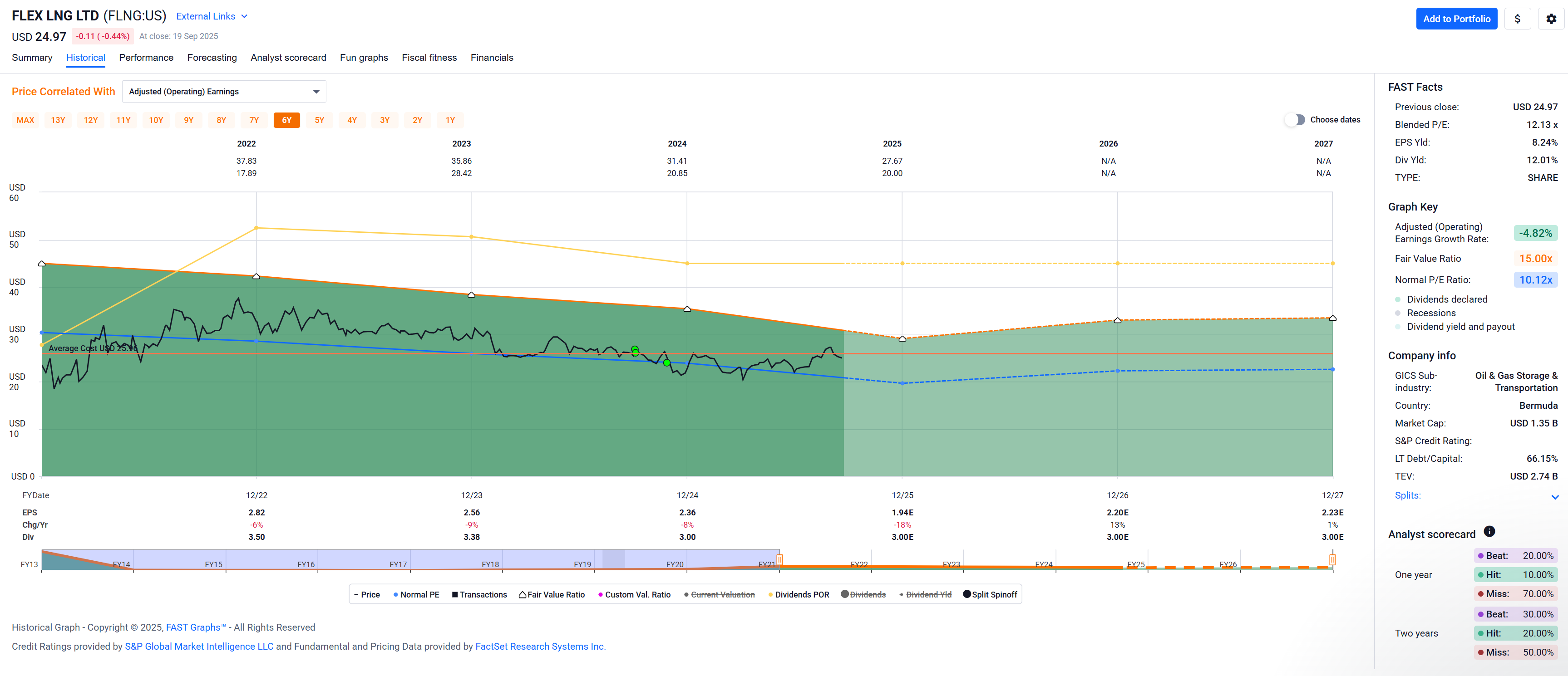
Since it’s a capital intensive business looking at Operating Cash Flow might be better to value the business, but the OCF FASTgraph doesn’t look much better.
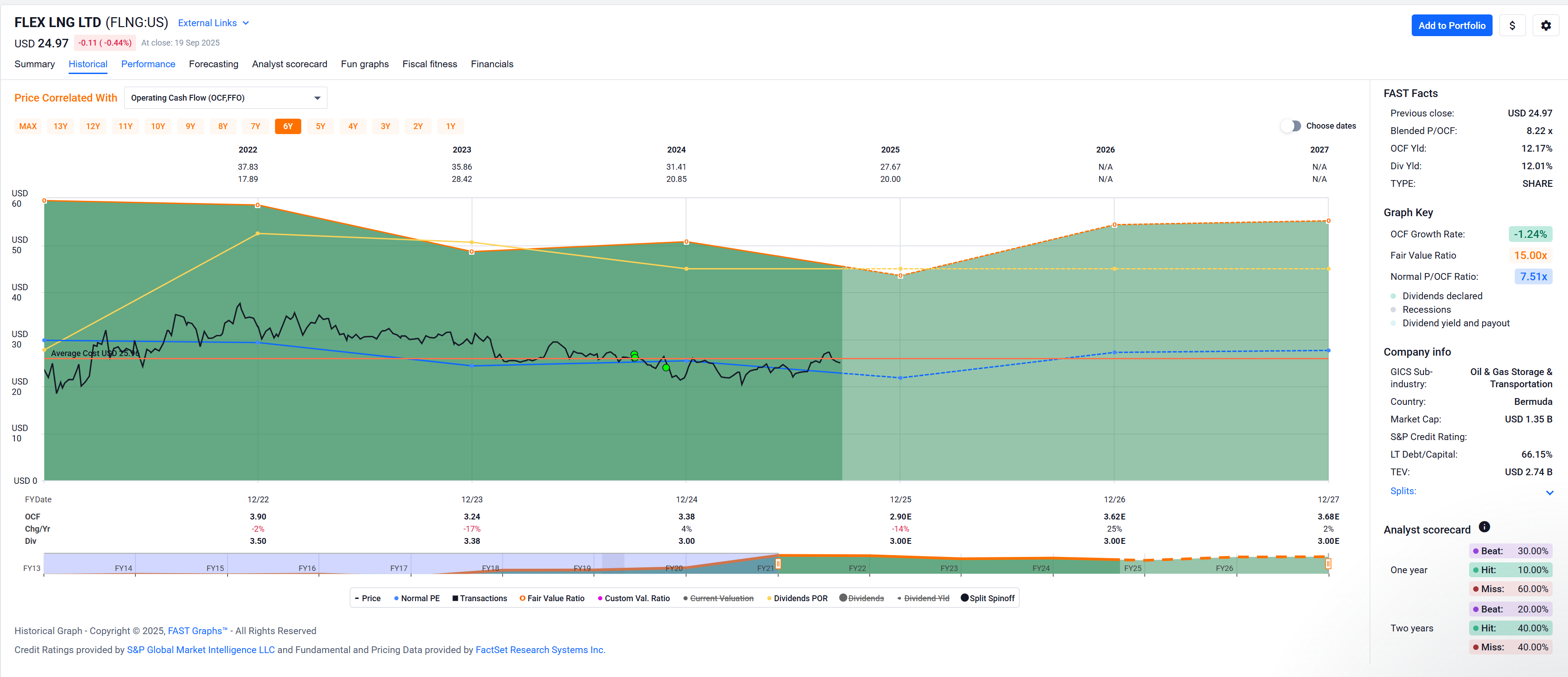
Why am I invested and still interested?
- well, there’s that juicy yield … they could lower their dividend 10% or 20% or 30% – heck! 50% – and it would still be an attractive yield.[$]
This is really only an income vehicle, not a dividend growth stock that I usually prefer. - they have a modern fleet of 13 Liquefied Natural Gas Carriers (LNGCs) and my
macro theorybest guess is that Natural Gas consumption will increase with e.g. Europe buying from the US or so. - they have 55 years of minimum charter backlog (84 years with charterer’s options)
- no debt maturities prior 2029 and capex liabilities are limited to drydock of the fleet
- they state that their earnings belong to the shareholder (how quaint a thought in today’s markets …)
- they’re small cap and afaik only in the Russell 2000 (hence I’m not competing with the big boys on Wall Street in trading this issue)
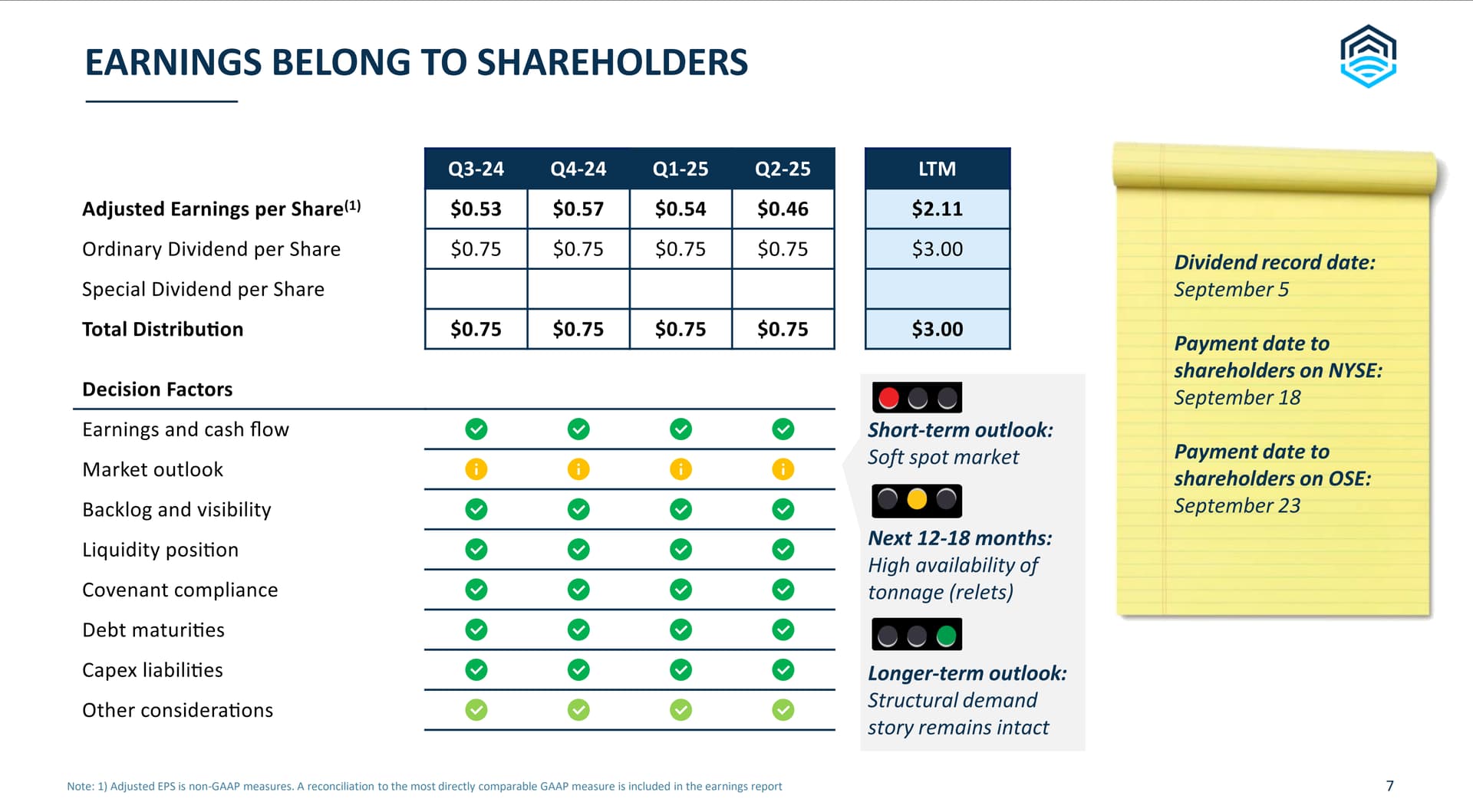
$ Of course they claim that their strong financial position and the contract backlog supports the dividend.
1 Like
Always hard to advise other people on investing, at least for me, as their goals, risk tolerance, time horizon, etc differ from mine. With that out of the way:
ABBV
- fair value is about $173 at the moment ($180 at year end) with regard to “fair” being a 15 multiple given the company’s earnings growth
I’d prefer to buy with a margin of safety, so below the fair multiple of 15, but then again Goofy’s a chicken.
If you’re going to hold for, say, 10 years, buying at the fair multiple now (without a margin of safey) won’t matter that much in 10 years. - the normal multiple for this company has historically been lower than the fair multiple for this company (the blue line in your graph) and only in the last couple of years has the stock price been above the fair multiple.
I believe that’s heavily influenced by that Humira patent cliff we discussed last week or so, so maybe that’s a one-off that dominated the normal multiple but it’s not the normal normal multiple.
Nobody knows with these biotech companies …
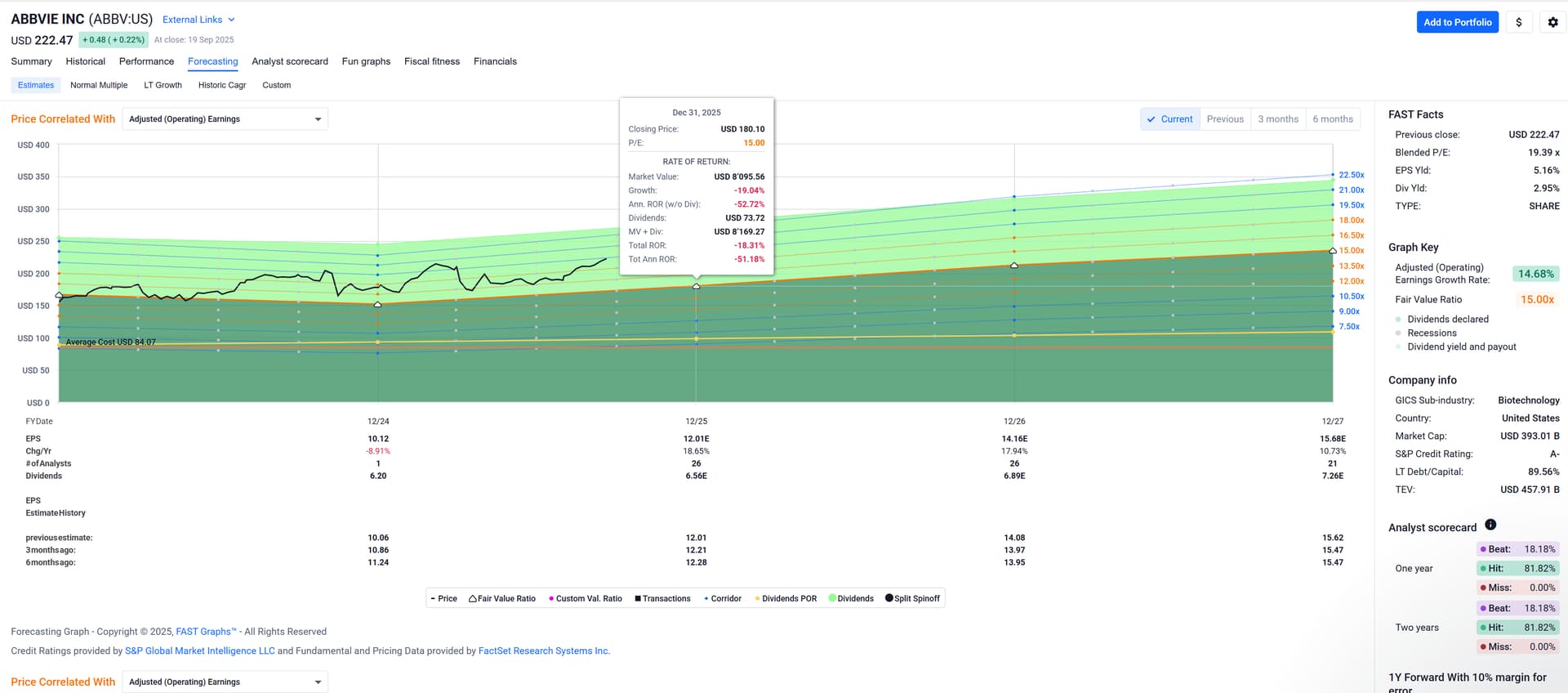
Certainly “if you can get it below $150 go for it” makes sense. I would add at $150 if I didn’t have a full position already. It’s even below the normal multiple of $160 that would apply at the end of 2025 based on current earnings estimates.
1 Like
Thank you, I thought my eyeballing of the chart wouldn’t be far off.
Overall they came to me for general investment advice because they don’t know anyone else “investing”, to which I said “we need to book some proper time, stay the hell away from banks and insurance companies until we talk” - I know insurance and banks are like vultures and will spot someone joining a big multinational firm, after which they’ll start circling them with “offers”. I’ll give the overall spiel of “low cost, broadly diversified index funds”, “time in the market beating timing the market” etc and they can take it from there.
1 Like
Isn’t it Signa Holding that you’re mixing this up with , solid RE sector investment?
 Mechanise your strategy before it’s too late!!
1 Like
Sorry, that’s private equity. We don’t mark that to the market until we have to.
Oh, wait …
It’s softly mechanised, rubber band and duct tape holding together a Tinguely-like machine, occasionally emitting a white puff as a buy signal and occasionally some grease burning with black smoke as a sell signal.
4 Likes
Position trimming continues as I try to convert stocks to cash for my pension purchase.
Today, I sold just under half of my BTU position. Funny how this ‘obsolete’ industry doubled my money in less than a year.
3 Likes
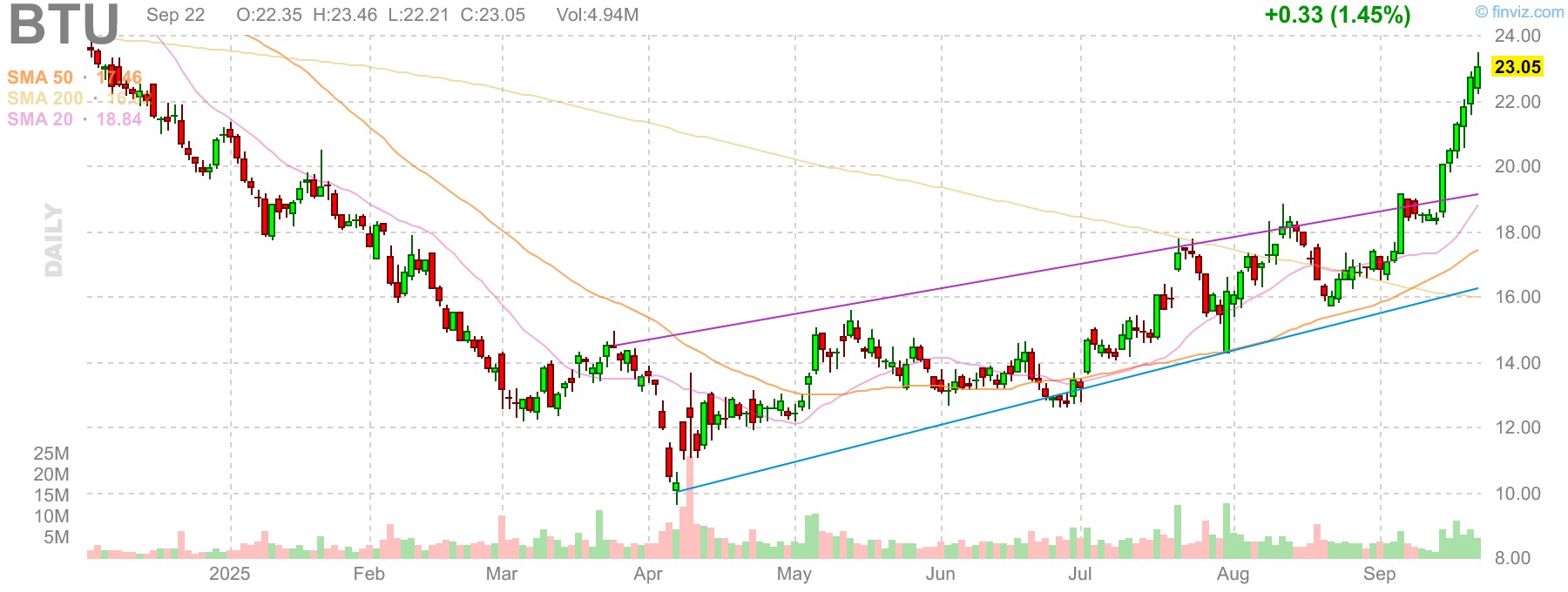
I remember posting about it on here when the price was $10 and wondering “why am I not buying this hand over fist?”
Although it is where it was a year ago, the big money was to be made pre- and post- covid. it is a 10x from 2020/2021.