ehmm, divorce?
Not sure. I have another 30 years ahead of me. That should take care of volatility, no? Or am I missing something?
ehmm, divorce?
Not sure. I have another 30 years ahead of me. That should take care of volatility, no? Or am I missing something?
I don‘t think having this much precious metals/commodities is a diversified enough approach to protect you from a crash.
They tend to work well in inflationary crashes. But not so much in deflationary ones.
You are making an insane bet with 45% here.
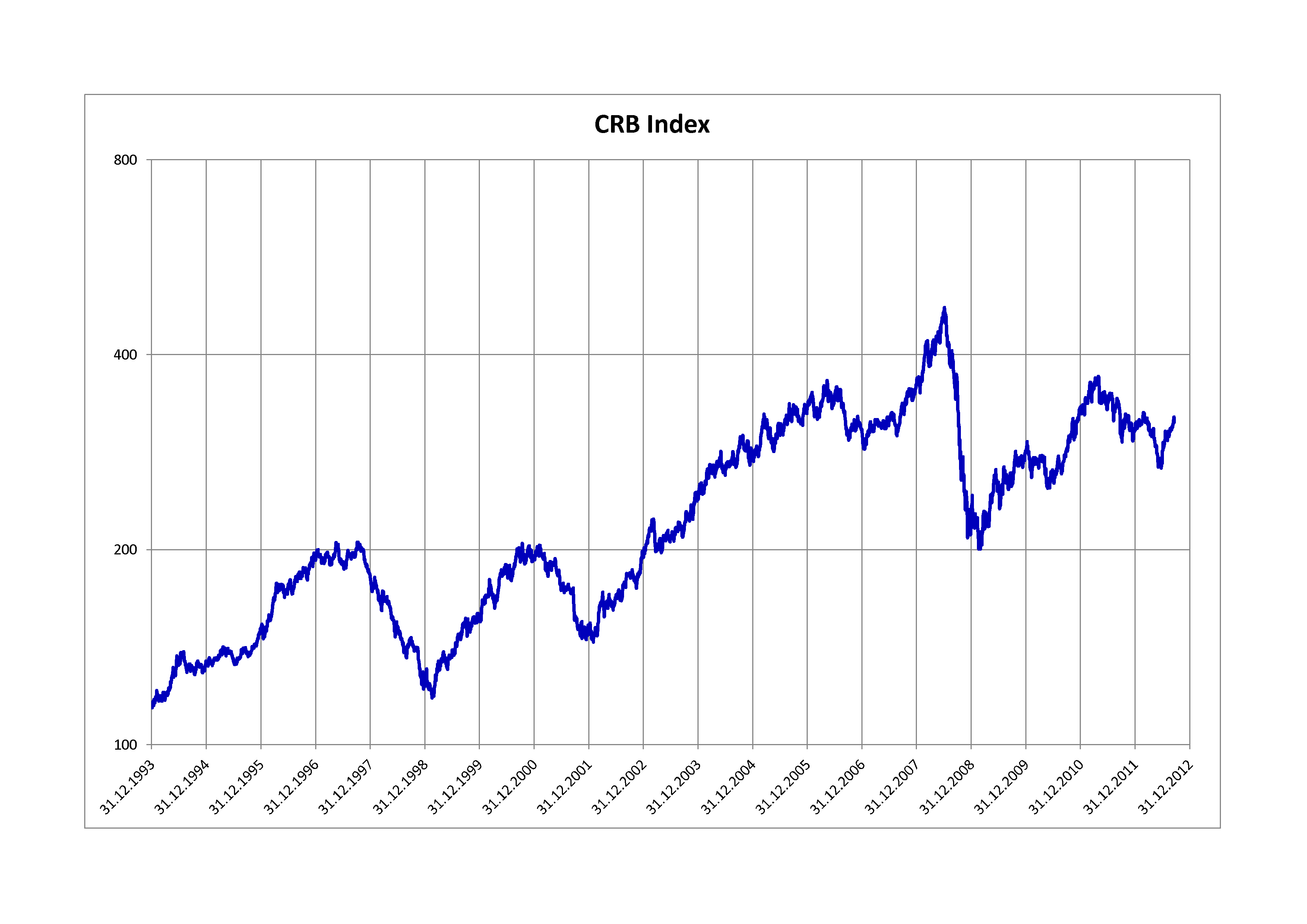
Commodities for example have done terrible in 2008.
There is easily a chance they crash together with your equities, and then you are really bad off.
Are you talking about gold? Done terribly in what timeframe after 2008?
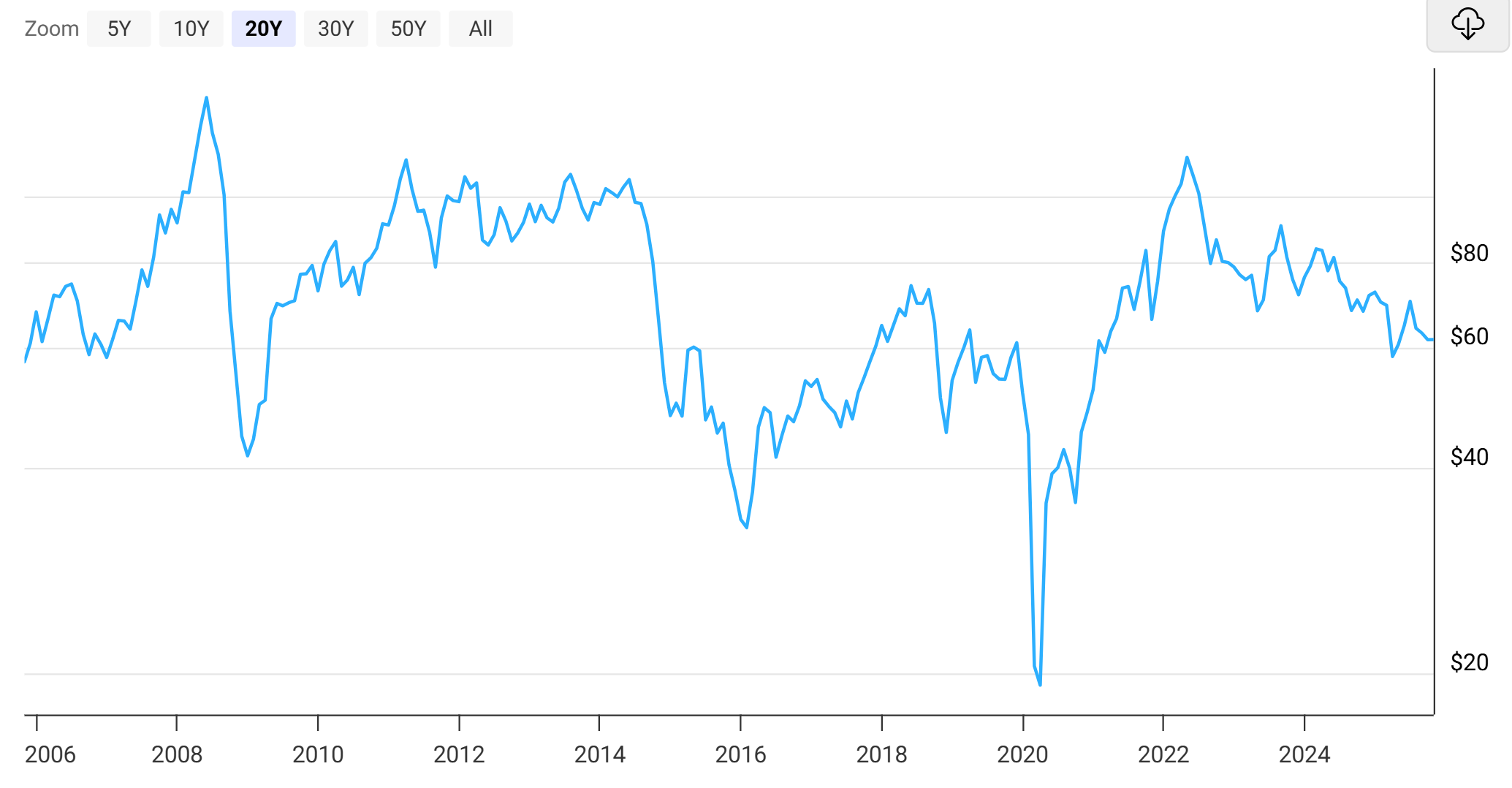
OK, crude oil in USD is another story. Never made it back to the June 2008 peak ($147 per barrel).
No
Yes.
Well, I meant that your strategy seems to be to invest in hard assets, such as metals, energy. So, real estate would be another obvious category in the same theme and can be done directly or through funds/REITs etc. So I was curious to why it wasn’t in the mix.
I find the market too expensive to buy multiple or single homes near where I need to stay (city of Zurich). Same with RE funds. Commercial properties remain an enigma. I considered co-ownership with Crowdhouse but came to the conclusion that they are not aligned with my interests. I would be happy to buy real assets at a good price but can’t find anything at the moment (it’s been a looong moment already  )
)
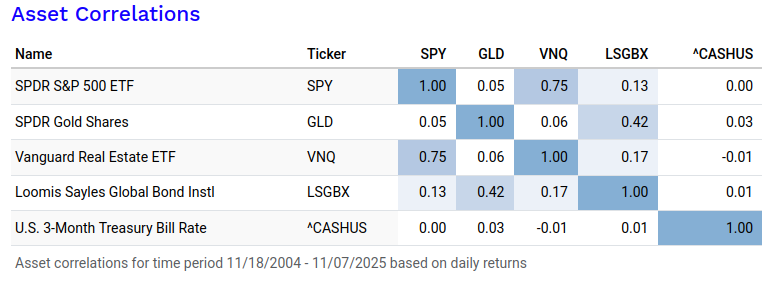
I can’t find longer term assets correlation tables but in my memory, the trifecta of low correlation assets are bonds, gold and stocks (and cash). Real estate has more correlation with stocks.
For example, from portfoliovizualizer, from 11/18/2004 to 11/07/2025, over rolling 20 trading days periods (in USD for ease of access to data):
https://www.portfoliovisualizer.com/asset-correlations?s=y&sl=3KHt4bo5NxMMw5OBsmGZKT
A bit off-topic, and I don’t want to ask around too personal topics. I’m aware of the common story that “she” is screwing “him” over in a divorce. How does that even work given there’s no marriage contract. In that case, it’s just half-half for all the assets?
I’m not saying you should or shouldn’t have land to your name etc, it’s just a really different topic for me
probably for a new thread…
I understand that feeling. There are few bargains if you want to buy Swiss residential RE.
I actually felt the same about gold in early 2024, but decided to ‘hold my nose’ and buy anyway.
I’m getting the same feeling about energy and commodity stocks too: I’d like to buy them at a cheaper price, but maybe buying them at a less than ideal price might be better than not buying them at all.
Fair enough
I’m not interested nor could i contribute, but wanted to challenge the picture that a divorce would change your financial situation or could ruin your life, and it’s typically framed around the wife.
Probably for another thread too but I would guess it does, independently of the affected partner.
On the real estate side, the feeback I have from a divorced colleague with children is that both partners need to have rooms for the children, meaning you need more real estate for the same amount of people and with similar incomes so buying may become too expensive and renting be the better option, at least until the children leave home.
I’d say cases where the real estate asset is left to the partner are less financially clear cut, though emotionally, one may not want to buy new real estate assets quickly and may not qualify for the desired mortgage when it comes to income. There may also be a need, enforced by a judgment or self defined, to help the ex-partner keep the home in which the children have grown for their own wellbeing, meaning more transfer of money between the ex-partners.
No worries, no bad feelings in my case. She didn’t want me as a co-owner after the divorce and paid me out. No more homes but cash.
Your post gave me an impression that you have less stocks because you are close to retirement. I assumed this meant you want lower volatility.
That’s why I said what I said.
I think commodities in such high proportion might be too high.
I always thought investing in commodities isn’t worth it because they are traded differently. Futures need to be rolled over and that can cost a lot of money (in the case of contango) depending on the futures curve. So getting exposure to commodities markets is not that simple because of these future curves. Despite for example an ETF being able to do this, the underlying rolling mechanism remains there.
I have used the term “commodities” for a mix of individual stocks and funds, mostly in the extractive industries, petrochemical and nuclear companies. My exposure will be 5% after implementing the slightly changed asset allocation.
To go back to the original discussion: sell what to hold what?
Which bubble?
The seven magnificents are probably in a bubble and the problem they make a large amount in the S&P500 now. But if I look other indexes (Europe, Japan, Asia and Pacific area) the valuation is high but this is not a bubble to me. The problem is the large amount of cash that had been invested in AI infrastructure that will be obsolete within 4 years. Probably the future is brighter for shares of chip manufacturers (AMD, Intel, SK Hynix, Samsung, TSMC ) than for the 7 magnificents.
AFAIK long time they do not manufacture their chips, they’ve gone fabless a while ago.
Why? The HW will “expire”, yes, but the business/enterprise value that this hardware and cash unlocks will need to offset it (and more). That’s their business case -plus rushing to be the first, ofc.
Yes, AMD fab = TSMC.
NVDA fab = TSMC.
Apple fab = TSMC.
Qualcomm fab (Snapdragon) = TSMC.
Amazon custom chips = TSMC.
Sony (PS5) = AMD = TSMC.
–> Buy TSMC