It really doesn’t matter, Ben Felix is talking from an academic maximum possible total return point of view. It makes sense to do it this way to ensure a common baseline and compare apples to apples. It doesn’t matter because the premise doesn’t work in the real world, or for all people.
Genuine real world question:
What prevents anyone from investing in a sp500 etf and do what’s said here, take the yield of a sp500-based CC ETF by withdrawing?
(I would say all the trading implied, that’s why I suggested the robo with a standing withdrawing order).
In my view he isn’t here.
He’s literally spending SP500 ETF at the amount of JEPI yield, monthly.
Monkey is fed the exact same amount in cash, monthly.
Then he’s comparing the NAV of the principal, in this scenario.
You’re 100% right, the issue is psychological, seeing numbers of shares going down over time, worrying if the robo advisor (very good idea, by the way, if it can be automated to sell and also send you some cash in a regular account) will sell at a downturn - which the human would sweat over - or worrying about selling in a bull run and hence capturing less of it over time.
One thing in the sim is spending matches JEPI dis which are not steady. So an 8% fixed recurring withdrawal might behave differently in comparison.
If you consider the robo a black box and doesn’t care about what the robo does or the unit counts… I’m not withdrawing but I have no idea of what’s in my VIAC 3a in terms of unit, while I very well know every position I manage myself.
I’ve got a robo story myself - and I don’t know the unit counts either, while I monitor the position amounts and the total AUM.
It’s not the main part of my (one and only, I don’t segregate strategies, just different tooling) PF, and I might experiment that withdrawal thing maybe next year, since I don’t want its AUM to go higher anyway - fees.
I’ve only used it as a no-brainer, standing order dca investment, and that was efficient during pseudo-bear 2022. I also lumped sum big bad time in the non-robo part end of 21 and needed tooling to stay in the course. It helped and succeeded. Now I just throw a few hundreds in it each month to empty my account once everything’s paid (incl. the “pay yourself first” fixed amount).
I wouldn’t withdraw 8%.
Quick question about dividend payouts: CHDVD had one with ex-date March 12 (yesterday) and record date March 13 (today).
- The dividend amount was deducted from the share price on March 12 at start of trading (so basically overnight from March 11 to March 12 while the exchange was closed), right?
- When would I have had to own a share to receive the payout? March 13 at start of business day (so buying on March 12 by exchange close at the latest), or March 13 at end of business day?
the ex-date is when it is no longer eligible for dividend. so if you want the dividend you need to own it on March 11.
4 Likes
If you see the ex div dates, it’s got loads, making me wonder if it simply passes on dividends to holders as they come in from the 20 companies it owns. Wouldn’t it be more efficient to provide just a single dividend per year (say, July)?
And what the monkey will say? monthly dividends ftw 
CHDVD is a bond, with more upside and downside 
Heh, getting close to my cost basis on CHDVD, at least it’s thrown off some dividends, and will be throwing off a lot more until August. The monkey brain tells itself “Ok, but it did something for you, if you held from 165 to 190 to 165 with nothing to show for it you’d feel like a right chump”.
You activated my monkey brain and so I checked TDIV, since the beginning of the war it lost roughly 4%.
1 Like
Nearly -7% YTD on CHDVD, oh well. Thankfully SCHD has carried the portfolio so far.
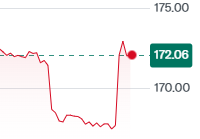

Don’t, that is how an addiction to checking the markets begins …
4 Likes
Exactly. Just today, I was thinking of just freezing my portfolio and not messing with it for the next year or two.
1 Like
Oh yeah, that guy. Goes by the name r/RaoBlackwellized or something like that on reddit. Writes a lot to say very little. Quite the preacher.
Edit, now I read about half before throwing in the towel. It’s as I expected, self-aggrandising, many many words, a lot of data (data are good, so are references) and probably biased given he doesn’t even try to conceive a scenario where JEPx are a good idea.
Here’s a real-life scenario: when I posted here for ideas how to build a portfolio for my mother and brother, a key factor was that neither need (other) income, so we settled for buying just one ETF (VEVE) and keeping a large cash pillow. Not ideal or “optimised”, but practical and appropriate for them. The goal was to get market returns for the long term. Had they needed income I’d have gone to JEPG in an instant. A retired person doesn’t need to get maximum potential returns, but they (may) need income to fund their lives, it’s their money, after all.
So, a more succinct review of JEPx, from me who don’t have a youtube channel or anything would be: “if you need cash from your portfolio without you doing the selling, JEPx are the dog’s bollocks, for everyone else go to low cost, diversified ETFs”.
What moved me to post it is data and thorough analysis. Sorry for the monkey brain if it has to go to bed when adults talk stuff.
The main point I took out from this is that the covered call selling strategy has basically the same downside as stocks but very limited upside. Which is exactly the opposite of what we ideally would like to have. The limited upside after a downturn is what kills the performance. I was already wondering myself how a portfolio suppose to recover if you sell the upside move.
Eh?
If anything, there’re few things that scream immaturity louder than somebody (not you) not understanding nuance in life.
I can’t believe you didn’t know this already!
These are the keywords which bear the nuance:
- we: who are “we” exactly? There are as many goals as there are people who invest in tradable securities. Neophytes and zealots and preachers (like the optimized guy) think they have the one supreme truth that applies to all. Adults, with life experience, know that life happens, situations change, and people change with them.
- Ideally: ideally only applies to the theoretical scenario where one buys some securities and holds them until the sun explodes, it’s not a real person. Caveat: I understand, and defend/respect Ben Felix for presenting the theoretical ideal as supported by data, but it’s just that: theoretical. It has no application in the real world.
Because, again, outside excel spreadsheets and backtests, performance means different things to different people with different circumstances.
Sure, as I wrote above, anyone who doesn’t need income (no quotes, it is income - it’s funny how the optimized guy flips between quotes and no quotes when talking about income) is better off getting broadly diversified index funds. Also, outside of the theory there is the real mental block many people have with selling, not acknowledging this (again, not you, the Rao-optimized-shill guy) just shows glaring immaturity and lack of life experience. He’d get a lot more credit from me if he was less preachy, and say “This is a suboptimal investment style*, for me/in my opinion*”. Few words communicate real life experience/education/confidence more than these.
1 Like
A more dangerous immaturity for me in this case is to believe that some financial mumbo jumbo can generate more (or “better” resp. risk taken) income from something than the underlying itself.
On the contrast, I find theoretical results very useful as the best case scenario. If something is not working in theory, it won’t work in practice. I am not playing lottery or gambling in a casino, I invest into global economy.
For the rest, I don’t want to argue.