Everything can be improved, always. I did some small changes, mainly in money management. For example, I do now partial sells after 500%, 1000%, 1500% and so on. Wish I would have done that earlier.
The strategy is optimized for my personal situation, I need some form of cash flow. I think everybody should construct a mechanical strategy for the personal situation. One or more, as I do. The strategy may not be perfect but it is a perfect complement to my dividend strategy and both together are perfect for my personal situation.
Just to repeat, how to construct a mechanical strategy: 1. Define a vision. 2. Define money and position management. 3. Define stock picking.
Test, test, test. And then, most important: stick to it!
Curious on specifically this -
How did you size up the portions to sell at these thresholds?
(I did something similar as some of individual stocks grew, but more of with an approx principle of "let’s get back what I invested x2 and let the rest run)
I sell so the position still grows a little. Obviously the first mark is the most difficult to reach. 500% is usually a windfall profit. My table goes like this:
But I actually never reached 2600%. At those marks I can sell 20% and the position still grows a little. Of course after the first sell I already get back my initial investment. Those tend to be very volatile stocks and this way at least I have the illusion that I cannot lose anymore. Which of course is not true…
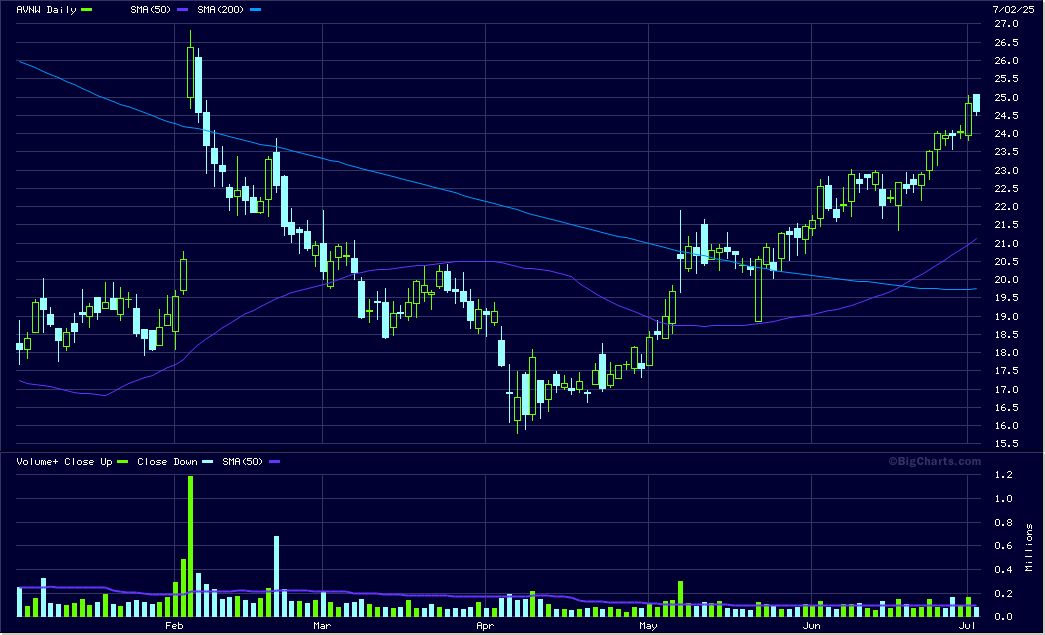
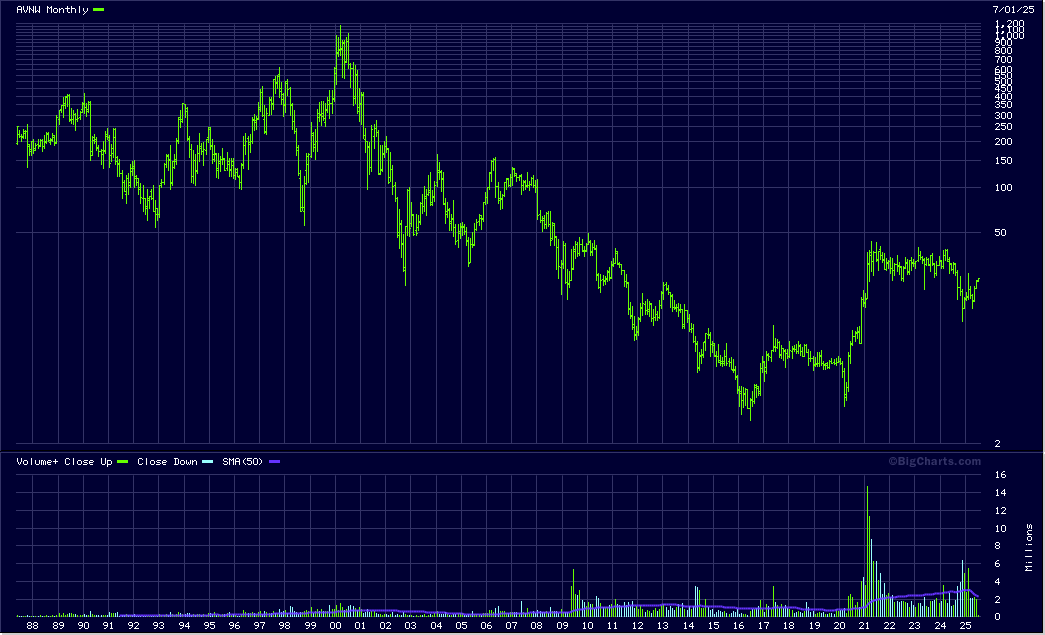
Today the captain told me to do things I like more: for my momentum portfolio I sold Marcus which was a loser and I bought an obscure and very small tech, that in theory is in a place that should have worked out fine for many years. Seems it starts to work out now, but who knows.
And again I had to re-invest dividends in the dividend strategy. As you all know I don’t like cash. Bought JNJ at close for $155.27.
I thought I need a new car, so I would get a little debt and not need to reinvest dividends every few days. But I drive my current car now only for 21 years and I really like that car. I will continue driving it. My mechanic says it will make a million kilometers and it has only 220’000 now…
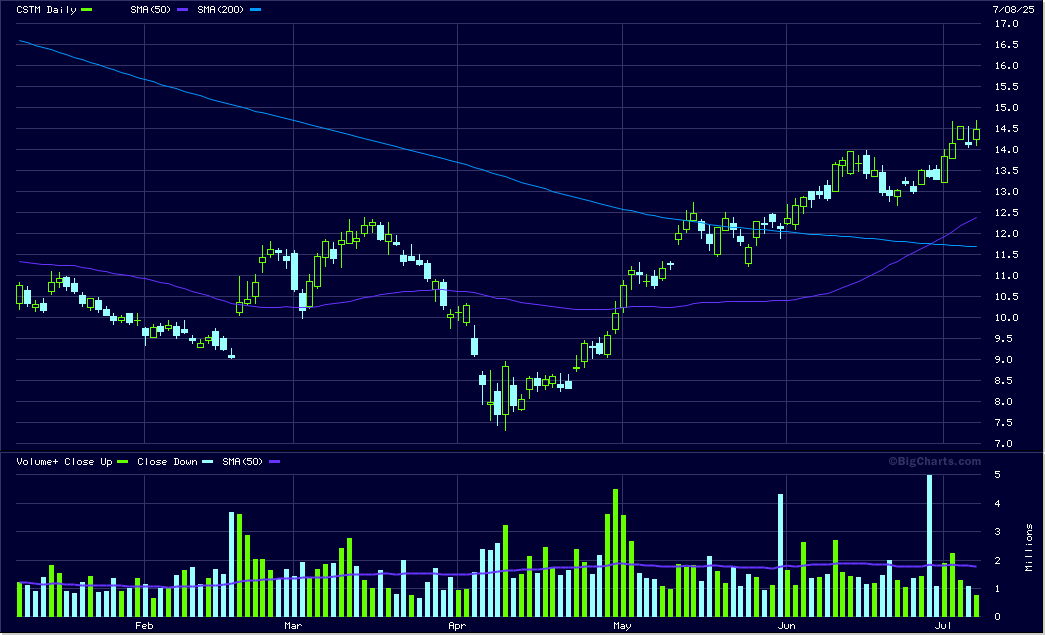
Today I had to buy for my momentum strategy Constellium (CSTM). The aluminium giant to which ex Alusuisse belongs almost doubled in price the last months, nice momentum.
e-Health (ehth) was pushed out… finally. I hate Kreisschreiben 36 sometimes, having to hold such a loser for 6 months is hard. Lost like 57% on it.
I did read a few good books about investments last months. I did read hundreds of books about this theme during the last 45 years.
I was wondering if there are some good books about mechanical investment strategies. I searched the Internet and found some, but they are far from describing how to construct a real world mechanical investment strategy as I did here.
In my opinion you need mechanical money- and position management and mechanical or half mechanical stock picking. No book I found describes the complete story. Probably it is because it works; whatever you may gain from writing a book about it is peanuts compared with what you gain using it.
Hedge funds do it, index do it, ETF do it. I do it. Why there are no books about it? Because it works.
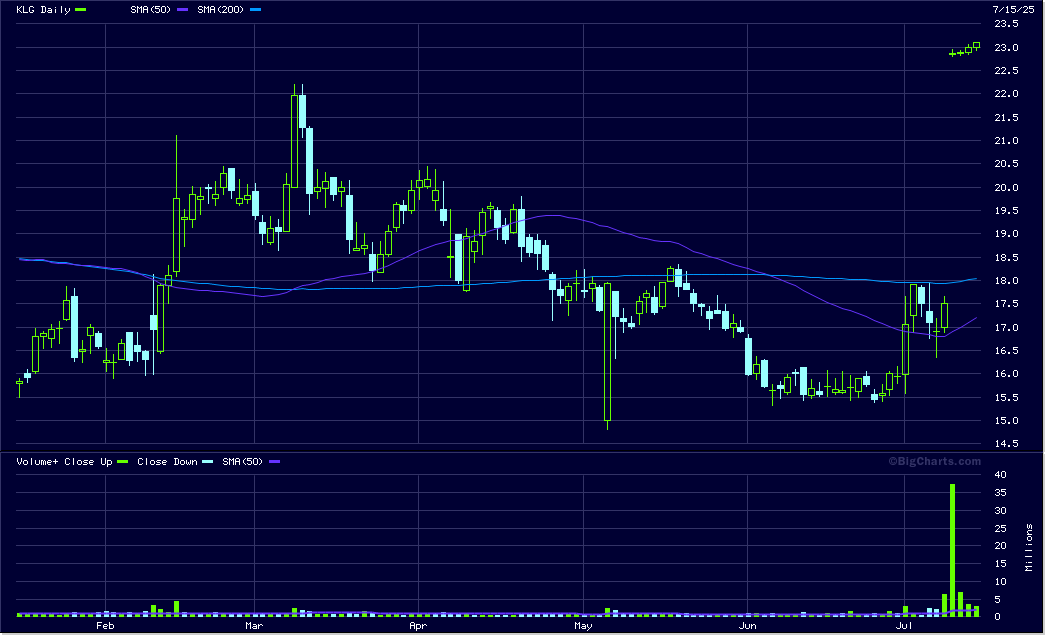
Today I love the taxman! Because of Kreisschreiben 36 I kept holding KLG which was on sell since a few months. Seems it will be bought by Ferrero, price appreciated 50% tonight.
Thanks Kaspar Villiger, you were the best (after the Appenzeller Hansruedi Merz with the Bündnerfleisch, of course) !
I defined a vision: Accumulate savings and achieve long-term returns above saving account interest rates or government bonds.
Defined money/position management: I have money each month from salary that gets invested; position is world ETF (market cap based). Gets sold once I do not receive salary anymore or decide that in the foreseeable future I will want to spend some of the money
I let the ETF managers do the stock picking of what to include or what not (I know you criticized how they do this a few times on this forum; but I believe it is still better than me spending time trying to be more clever than them.
Now would you still call my strategy “mechanical”? Or if not, due to imperfect rule following by the fund managers, would you call it “mechanical” if they did 100% follow transparent rule sets? Or is a mechanical investor only someone who does come up with the rules themselves?
You avoid behavioral errors from your site. So yes, I would call it mechanical.
I don’t know about the ETF you are using, but I suppose it uses mechanical stock picking based on some diversification rules and market cap? But that you should probably investigate before you start investing in it.
As I said before, I am absolutely not against ETF investing. For many people it is the best they can do. You avoid expensive errors all of us commit, even I did.
And it seems you have a mechanical money and position management.
Just got my account from AHV with all the nice numbers. Couldn’t help but do some statistics: per year I made 185% from my mechanical investment strategies of what I made working. Just simple average, total money made divided by years. OK, not simple because on the stocks income the tax is already deducted while the AHV account is gross, social security and tax would have to be deducted. And of course it was a lot of years working and the investments I only count since 2014, after investing my 2nd and 3rd pillar money myself. It is not inflation adjusted. Just playing around.
Nice, stopping to work gave me a theoretical raise of 85% of my salary.
Depends on the pension fund. I hate that I have/had no control over it. I did add tons of risk when I could because my individual situation allows me to.
And we did only have 3 losing years since I started. Pension funds per definition have none. That insurance does not come for free.
Wouldn’t it be nice everybody could decide for himself? I did, but I had to stop working and leave Switzerland to do so…
Back to topic: my strategies performed nice, but nobody knows the future. I still have heaps of risk, but I sleep like a baby.
How do you know when the risk is right? You make a lot of money and you sleep at night!
KLG did overpass the agreed buying price of $23 from Ferrero yesterday? Is the buyout probably not that sure?
I still hold KLG because the 6-month rule, thinking about selling in August. Any ideas what the price movement is based on? Usually the price stays under the buyout price minus interest and some risk premium.
From what I understand, you have a 6 months holding rule because of the famous Kreisschreiben, not because it’s a part of the actual strategy. I wonder why you stick with it, as you are heavily using leverage and out of safe zone anyway?
Translating to real estate I would have a total mortgage of less than 30% what is extremely low for Switzerland. So yes, I adhere to the rules of Kreisschreiben 36 to have some legal certainty.
Mit dem Lesen und der Teilnahme an diesem Forum bestätigst du, dass du die Forum-Richtlinien gelesen hast und damit einverstanden bist sowie den Haftungsausschluss auf http://www.mustachianpost.com/de/ akzeptierst.