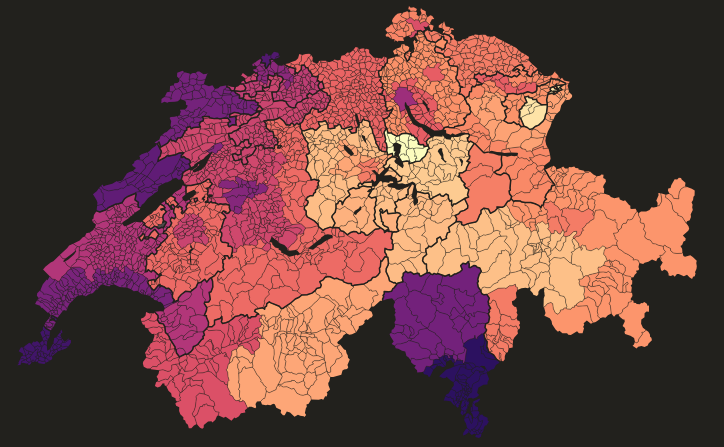
The 2027 premium data for KVG/LaMAL will be published on Priminfo next Tuesday (Sep 29), following the press conference of the Federal Office of Public Health (FOPH).
I will publish the updated map here once I have adapted to this year’s new data model.
Average, usually the cheapest plans increase by quite a bit more than that.
But, yeah, we should expect a ~5% yearly increase for the foreseeable future in my opinion. The population is aging out and there’s no way to escape that.
According to this article in the NZZ, it’s only the last two years of one’s life that is around 12 times as expensive as than the rest of your life (the article quotes Stefan Felder). It is therefore the claim that other factors, such as a new technologies, have a much higher impact on rising costs than a population getting older.
If that’s the case, we should expect the system to change (low/middle class won’t be able to pay at some point if it continues outpacing inflation/wage growth, cantonal subsidies will dampen it but that will also create it’s own tax/budget issues).
At least in Vaud, we’re already seeing it. The cost is being shifted to taxation via the exploding subsidies and the 10% cap.
But health insurance is still “cheap” in many parts of Switzerland, and as we’ve seen with GE being denied their unique cantonal health insurance by the confederation, any meaningful changes will be required to be done at the federal level.
It will take a while before such a major change happen, so meanwhile I would expect premiums to keep on growing + taxes to increase to fund the subsidies.
I wouldn’t be surprised if the Romand cantons + TI/BS/BE soon follow VD in capping premiums to 10% of revenues.
Expensive is relative. The best indicator would be the use of health insurance premium reductions. It would figure that a decline in health insurance affordability would result in an increase in the portion of the population that receives premium reductions. However, that proportion of the population has remained more or less stable since the introduction of mandatory health insurance in 96.
So statistically, the affordability of mandatory health insurance has remained stable, meaning income and population increases (possibly more affluent immigrants) have apparently evened out health insurance price hikes.
Don’t forget to change to the cheapest basic insurance (which supports your preferred doctor) because if everyone stays with their insurance forever, the competition is not fueled.
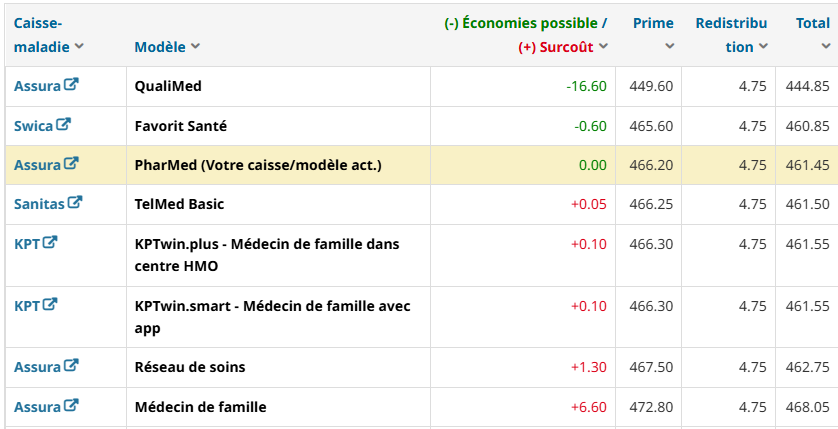
I’m in Geneva as well so in the same boat, but based on everything I’ve heard about Assura I’d rather pay up the extra 15-20 CHF per month to avoid the hassle..
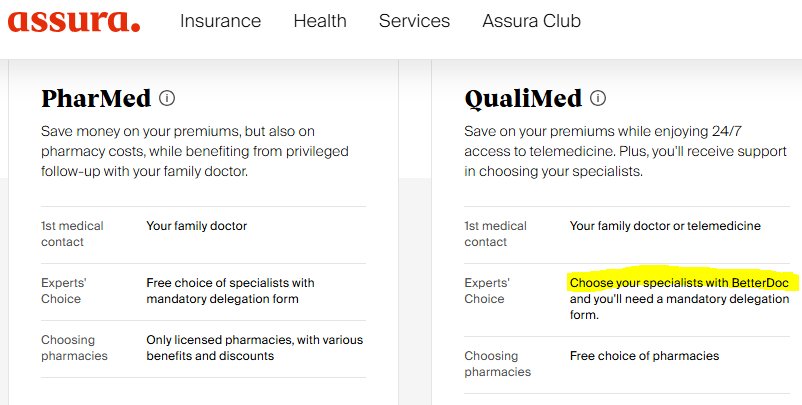
I have been refunded so far with the ParMed model.
Do you mean switching to Swica - Favorit Santé or Sanitas - TelMed Basic ?
I have never tried these subscripters.
Anyone has experience how it works if you already have a referral, check-up appointments or anything else and then change insurer and model? Does it need to be re-confirmed or might get re-directed somewhere else?
If 1 GP visit / telemedicine phone call costs 70-100 CHF, then 2-3 calls a year is enough to balance out 15-20 more per month (for telemedicine model where calls are not charged e.g. SWICA and some others ) - simply in terms of costs.
Additionally you can get a lot of referrals to specialists on phone itself. Saves a lot of time visiting GPs.
If you want these calls with actual doctors to be free, you can choose Sanitas TelMed Plus, which costs more of course.
Or the Maverick™ way: if you never exceed the 2500 anyway, just take the cheapest insurance there is and always pay all doctor’s bills directly yourself. That way, they don’t notice you didn’t call first. Because if they do, they might give you a warning and if they notice it a second time, move you to the standard model for your remaining months. Just switch insurance then.
Whenever I had a teleconsultation, it seemed more like a “meat proxy” going through a predetermined checklist, before telling me “yes you can book this specialist for your case” .
But my sentiment might be completely wrong.
If indeed actual doctors, I revoke my rant.
Saving time and space for both of us should cause less costs overall (and is thus the cheapest model in most cases).
From what I read - it is only billed (as a regular doc visit) if it was conclusive,
i.e. not being further referred to a specialist.
Sounds fair.
Correct, you are not immediately connected to a doctor. First contact is with people who can decide if you need to talk to a doctor (and yes, from personal experience, there are actual doctors working there, at least at Medgate), if you need to see one, or if you can book a specialist. Which makes sense, no? And in the case of Sanitas, you’re only billed if there are no further steps. Calling to request to book a specialist? Free. Calling to ask to visit your doctor? Free. Calling and talking to a doctor, who decides you need to visit a doctor in person or a specialist? Free.
Also don’t forget that for a lot of things, a visit to a pharmacy can be the cheapest and fastest option. The people there usually know the difference between “here take this over-the-counter pill for a week and call a doctor if it doesn’t improve” and “call a doctor now”.
I switched from Sanitas to Sympany telmed years ago, and never realized that I was no longer getting charged for telmed consultations. I thought about switching back for a second, but this difference makes staying with Sympany a no-brainer.
Mit dem Lesen und der Teilnahme an diesem Forum bestätigst du, dass du die Forum-Richtlinien gelesen hast und damit einverstanden bist sowie den Haftungsausschluss auf http://www.mustachianpost.com/de/ akzeptierst.