I found this article interesting and I expect some of you might too.
Tl;dr:
-
personal note: wealth in this context is wealth linked to financial assets. Your cans of beans are safe, other real assets might too (the author admits a house without a mortgage can keep providing its housing value even in a financial clash). It’s clickbaity and I hate it.
-
if the value of financial assets crashes the wealth measured by a stockpile of their value crashes too (duh).
-
there are unproductive transactions that are used in GDP numbers. Those are inflated with regards to the actual prosperity that is derived from it.
-
it draws some parallels with energy and is weirdly attached to oil, using the oil crisis of the 70s as a reference for some reason.
-
otherwise, it’s just your usual run off the mill “we’re in a bubble, moral hazard from central banks interventions abounds, the system is going to collapse” rant without actionable solutions.
This paragraph doesn’t make sense:
Renewables, and for that matter nuclear power as well, cannot materially slow, let alone reverse, the relentless rise in ECoEs caused by the depletion of oil, natural gas and coal. Neither can technology halt this trend, since the potential of technology, far from being infinite, is bounded by the limits imposed by the laws of physics.
If the problem is replacing the energy from oil, natural gas and coal, then technology definitely can reach there.
We’re limited by knowledge, physical space, availabality of the physical materials needed to build the means of energy production, storage and transportation and available sources of energy. The sun itself generates a tremendous amount of energy of which we convert but a tiny fraction. There are other sources of energy around.The author severly lacks a sense of imagination, basic knowledge or integrity.
This one doesn’t either:
This is why not even the poorest person can view the impending collapse of the financial system with equanimity.
Equanimity is derived from wisdom. That the author is incapable of it doesn’t mean others, be them poor or rich, can’t manage their affects to not bump at the prospect of total collapse or total prosperity. The author lacks perspective, knowledge, wisdom and humitlity.
My take from having read other similarly written articles from other authors on different topics is that the author has had a small insight into the vast consequences fiat money and central banks interventionism have and is now talking authoritatively out of their ass because they lack real knowledge on the topic and are tied by their own affinities and bias (oil).
4 Likes
FWIW the blog is dedicated to that theory 
1 Like
Thanks! I lack awareness of my surroundings… in the context of a blog dedicated to Surplus Energy Economics (of which I will admit I know nothing) diving into the financial world, this all make sense.
Also, the paragraph I’ve cited on renewables and nuclear not being able to slow the Energy Cost of Energy (ECoE), that is, the energy needed to produce and transport energy (I guess, I’m not going to dive in the topic) can make sense if oil, natural gas and coal have the lowest energy cost of energy of them all and the physical boundaries the author talks of are things like the speed of light so, mea culpa.
My point on that topic being: it doesn’t matter. What matters is the total energy available for consumption (and the amount of it we need) and technology can bring us there as there are a lot of untapped sources of energy still available around. Also, the rise in ECoEs due to the depletion of oil, natural gas and coal that the author writes about is bound to cap somewhere at a point below 100% where all energy produced from oil, natural gas and coal would have been depleted so the inputs from those sources of energy can be replaced.
1 Like
Yeah also it’s easy to forget how fast technology changes, while the EROI for fossil fuel keeps decreasing the EROI for photovoltaic keeps increasing (and is now above fossil fuel).
Plus energy invested for something like PV might not matter as much since you can get a positive feedback loop (solar isn’t bounded like fossil fuel) and it would be fine to dedicate a large fraction of the (renewable, non-finite) energy to produce more (renewable, non-finite) energy. For our economies, cost matters a lot more.
Anyway didn’t find this super interesting (and yes it seems like EROI type analysis are often done by people close to oil, tho the author didn’t seem like it was pushing specifically for oil, if anything it’s as you say it’s a bit doomerism with no solutions)
2 Likes
I wonder if the author ever heard of synthetic fuel produced by using renewable energy. Or it just doesn’t fit into their picture of the world?
To be fair it’s still kinda a pipe dream from what I understand.
My uneducated guess is that oil and natural gas have a lot of energy that has already been used to create them from the original biological matter that isn’t accounted in their Energy Cost of Energy as we didn’t have to provide it ourselves (our cost comes from extracting and transporting them). Synthetic fuels would bear that cost.
That being said, I’m also willing to guess the energy costs of extracting and transporting oil and natural gas are not inconsequential so that more locally created sources of energy should be able to compete given technological improvements (not that competing on that specific metric is relevant at all - see my previous rant).
2 Likes
+coal. I remember this was taught to us in high school 30 years ago by a highly charismatic teacher of chemistry, almost word for word as you put it so probably not that uneducated! The other massive advantage of fossil fuels is that they are readily transportable, stable/inert and safe.
3 Likes
I admit, I haven’t seen any numbers, but as a gut feel, I find that hard to believe.
I fancy myself as a jack of most trades and like to show humility when I risk being on the opposite side of an expert (which the author of the linked blog post might be in their own field - I haven’t taken the time to do an assessment on that) 
Yeah it’s surprising, but oil keeps being harder to extract and renewable keeps being more efficient.
https://www.reddit.com/r/energy/comments/1d7c9nb/wind_power_and_solar_photovoltaics_found_to_have/
1 Like
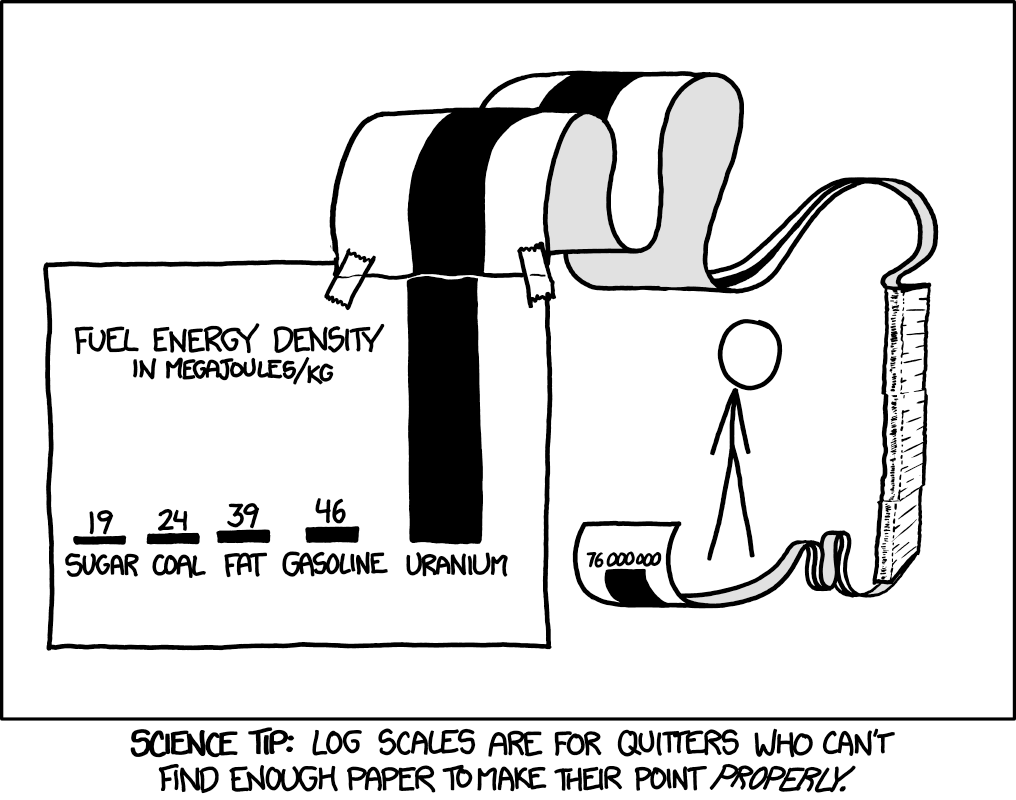
Yes, it is at least something objective that can hardly become a subject of an ideological debate. A mixture of liquid hydrocarbons has very high energy density, like, how much energy you can produce from it per volume, and even per mass it is very good. However, this mixture can be of natural origin or produced by humans.
If I heat up my pipe a bit more, I can imagine in 30 years Gulf states exporting synthetic fuel produced with solar energy  .
.
2 Likes


According to certain LLM, a nuclear microreactor can fit into one standard shipping container. So it looks like our Greek friend won’t be able to ride a nuclear powered motorcycle any time soon.
3 Likes
According to a better certain LLM, this is what it looks like when he rides it.

(the original gas tank has been converted into a Feta storage unit also cooled by the microreactor)
4 Likes
I didn’t say anything about future share of energy… did I? We were discussing the EROI.
(Also no idea what future share is, tho we’re pretty cooked if it doesn’t come down)
While I usually don’t like macro arguments, I would say the two are heavily interlinked.
But sure, you didn’t say anything about future share of energy used by the world.
Anyway https://iea.blob.core.windows.net/assets/1438d3a5-65ca-4a8a-9a41-48b14f2ca7ea/WorldEnergyOutlook2025.pdf is a super interesting read so thanks for linking to that (indirectly).
It’s actually not (all) gloomy, e.g. renewable is really eating electricity generation (as expected given the costs trend). Even in the current policy scenario we’re reaching 50% of electricity from renewable in 2035 already.
Also super helpful to understand what the key drivers are. For example boosting electrification in emerging countries would have a massive impact (not just transport but also things like cooking, which also would have health benefits). Most of the increase in emissions is outside developped markets. And personally I think the economics would make sense (pv+battery is likely easy to deploy and will keep being cheaper).
2 Likes
For me, the real optimism is the potential for nuclear to make a comeback after the Ukraine war put self-sufficiency back on the table.
These percentages are one thing, I suspect that energy demand growth means that in reality, the absolute share of fossil fuel usage will not fall much, if at all.
2 Likes