Example: Vanguard owns 9,47% and Blackrock 7,76% of Apple, total 17,23% (source). Mainly because of the ETFs offered by these companies. And those are just two ETF providers. And now a lot of money is flowing into Tesla because Tesla has been included in the S&P 500.
You could even do a pump and dump. So you pump so much money into a company until it is included in a major index, which means that all ETF providers have to buy, and then you sell. But of course, due to the sheer size, this is only theoretical (or not, hello MSTR?).
I wonder whether “the market” would be represented more fairly by the market minus index ETFs.
I have choosen avantis AVGV fund of fund for my value tilt portfolionto to avoid this kind of crazyness. It’s not index based and Apple is about a 1% of holding with big tilt toward SCV and MCV
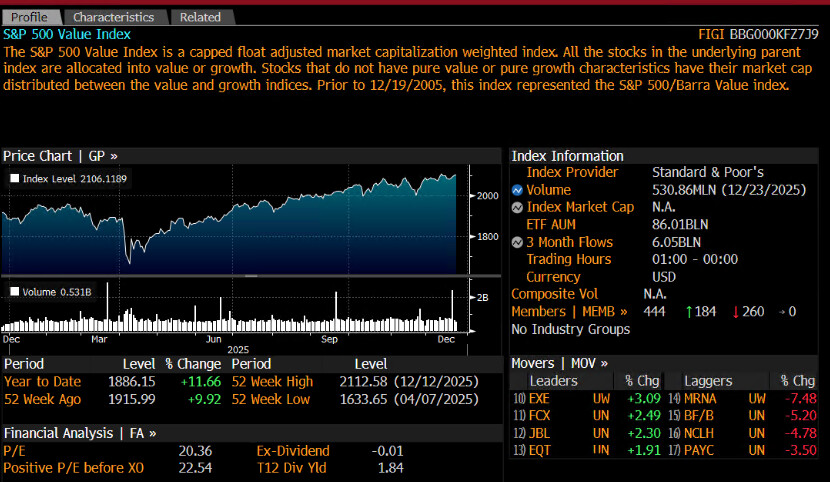
I read it as $TSLA being now a value stock as far as Standard & Poor is concerned. $BRK.B is not one anymore (I guess it’s either clasified as growth or microcap?).
AFAIK the S&P 500 Value Index is its own index with the S&P 500 as its universe and … wait for it … it is mechanically calculated. This is what Bloomberg says about it.
The S&P 500® Value measures constituents from the S&P 500 that are classified as value stocks based on three factors: the ratios of book value, earnings and sales to price.
The page also contains a link to their methodology which contains a PDF describing their formula for capped value/growth indices.
I think if you look at the methodology it can be somewhat surprising: growth is a average of price, sales and earnings momentum, not the inverse of value. And due to the styles not being the inverse of each other, a stock can end up in the value index if it is really bad at growth (momentum).
Still hard to imagine that Tesla is doing even worse on momentum than at value though.
The way I’m reading this is that TSLA has been demoted to be a value company instead of a growth company …
But yes, indeed, the way these index providers define value is not how I define value. In fact, I don’t really distinguish between value and growth. I best like undervalued growth companies but I compromise a little on this ideal as I need enough cash flow to live on.
I roughly see the investment world through the Dividend Growth Triangle:
current yield (goal: high enough to meet my current income needs)
growth rate of the dividends (goal: fast enough to ensure my purchasing power over time, at least beating inflation)
valuation (goal: low enough to provide a “Margin of Safety” and potential for capital gain)
Usually you can meet one or two of these, but not all three.
I believe in the professional investment world “value” is often just item 3 (valuation), which doesn’t cut it for me. How TSLA fits with the label “value” in S&P mechanical criteria seems odd to me since certainly the valuation is very rich.
Anyhow, I thought this was a fun little reconstitution that makes you go … wait, what?!?
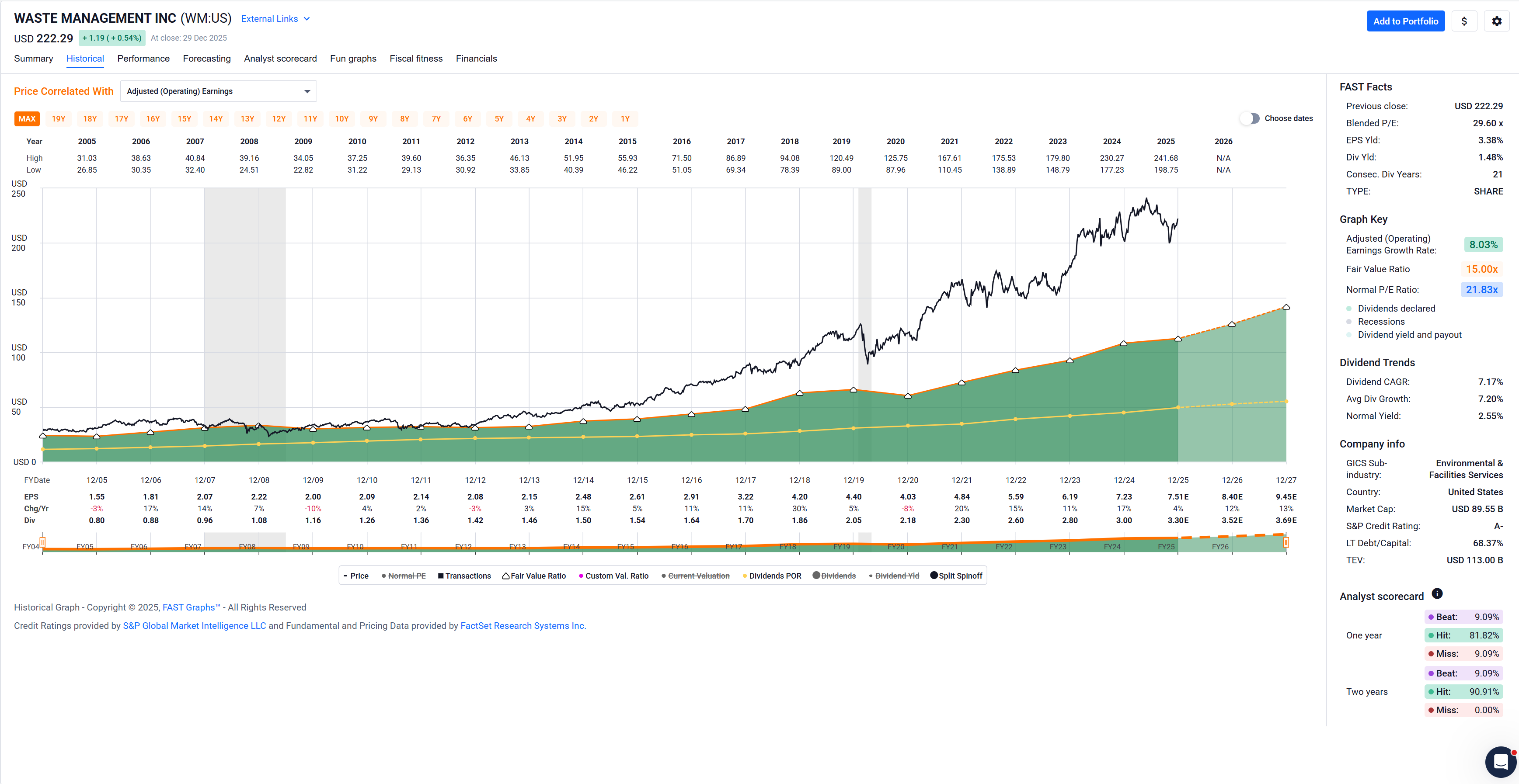
(and revenue kept stable, so no smaller slice of bigger pie story)
Now if only the stock price also matched a value company it would make more sense … . Though with such a drop you also start wondering about falling knifes …
Cambridge tells me that ‘valuable’ means ‘worth a lot of money’ so, expensive stocks. I guess we could say garbage means very cheap stocks. The separation is easy to do. I would not invest in such ETFs.
Edit: best value would probably be if we launched a bunch of different ETFs under a bunch of different providers with a bunch of different managers. Most would probably fail but no money of ours would be lost. If one skyrockets, we could then divy up the fees and all get rich.
Those who dealt with the failing funds can recycle their career by working at SoFi Bank or for a German pension fund. If they’re connected enough, they can become president of SIX (André Helfenstein soll SIX-Präsident werden). I’m sure there’d also be a career path open at the SNB for some higher up former Credit Suisse execs.
It’s less about Tesla specifically, but more about how factor ETFs vary wildly in their definition of factors …
… and hence they might not use the “wrong” forumulas to define value, but their understanding of value (or any other factor) seems to be vastly different between fund/ETF managers.
OK. That hooked me at the first para: “I am reminded of my son’s road trip with friends to New Hampshire. They found themselves sitting at a dock with their gas gauge near empty at 11:45 PM in mid-December with the GPS instructing them to wait for the ferry…after the sun rises…in the spring.”
Mit dem Lesen und der Teilnahme an diesem Forum bestätigst du, dass du die Forum-Richtlinien gelesen hast und damit einverstanden bist sowie den Haftungsausschluss auf http://www.mustachianpost.com/de/ akzeptierst.