That’s the thing, there are analysts (eg these) looking at this stuff all the time, and they know their stuff, so wouldn’t it be…priced in?
It’s funny, pharma being the one business I have any serious understanding of, yet it’s so unpredictable that I’d struggle to invest in even if I was allowed to. Then again you have J&J, AbbVie and others who steadfastly somehow manage to raise dividends seemingly forever and in whatever climate, so they have seem to do that right.
I mean, going forward they might even look attractive, but look at the history of them poo-pooing all over the place, especially regarding dividends.
Perhaps from a pure price specalation POV it might be worth a shot? I don’t participate in playing that game, though, as I am just a simple (dividend) mind.
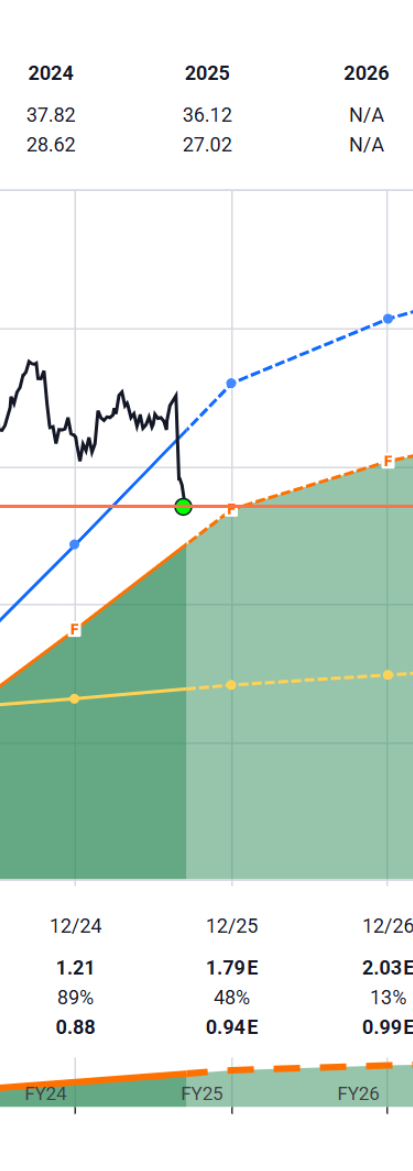
I believe the first obvious difference is that FASTgraphs aggregates to yearly data points (versus the quarterly ones (that I assume) you’re looking at? For the yearly FASTgraph/FactSet numbers please see the graphs in my previous posts where FCF and OCF is depicted (per share), but only in fiscal yearly terms (e.g. expected $1.79 FCF for 2025 and expected $0.94 in dividends for the same fiscal year.
While FactSet provides much more granular data, I unfortunately do not have direct access to it. The subscription fee is pretty rich – high 5 to low 6 digits CHF per desk per year IIRC.
Now the embarrassing part:
I do have access to a Bloomberg terminal – kind of the gold standard for financial data, both current as well as historic – but I can’t navigate it to produce tables of FCF or OCF for KDP in order to argue about the actual numbers for KDP.
I’m just not well versed enough for entering the keyboard shortcuts that would produce those tables.[OT] If anyone knows the key control sequence for producing such tables, please post.
Lastly, independent of Bloomberg or FASTgraphs: I’m not very familiar with this, but I am guessing that companies try to get their numbers appealing on a (fiscal) yearly basis, not just on a quarterly this-and-that argument (which unfortunately seems to be the rule nowadays).
Thus, judging KDP on a quarterly basis may be premature.
But what do I know?
OT (Off Topic) The keyboard shortcuts for the Bloomberg terminal remind me of the keyboard shortcuts for using Unix text editors VI or Emacs – I’m fluent in both VI (close to native speaker) and Emacs (first 2nd language learned)
And yes, the first two quarters had the same problem last year while the year end data looks better. However, it got slightly worse this year. I do not use the last 4 quarters but once a quarterly and yearly report are not to my satisfaction… out with it.
I rely on Edgar for data. Maybe a little trick, you can add a one letter search engine with the link above to google chrome. And of course, Edgar works only for U.S. traded stocks.
Quarterly is a little too noisy for my taste. Some new investment in this quarter, some special tax situation in that quarter, FX headwinds in the 1H of 2025 … probably easy to account for if you read the 10-Q, but I’ll just go with the yearly data aggregated in FASTgraphs. Call me lazy …
Keurig has raised their dividend since they initiated one in 2009 and their (financial year) FCF has covered the dividend with two exceptions: 2012 and 2023. We’ve disagreed on this before – I like it when the company continues to pay their dividend even if cash flow in some years might not cover it as long as the fundamentals of the business are still ok long term. With Keurig, I feel like that’s still the case as they continue to grow their business and their earnings at a nice cliff.
I’m biased as I am a shareholder and MRK is an almost full position in my portfolio (and I’m even short a 75P expiring in December …) so take my view with a grain of salt.
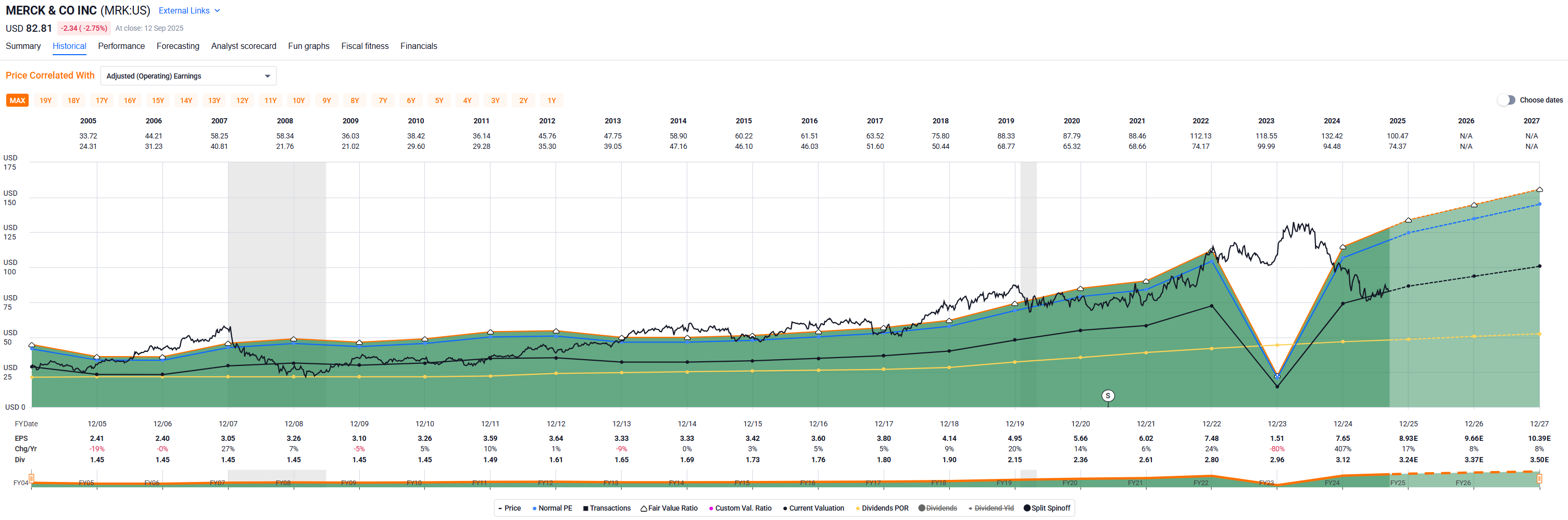
Merck seems like a fine business to me and I’d probably add at these levels if my position wasn’t already almost full. If you ignore the price line for a minute, then the earnings line looks fine except for that hiccup in 2023. According to Gemini, the earnings drop was not the result of a commercial slowdown or operational weakness[1] which is also how I remember it. The company even guided for it which is why the price held up until just about around the time that … Trump won the election!
Pretty much the entire healthcare sector has been under pressure since then as Trump ran on the promise to bring healthcare costs down.
Maybe he will. In the meantime, earnings expectations for most of these healthcare companies still look fine and Trump will be gone again in a couple of years.
1 Gemini: An Expert Analysis of Merck's 2023 Earnings Performance: A Strategic Reinvestment Behind the Drop
Executive Summary: The Paradox of Growth and Decline
An in-depth analysis of Merck’s (MRK) 2023 financial performance reveals a significant dichotomy between its top-line revenue growth and a dramatic decline in reported earnings. The precipitous drop in both Generally Accepted Accounting Principles (GAAP) and non-GAAP earnings was not the result of a commercial slowdown or operational weakness. Instead, it was a direct consequence of substantial, non-recurring, and one-time charges related to strategic business development transactions. These charges were the primary financial mechanism by which the company executed a proactive, long-term strategy to diversify its product pipeline and mitigate the future risk posed by the impending patent expiration of its blockbuster oncology drug, KEYTRUDA.
Merck’s underlying commercial performance remained robust, driven by the sustained strength of its oncology and vaccines franchises. The company’s calculated decision to heavily invest in its future, rather than to maximize short-term profitability, positions it for a return to strong earnings growth in the years to come, as evidenced by its positive forward guidance. Therefore, 2023 should be viewed not as a year of decline, but as a pivotal period of strategic transition and capital allocation designed to secure long-term value.
Financial Performance: A Dichotomy of Sales and Earnings
Merck’s 2023 fiscal year presented a central paradox in its financial results: a clear narrative of sustained revenue growth at the top line contrasted with a dramatic decline in profitability at the bottom line. This divergence underscores the importance of examining the underlying factors beyond the headline figures. The company reported full-year 2023 worldwide sales of $60.1 billion, representing a 1% increase from the $59.3 billion reported in 2022. On a constant currency basis, this growth was even stronger at 4%. This sales momentum was consistent throughout the year, with fourth-quarter worldwide sales increasing by 6% to $14.6 billion compared to the same period in the prior year. The company’s leadership characterized 2023 as “another very strong year,” reflecting an internal view of commercial success despite the challenges.
However, in stark contrast to this top-line strength, the company’s reported earnings plummeted. Full-year GAAP Earnings Per Share (EPS) was a mere $0.14, a massive 98% drop from the $5.71 reported in 2022. Non-GAAP EPS, which typically provides a more normalized view of operational performance by excluding certain one-time items, also fell sharply to $1.51, representing an 80% decline from the $7.48 recorded in 2022. This significant difference between sales growth and earnings decline is a critical illustration of why analysts look beyond headline numbers. While the GAAP figure is technically correct, it does not represent the company’s operational health in a way that is easily comparable year-over-year. The precipitous drop was primarily influenced by non-recurring, one-time charges that distorted the underlying business performance, a topic that is explored in detail in the following section. The table below visually represents this central paradox, serving as a foundational data set for the analysis.
Metric
Year Ended Dec. 31, 2023
Year Ended Dec. 31, 2022
Percentage Change
Total Sales
$60,115 million
$59,283 million
+1%
GAAP Net Income
$365 million
$14,519 million
-97%
Non-GAAP Net Income
$3,837 million
$19,005 million
-80%
GAAP EPS
$0.14
$5.71
-98%
Non-GAAP EPS
$1.51
$7.48
-80%
The Root Cause: Strategic Investments and Portfolio Reinvention
The dramatic decline in Merck’s 2023 earnings can be attributed to specific financial charges that were a direct outcome of a forward-looking business strategy. The company’s financial statements explicitly state that both GAAP and non-GAAP EPS for the full year 2023 included charges of $6.21 per share related to “certain business development transactions”. This single figure accounts for the vast majority of the earnings drop and highlights a calculated move by the company to reinvest capital into its future growth engines.
The charges were primarily driven by two landmark transactions. First, the acquisition of Prometheus Biosciences in April 2023, valued at $10.8 billion, was a significant move to diversify Merck’s portfolio beyond oncology and into the promising field of immune-mediated diseases. This acquisition provided Merck with a novel, late-stage candidate for conditions like ulcerative colitis and Crohn’s disease, which has multibillion-dollar peak sales potential. This deal alone represents a substantial allocation of capital intended to secure new long-term revenue streams.
Second, in October 2023, Merck entered into a landmark global development and commercialization agreement with Daiichi Sankyo. This collaboration focused on three of Daiichi Sankyo’s cancer-targeting antibody-drug conjugate (ADC) candidates. The financial terms of this deal were staggering, including a massive upfront payment of $4.0 billion. This payment resulted in a significant pre-tax charge to R&D expenses, which swelled to $30.5 billion in 2023 from $13.5 billion in 2022. This collaboration bolsters Merck’s oncology pipeline with next-generation technology, specifically ADC therapies, which are seen as a critical component for future combination therapies and a way to maintain leadership in cancer treatment. The table below provides a breakdown of the strategic charges that impacted 2023’s financial performance.
Strategic Investment
Financial Impact on 2023
Total Business Development Charges
$6.21 per share
Daiichi Sankyo Collaboration
A significant portion of the total charge, including a $4.0 billion upfront payment and a $1.69 per share charge in Q4
Prometheus Biosciences Acquisition
A significant portion of the total charge, stemming from the $10.8 billion acquisition
Other Transactions
Remaining charges from other acquisitions and agreements, such as Imago BioSciences and Caraway Therapeutics
The timing of these monumental investments is not coincidental. The impending patent expiration of the company’s leading drug, KEYTRUDA, in 2028 is a known and significant future risk. A pharmaceutical company’s viability is fundamentally tied to its ability to continuously innovate and replace the revenue from aging assets. The 2023 earnings drop is a direct financial manifestation of Merck’s proactive strategy to address this patent cliff years in advance. The company is leveraging its current profitability to acquire and develop the drugs that will power its growth for the next decade. This is a crucial distinction that redefines 2023’s performance as a strategic reinvestment rather than a financial setback.
Commercial Performance: A Nuanced Look at the Product Portfolio
To fully comprehend Merck’s 2023 performance, one must look beyond the earnings statement and examine the health of its underlying product portfolio. The analysis reveals a business that is fundamentally healthy, with its core growth drivers performing exceptionally well despite the anticipated decline of older assets.
Merck’s oncology and vaccines franchises demonstrated unrivaled strength. The oncology powerhouse, KEYTRUDA, continued its phenomenal growth trajectory, with 2023 sales reaching $25.0 billion, a 19% increase from 2022. The growth of this asset was fueled by increased global uptake in earlier-stage cancer indications, such as triple-negative breast cancer and renal cell carcinoma, and sustained demand in metastatic indications. This performance cements KEYTRUDA’s role as a cornerstone of the company’s current success.
Similarly, the GARDASIL/GARDASIL 9 vaccine franchise delivered exceptional results, with sales growing 29% to $8.9 billion. This growth was driven by strong global demand, particularly in China, and public-sector buying patterns in the U.S.. While overall sales were strong, there were significant headwinds, including sluggish demand in China that led to a temporary halt of shipments due to excess inventory. This nuance demonstrates that even within a highly successful franchise, there are localized challenges that require strategic management.
Conversely, the company faced expected headwinds in other areas of its portfolio. Sales of the COVID-19 therapeutic LAGEVRIO plummeted by 75% to $1.4 billion. This decline was anticipated as the global health crisis waned and demand for pandemic-related products decreased. It is important to note that this is not a unique issue for Merck; peer companies like Pfizer and AbbVie also reported revenue drops in 2023, citing waning sales of their own COVID-19 products. This places LAGEVRIO’s decline within a broader industry trend, reinforcing that it was a managed and anticipated event, not a failure of strategy.
Furthermore, the diabetes franchise, JANUVIA/JANUMET, experienced a significant sales drop of 25% to $3.4 billion. This decline was a direct consequence of the loss of market exclusivity in Europe and other international markets, leading to increased generic competition. The table below provides a clear, side-by-side view of the performance of the company’s key growth drivers and its declining products.
Product Franchise
2023 Sales (in millions)
2022 Sales (in millions)
Percentage Change
KEYTRUDA
$25,011
$20,937
+19%
GARDASIL/GARDASIL 9
$8,886
$6,897
+29%
JANUVIA/JANUMET
$3,366
$4,513
-25%
LAGEVRIO
$1,400
$5,700
-75%
This data visually demonstrates that the company’s core growth drivers were exceptionally strong, and the overall sales increase was achieved despite significant declines in other product categories. This substantiates the argument that the earnings drop was not due to a commercial failure, but rather a deliberate, strategic action.
Strategic Context and Forward-Looking Outlook
Merck’s 2023 performance must be understood within the broader context of its long-term strategy and the evolving pharmaceutical landscape. The substantial, multi-billion-dollar investments in mergers, acquisitions, and collaborations are a direct, proactive strategy to diversify the company’s pipeline ahead of KEYTRUDA’s looming patent expiration in 2028. The company is actively building a portfolio to secure a sustainable long-term revenue stream to counter the inevitable decline in KEYTRUDA sales that will follow its loss of exclusivity.
By acquiring novel assets, such as Prometheus Biosciences and Caraway Therapeutics, and forging key partnerships for next-generation therapies, such as the Daiichi Sankyo ADC collaboration, Merck is laying the groundwork for future growth. These strategic moves position the company to maintain its leadership in oncology while also expanding into new therapeutic areas like autoimmune and neurodegenerative diseases.
The company’s positive guidance for 2024 underscores its confidence that the 2023 earnings drop was a one-time, non-recurring event tied to these strategic investments, and not a sign of long-term weakness. Merck anticipates worldwide sales to be between $62.7 billion and $64.2 billion and projects Non-GAAP EPS to be between $8.44 and $8.59. This guidance signals a significant rebound and a return to strong performance, which aligns with the company’s view of a fundamentally healthy business.
Merck’s position as a top-tier pharmaceutical company by 2023 revenue ($60.1 billion) provides a clear benchmark, ranking it among the industry’s leaders. Furthermore, the challenges faced by its older products, like the decline in COVID-related LAGEVRIO sales, are mirrored by similar experiences at Pfizer and AbbVie , indicating a common industry trend rather than an isolated corporate issue. The company’s strategic investment in new technologies, such as AI and next-gen therapies, is also a major trend across the entire pharmaceutical sector, which is increasingly focused on innovation to address rising R&D costs and supply chain disruptions.
Conclusion: A Year of Strategic Transition, Not Decline
The sharp decline in Merck’s reported earnings for 2023, while visually jarring on a financial statement, was a direct consequence of a deliberate and strategic pivot. The company leveraged its robust financial position to execute major acquisitions and collaborations, incurring significant one-time charges that were accounted for in the fiscal year. These investments were a proactive and calculated measure to address future challenges, most notably the impending patent expiration of its blockbuster drug KEYTRUDA, and to secure long-term growth.
The underlying commercial performance, driven by core growth assets like KEYTRUDA and GARDASIL, was exceptionally robust. The earnings drop was a temporary and calculated trade-off, a financial manifestation of the company’s strategy to secure its future. Therefore, 2023 should not be viewed as a year of decline for Merck, but rather as a pivotal year of strategic transition and portfolio reinforcement that has positioned the company for sustained success in the years to come.
The under-valuation deceives a bit - Just off your Merck graph to the right, in 2028, Keytruda patents start expiring. Keytruda is the best selling drug in the world today, a mega-giga-blockbuster-drug with annual revenues of about $30B, over 50% of Merck’s total revenue. Keytruda revenues will probably drop 30-40% annually. Very difficult (to predict whether) such a patent cliff of one drug can be navigaetd without significant drop in EPS. I would say no. New drugs have a revenue ramp-up time, as new indications get added over the years. No way to replace 30B by 2030. The “undervaluation” may be gone very quickly. Still an OK holding for the dividend and maybe a “normal” valuation by 2030.
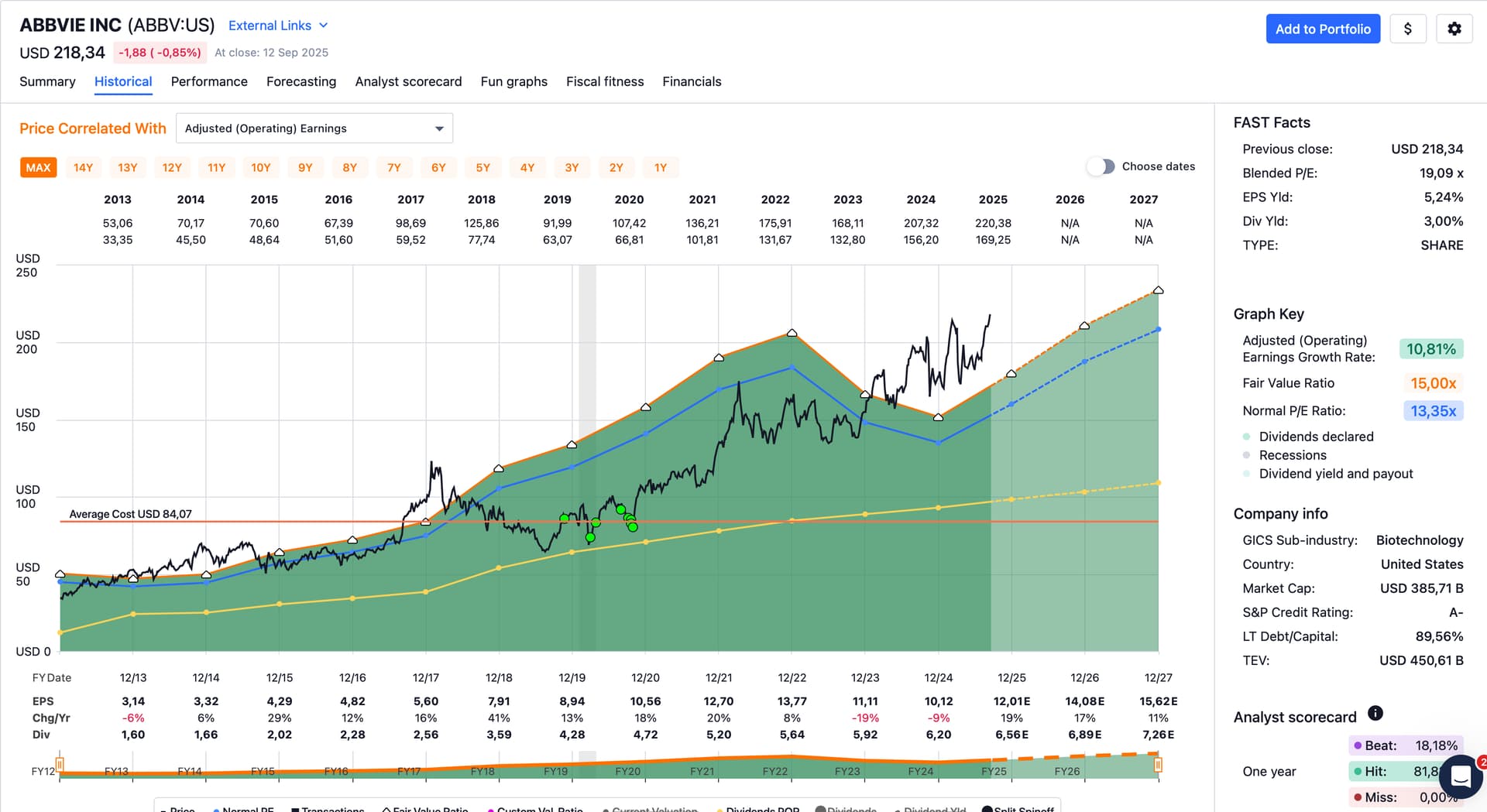
I remember when ABBV was hit hard due to anticipated Humira expiry. They completely overreacted. I remember buying some in the $60s - then I thought, hey, even at $80, this is a bargain and bought more. I sold once it hit $160-$170, but it is now $218 today.
I own Merck and it is actually on “hold” state because of the last quarterly cash flow statement. I bought Merck from 2020 until February this year with an average price of $81.81, almost no gain or loss, but nice dividends.
On first sight the reason for the “hold” state is a FCF dividend payout ratio of over 100% in the last quarter. I hope that gets better soon, until then I just wait and get paid nicely for that.
Might sell some if it continues to be overvalued and goes up a bit more.
ABBV’s Humira patents expired in 2016 in the US and 2018 in the EU. Biosimilars didn’t hit the market until 2023 which is nicely visible in the earnings line.
As you say it’s hard to predict when this will actually hit their earnings. In ABBV’s case it took another five years or so until biosimilars came to market and started to eat into ABBV’s Humira revenue (which is still selling quite fine as some doctors/patients won’t switch brands).
Perhaps a Keytruda generic drug is easier/faster to bring to market. Surely, @Mirager can speak to the complexity of these drugs and let us know of the date (just the month/year, not down to the day) when Keytruda competitors will enter the market after the patents start to expire.
Is MRK the one with management morale issues? I remember researching a pharma company, it could have been MRK but maybe another and there were huge complaints from within the organisation about bad management, loss of staff and general dis-array in the organisation. It was enough of a red flag not to buy.
I hold ABBV too, bought since 2020, last buy in January this year. Nice average gain of 155% plus the tasty dividends.
It is on “hold” too because it is slightly overpriced according to my cash flow parameters. But then overvaluation is almost never a trigger for me to sell, unless the stock is in the lower half of momentum of all my dividend stocks.
I don’t actually know, there are other drugs of the same class, borderline interchangeable, there are also Chinese versions that the FDA hammered, possibly slightly protectionist.
Image generated by ChatGPT in the style of Bram Stoker's Dracula -- directed by the great Francis Ford Coppola -- where there indeed is this scene where Dracula, played by Gary Oldman, has just returned from a night out, and he is a monstrous, bat-like creature. He approaches a vase of roses, a symbol of love and beauty, and his clawed hand gently touches the petals. As his hand glides over them, the vibrant, crimson roses instantly shrivel and die, turning black and brittle.
Exceptional movie, BTW, if you're too young to have seen it when it came out.
A kitten died in the process of creating the image above due to the power consumption of NVDA’s GPUs involved.
Edit: Sacrificed another kitten to the AI gods, but I think it was worth it:
Fun fact: after getting the above image with Drumpf, I asked both ChatGPT and Gemini to generate a version with smaller hands for the Donald. Their answer: “This image generation request did not follow our content policy.”
There are way more companies now into Biosimilars than there where back in 2019. Also the requirements have been (or will be) lowered from a Clinical trial perspective with the biosimilar red tape elimination act. As Keytruda is by far the most important oncology drug (the most lucrative niche of pharma) right now I would be very surprised if there is no biosimilar out the minute Keytruda loses patent. In any case, I’m invested in Merck as well.
Mit dem Lesen und der Teilnahme an diesem Forum bestätigst du, dass du die Forum-Richtlinien gelesen hast und damit einverstanden bist sowie den Haftungsausschluss auf http://www.mustachianpost.com/de/ akzeptierst.