What is your mental model of financial gains?

I recently got input from 2 different parties: “the gains you are talking about are unrealized. It’s just paper profits and you can’t buy anything with it.”

Thinking about it, even the cash I hold is just on paper, as it exists only on a bank statements and has bond-like properties. Yet I feel that a home could be a different thing, as stocks have a clear market price and high liquidity, while homes are less liquid and have a high utility value.

So my mental model builds on the availability of a market price and on an easy way to convert what I own to something else. If both are given, I don’t care about the kind of gains (or losses) I am experiencing. They may be unrealized gains (or losses) but feel very real to me.

2 Likes

One way to look at it is: the value of your portfolio is what you have on the table right now. Financial gains/losses are an integral part of it.

You can take your money out or keep it on the table (i.e. invested), in which case, you are going into a new round of play that may result in gains or losses. Whatever you’ll have on the table and stored outside of it at the time when you need it will be what will be available then.

The value of your assets only matters when you need to trade them for other stuff (or use them as collateral/leverage to get other things). That can be now, that can be tomorrow, that can be in 15 or 30 years, that can be never. The questions, to me, are:

  1. How much will be available when I expect I’ll need it?

  2. What happens to me if things happen at untimely times so that I have to access my assets at a time I hadn’t anticipated and can I deal with it with equanimity or positive emotions and move on with my life?

  3. What happens to me if I don’t play the game, don’t get any returns from the financial markets and have to live only on what I already have and can get out of my human capital and the social safety net we have/are likely to have in the future?

4 Likes

My mental model is:

  • Most of my financial holdings are shares I own of real businesses.
    This requires holding businesses in liquid markets in jurisdictions that value the private ownership of things.
    The daily price is something I look at, but it doesn’t really matter in the long run.
  • My financial capital gains (or losses) become real(ized) when I sell which I mostly try to avoid.[$]
    Occasionally I sell for a gain which is usually invested but sometimes also consumed. Both feel real, but only the latter is real(ized).
  • Of this year’s cash flow paid out I already consumed about half of it. That’s very realized. The cash flow increases implemented or announced by my companies this year average to about 4% or 5%. That feels mostly real (except for the ones announced but not yet paid out).
  • My financial cash flow gains feel real as the cash flows are when a holding of mine increases their payout.

There, I made 4 bullet points (without the help of AI) for essentially saying the same thing over and over: Dividend Growth Investing in established businesses that still grow. :wink:


$   Unless I feel a particular asset is really becoming overvalued or is at risk of lowering their payout to me as a shareholder (or has already cut their dividend).

6 Likes

Sounds like cash. So far we got nothing to worry with CHF and it looks like real value. High inflation or failing banks could make cash look like bad stocks.

I try to be modest, especially in my momentum strategy: for the money management I use the minimum of entry price and actual price, so I only include realized gains and realized or unrealized losses, but not unrealized gains. The money management I use there gets a little less aggressive… but is still kind of heavy.

But for the performance calculations of course I use realized and unrealized gains. My stocks are liquid and I can liquidate them whenever I need or want to.

As I never hold net cash my mental model consists of my net worth, no matter if there are unrealised gains or not.

I think there is some truth to

You can only buy something with your assets if you actually buy something. As that is not now, it is somewhat virtual. You don’t know exactly how much you are going to spend and how much your assets are going to be worth at that time. Having your assets allocated to volatile things makes the prediction even harder.

Think about having your assets in crypto. Of course, you had a stellar return and could now buy a luxury car. But that doesn’t tell us too much about if you still can in three months when you decided on a model. Maybe you could buy a yacht instead then, but maybe it’s only a doner kebab at the train station.

So “realizing” it to cash makes it more real as cash is more stable in relation to the things you likely are going to buy. Thing is, the same virtuality applies to cash on the long-term. You don’t know what your cash is able to buy 30 years later. At least looking at the expected minimum, for diversified stocks it is going to be “more”, which is desirable.

Now to put this complexity in a nice phrase to counter the above, hmm…

In Switzerland, I believe the system is built to allow us to not worry and have an acceptable retirement if we work a full career. There are meaningful cases where people might drop at the margin of society (health issues, divorce and addictions, among others), in which case it becomes very hard to rebounce but those would probably not be helped with stocks and/or bonds vs cash.

I also take into account the mental wellness that comes with financial independence, though, and that can’t be reached without investments in assets with more expected returns than cash or serious entrepreneurship (or inherited capital).

3 Likes

I think there’s value in taking a step back. You need certain things. Food, water, shelter, heat, protection, entertainment, etc.

You can buy these things and have access to them. Some are problematic though: you can’t store a lifetime’s supply of food as it will spoil and also take up too much space. The same with water. So you have to have access to a source that produces them. This could be a forest, land with animals on them etc. Of course, this isn’t practical unless you want to be a farmer.

Then you have to do the next best thing, accumulate other things that can be traded for the things you need. Now again, you can accumulate the stuff you need e.g. money, or businesses that produce in-demand goods and services.

You have to be wary that the things you accumulate do not spoil (money lost through inflation/hyperinflation) or confiscated (Russian stocks, gold in the US), or become obsolete (Kodak) or turn out to be frauds (Madoff) or fads/bubbles (Tulips, Tesla? Bitcoin?). Skills in a in-demand area is one way to secure tradeable offerings. There will probably always be demand for a music teacher, physician, cleaner, plumber. But watch out if AI and robotics start to disrupt even these areas.

I try to naturally hedge where possible, e.g. buy the roof over my head (even this plan has been weakened due to Brexit uncertainties). In my young paranoid prepper days, I even secured some daily items e.g. I found a bulk liquidation deal on razor blades and bought a lifetime supply of these and steadily working my way through them.

So if someone makes a fuss about paper gains, do remind them that even the 100 Fr. notes in their wallet are simply paper claims. And claims on what, in reality? Exchange for gold is long gone, maybe the ability to pay taxes and the vague hope it can be exchanged for something in the future. Gold is a step up, but you can’t eat gold either.

4 Likes

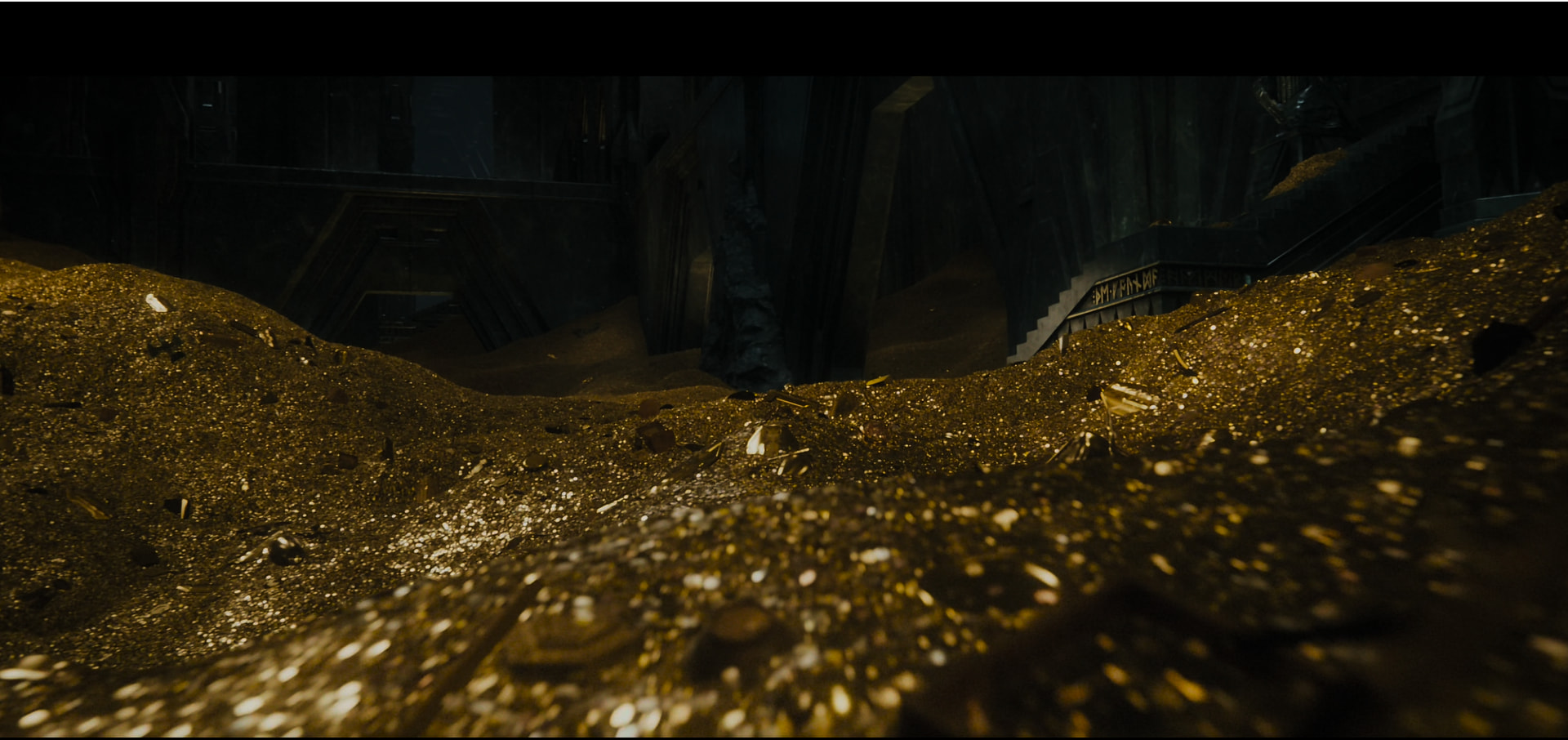
As you wrote this I was watching the scene with Smaug in the first part of the Hobbit series (which is actually enjoyable if you have plenty of privileged time like your retired old dog Goofy) and maybe even Smaug would agree with you on gold only being a step up … current ~last second frame or so of part one:

If anything, some buckets of gold coins got into his nostrils, but he just casually blew them off.

Smaug still seems content, though, and doesn’t seem to be actually eating any gold.


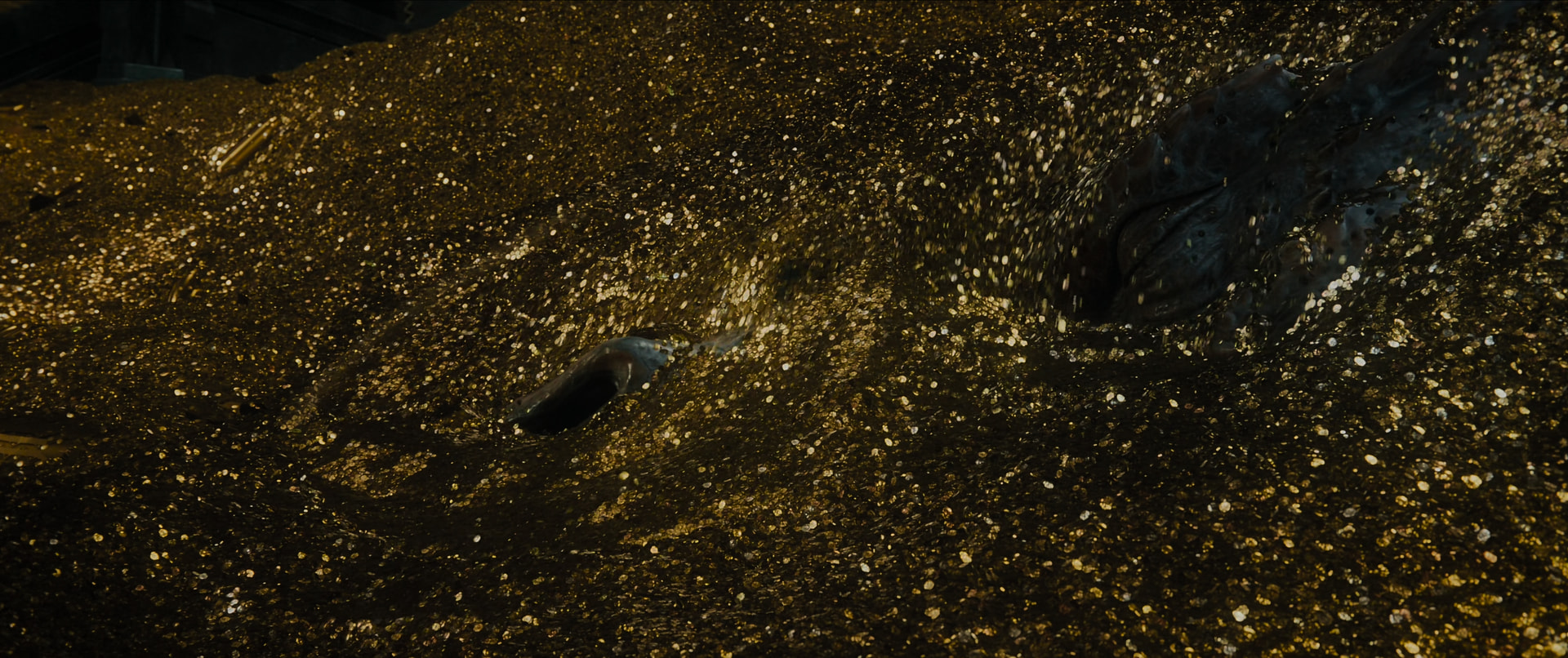
Nitpick: In our (non- Hobbit/LOTR) world we’ve only excavated about 23m3 of gold, while LOTR evidently demonstrates a lot more has been dug up … this is just a live shot of one dwarf location:

Probaby more than a hundred cubic metres!

By conclusion, I just realized – and my mind has been blown – the LOTR documentary isn’t actually about some ancient past, but a feature film of The Future!

Just think about it: lots more gold will have been dug up (as filmed in Smaug’s layer, see above), all the seemingly magic parts like Gandalf whispering and blowing into butterflies turning into eagles will eventually make sense, too – any sufficiently advanced technology is indistinguishable from magic – and … well, sadly, with the physical pile of gold increasing thanks to the Dwarfs, gold price will plunge again. Eventually worthless, and guarded by a dragon.

I’ll see myself out.

1 Like

nitpick of your nitpick: i was shocked that all the world’s gold would fit in my apartment with plenty of space to spare so checked the numbers

apparently there is ~220,000,000 kg of gold that has been excavated already

density of gold is 19,300 kg/m3

that makes 220,000,000 / 19,300 ~= 11,400 m3

which is not far off 23^3. so i think you got confused between 23m3 and “a cube of length 23m on each side”

this is all to say that ACKCHUALLY lord of the rings is indeed in the past!

6 Likes

I apologize. I previously ran the calculations myself but trusted that AI has cought up in the mean time.

My mental model is simple. Taking as an example VOO, I trust some of my money in the hands of 500 CEOs of the largest US companies

I trust that they will use my Money to grow more their businesses and this will be a reward for me as share price increase or dividend

2 Likes

My mental model is to fully blue pill myself around “line goes up in the long term”, “time in the market beats timing the market” and “diversification is the only free lunch”, or summarized in 4 letters: “TINA”.

1 Like

My mental model:

  • I put more weight in gains on very liquid assets, and less weight on gains from illiquid assets.
  • I accept the possibility that I could lose everything (including account balances, and even the value of cash money). I’ve lived through enough situations where these things happened to not be oblivious. But I take what measures I can to reduce this risk, such as geographical diversification, holding both material and immaterial assets, etc. I see myself as my greatest asset, and am ready to start again from scratch with the options at hand if need be.
1 Like