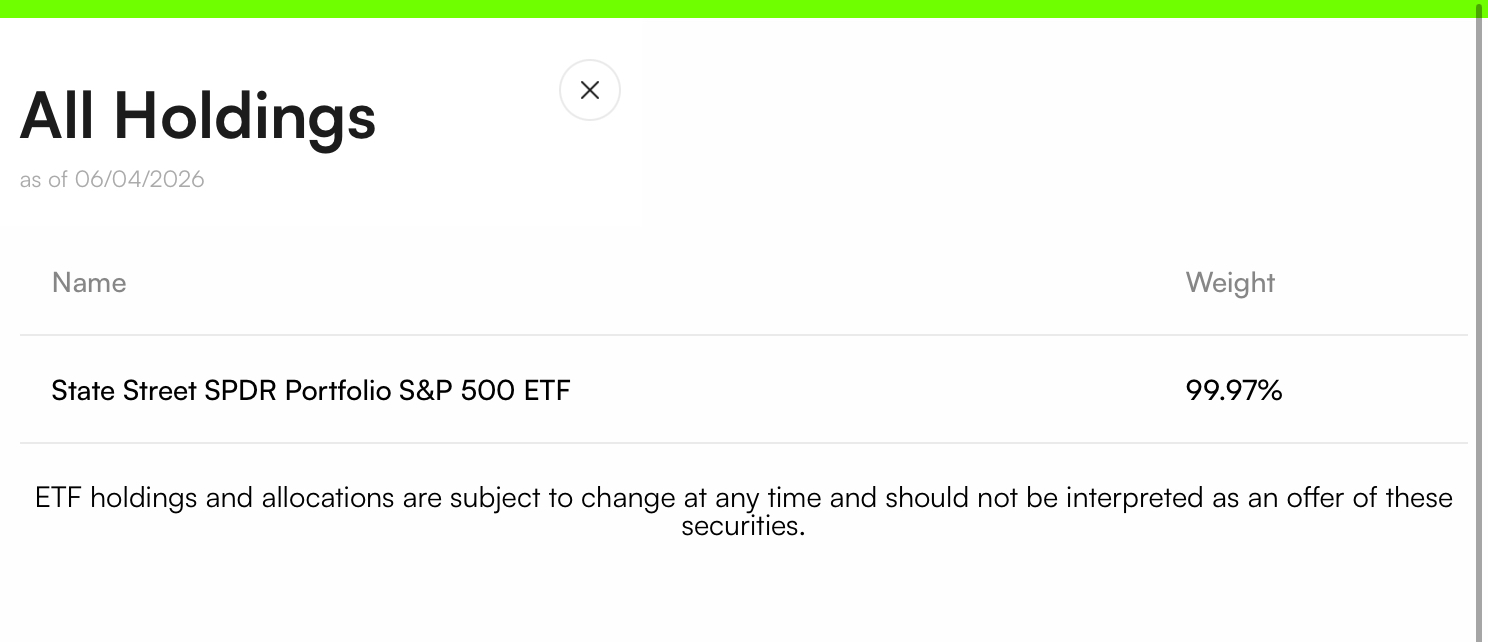
The S&P is approaching a 1% dividend yield. I don’t think we will be much better off after tax wise, at these yields. These etfs have higher expense ratios and likely have higher internal trading costs. I would expect a very marginal benefit at best.
At 1%, The total cost (after tax) increases about .27% (100k income in ZH, marginal tax rate ~27%)
Considering the increased cost of .08% vs. .02% we’re talking about a paper gain of .21% year-on-year.
At a saving rate of CHF 3000, assuming a ROI of 6.5% and Inflation of 2% this results into a total revenue of CHF 135’000 after 35 years or CHF 320.- per month (in today’s value / inflation deducted).
Even assuming the hidden cost of those ETF’s is half of that, that’s still a gain of CHF 160/m.
If you compare it to the MSCI World, you’re looking at >2% dividend yield or > CHF 640/m
That’s 5-20% of your saving rate. I’d say that’s significantly above marginally.
This fund will have higher trading cost, that are not reflected in the TER. The trading in and out of securities around dividend dates will reduce the advantage. By how much? I don’t know. It is to be seen.
Another thing. Currently the TER is .085%, but only due to a fee waiver. The regular expense ratio is .215%
Also the tax office might just start to tax it eventually, as its stated goal is cleraly to replicate an index. Swap etfs are also taxed for teh same reason, and they also have no dividends.
In the end you get a significant saving while trading in some certainties and increase your risk exposure (variable and somewhat hidden TER, new and small ETF, no msci world ).
GER can usually be ignored. From my own research, there is no incentive from any party (apart from real costs) to increase the NER.
Not sure why you’re even mentioning a potential change in how taxing works. This is a risk always present and there’s nothing planned legislation wise, as far as I am aware.
I literally cited the expiring fee waiver… unless they extend it, the waiver will expire in October.
Because this is basically legislation already. The current legislation basically says that index replicating funds shall be taxed, as if they would have received the dividends. Like with how it’s doen with swap etfs.
I literally cited the expiring fee waiver… unless they extend it, the waiver will expire in October.
Yes. And as I said, those usually get extended indefinitely. Though, you won’t have certainty.
Because this is basically legislation already. The current legislation basically says that index replicating funds shall be taxed, as if they would have received the dividends. Like with how it’s doen with swap etfs.
This is very much unlike a swap etf, which also tracks dividend payouts. One could theoretically create a swap etf that would avoid taxable events like XDIV/TOT, (simply by tracking XDIV/TOT). But that isn’t the point here. There is no dividend payout. So according to legislation, there is nothing to tax. Swap ETF or ETF regardless. Tax legislation is flawed and it’s getting more flawed as we speak f.e. by getting rid of rental value tax.
This is tax evasion and Swiss tax authorities will highly likely (meaning after 3-5 years ince they realise there was meaningful Swiss volumes in these products)… they will simply calculate a virtual dividend yield.
Given it was such a clear case of tax evasion, there may even be a claim back on prior years and the like…
There is an interesting twist here. I assume they will just take two ETF with opposite dividend distribution dates and swap back/forth. Or maybe for a change sell prior to dividends and keep the exposure with swaps/futures/CFD’s whatever.
Two things will happen: Tax authorities will take you as an ETF holder down for tax evasion… and guven the SPDR S&P500 ETF must distribute all Dividends received, it will lead to a situation where ETF distribute more frequent (to avoid the risk of sitting not yet distributed Dividends where the underlying shareholder disappeared on the expense of other shareholders)…
just because the US turns into a very strange jurisdiction and things happen in the US that are just… weird… that doesnt change anything about our rule based legal system we have here.
Normally the SEC actually has the same view and does not allow something like this.
Hence why Alph Architect launched their “US stocks minimize dividends” etf in the way that they actually trade in and out of single securities. They justify that with price dislocations during dividend dates, and also released a paper that tries to argue for stocks trading at a premium just before dividend dates + at discount right after.
IMHO this document isn’t really about what’s happening in these two ETF’s. Also it’s not at all about switzerland’s jurisdiction, so no relevance whatsoever.
If you wanna talk ethics: Taxing dividends differently than value increases is the real issue here, but that’s OT.
351 conversions are a very different topic tho (and not relevant at all for swiss investors, it’s about diversifying while avoiding realized gain taxation).
Edit: I see box spreads might be targeted, that said 351 conversions is where massive avoidance happens, eg all the IPO multi millionaires
Mit dem Lesen und der Teilnahme an diesem Forum bestätigst du, dass du die Forum-Richtlinien gelesen hast und damit einverstanden bist sowie den Haftungsausschluss auf http://www.mustachianpost.com/de/ akzeptierst.