Also, the loss from switching to UCITS is lower than the DA-1 credit amount for VT. About half is US WHT on ex-US. And from the actual US part, the lost tax credit at least reduces your taxable income. So it might rather be a difference of CHF 150-200. And that’s if you get a full DA-1 credit.
1 Like
Same here. I learned my lesson with Celsius Network. And at one point my wife got annoyed with my micro management. And getting older I look more at the flowers and animals than the TER and Cheap offers.
4 Likes
How long do you think that’ll take (for a physically replicating one), and how will the tax structure look like, L1 / L2 wise?
To be fair, this effect will disappear, soon
1 Like
I don’t understand where this irrational belief comes from that a Swiss bank or broker is somehow safe… I think if anything, the whole CS debacle showed that this obviously isn’t the case.
As for VT - yeah, I get that for some pople it’s just not worth it explaining DA-1 etc. to their spouses or heirs later on - or if you have to fill in the form manually… Although ngl, it sounds a bit silly - if you have a decent portfolio, this may give you back > 500-1000 CHF by filling out one line in a form. Takes 10’ - maybe the best hourly rate ever. The reason I got rid of it is the fact my mortgage always leads to getting 0 back - might as well just simplify the process then. Although I’ll reacess when the Eigenmietwert is done - because no clue how they’ll calculate this type of thing then.
Also: In practice, there is a lot of time until IBKR will know you died… Questionable if they’ll ever know if you don’t inform them.  . Moreover, as a Swiss you’re with IBKR UK anyway - so not that much US juridstiction outside of US securities and FATCA. (Not to mention the cheap fees and credit possibilities with IBKR)
Mortgage deduction will be 0. You’ll still have the wealth management deduction and calculation based on average tax, I’d guess.
1 Like
Often, it’s not a question of whether the bank is safe or not. It’s also about whether the bank is located in the same country and operates under the same legal system / rules as you do. It’s easier in an worst case event like a legal dispute, inheritance matter, consultation, etc. etc.
4 Likes
Sure, but especially with Swiss banks, we’re often talking about percentage based fees - trading fees 20x more expensive, stamp duty, etc.
For the money you spent, you can also hire an estate lawyer in the UK and still come on top - imho.
Then I might switch back  although idk if that makes much of a difference, despite raising the cost basis
Percent-based custody fees are a thing of the past. I have no idea which banks still do this (probably more in wealth management, asset management, etc.), but it’s not the norm for regular self service brokers like Saxo, Swissquote, Yuh, PostFinance, etc.
1 Like
VT-UCITS is expected to launch during Q1/2027.
Regarding L1/L2, I expect the following:
L1: 15% on US dividends (Ireland treaty). Same as VWCE.
L2: 0%. No Irish withholding to non-residents.
1 Like
I could never imagine instructing a loved one to commit a crime, let alone in mourning circumstances.
Unauthorized withdrawing or transferring estate money before receiving the inheritance certificate can amount to Veruntreuung (embezzlement, Art. 138 StGB) and a five years custodial sentence.
As you expect, it’s a different story in the US:
- federal wire fraud (18 U.S.C. § 1343) can get you in jail for 20 years.
- Connecticut prosecutes embezzlement as Larceny in the First Degree (CGS § 53a-122) and it’s a class B felony that can cost another 20 years in prison.
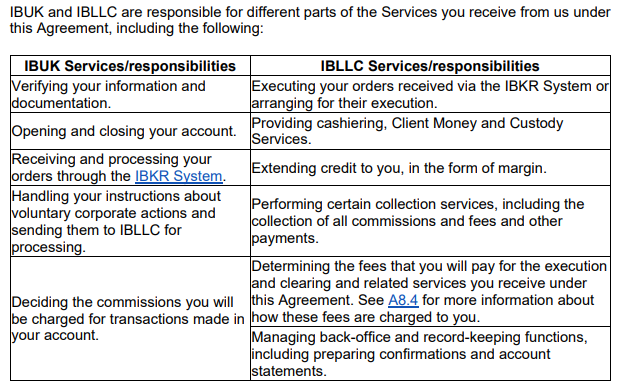
That’s incorrect. In practice, you agreed to this document and you contracted with IBKR LLC, that is subject to US Federal laws and regulations, as well as the General Statutes of Connecticut.
3 Likes
DA-1 was never the issue (always got part of my money back). The issue is the (feudal) US tax sytem and my/the reporting duties despite I have zero connections to the USA (I even have never been there).
As @makus654 said, it‘s also about CH-jurisdiction and CH-law in case shit hits the fan.
I even thought about keeping US-domiciled ETFs but below the USD 60k level - but I decided against since 1) all the effects are neglible with a growing portfolio and 2) for me the administration of such a small position is not worth the time and hassle. I still have to be up to date with US law.
I respect anyone who decides to stay in US-domiciled ETFs. In my eyes, the main issue was couple of years ago with IE-TER which was often 3-5x the US-TER. Nowadays, - I believe - there is no real USP anymore for US-domiciled ETFs - even for us CH-people who have access to such products, compared to our european neighbours.
Also thinking long term: when getting AHV + pension fund, this income is often below today‘s income. This has an effect as well on DA-1.
1 Like
I really wonder, if I have a crooked moral compass - or if some of you people really are paranoid. Who’s going to sue who over what, if the money is literally still there? No one, at least no one in Switzerland - embezzlement has to have an intent to enrich oneself, moving the money from IBKR to your shared bank account, where it’ll be just as locked, doesn’t really change much imho.
As for the US… well - sorry for the bluntness, but “womp womp” I couldn’t care less and I don’t really think they’ll notice, know, care (implications of tax treaty) or be able to enforce said laws.
The info about the separation of duties is very interesting though. For practical reasons, I’d still consider the risk of anything happening very negligible. However, I did in fact consider SAXO as well, but I really hate paying idiot taxes like stamp duty for example. Their margin accounts for 1M+ portfolios are very attractive though.
In case of death, you need to do a one time reporting of your assets, yes - and if you don’t report some, they have no way of getting them. Idk, again, maybe I’m morally corrupt, but the Americans ain’t gonna hear more from me than they need to know lol
Yeah, this is the point I get - still think that it’s probably cheaper to litigate in the US than it is to do so in CH, if anything would happen. 1:1 Litigation is a very unlikely scenario either way imho.
Yeah I wouldn’t do this either.
Yes, this is true, in retirement, your tax rate likely doesn’t make a DA-1 refund very worthwhile. You could always sell VT and buy VWRA/VWRD or whatever later on though - (and no, this doesn’t make you a professional investor… some people are going to bring this up, I guarantee)
What is the source of this information?
Bloomberg has already made ticker-tracking pages for apparently already-known tickers like VALL and VGLD, e.g. https://www.bloomberg.com/quote/VALL:LN
It is very well possible that the launch is more immenent than 2027.
No real source behind it, just compared it to other accouncements of various providers the effective launch (6-18 months). E.g. in bad markets providers tend to postpone thr launch; since there is a high attention on this one I can imagine, there is a „fast track“.
If it comes earlier, even better!
There is a very strong and well-studied cultural component: The Impact of Culture on Legal Behavior in Diverse Societies.
World Economics Rule of Law index as well as the Corruption Perceptions Index rank Switzerland at the top, while Albania and Serbia are at the bottom.
Strong social trust and collective responsibility tend to produce high voluntary legal adherence, while societies with strong familial and relational ties often channel disputes through informal networks. Switzerland shows high generalized trust, both in institutions and strangers. While in much of the Balkans, trust is concentrated within family or close social circles, a legacy some scholars trace to Ottoman-era and Communist-era institutional structures.
Switzerland’s legal culture developed over centuries under stable federalism and direct democracy, so people feel more ownership over the rules (because we vote on them directly). Balkan states have had legal orders repeatedly disrupted: Each rupture weakens the sense that “this is our law, made by us, that we should follow”. See Legal Culture as a Primary Resource for Rule of Law Resilience (Damjanovski, 2006).
Tax morale research is an extremely well-studied subfield, showing huge cross-country variance in voluntary tax compliance that correlates with trust in government and perceived fairness. Low corruption in Switzerland means rules are applied predictably and uniformly, which itself reinforces compliance. Higher perceived corruption in parts of the Balkans creates the opposite feedback loop: inconsistent enforcement erodes the incentive to comply. See Are There Cross-Cultural Legal Principles? Modal Reasoning Uncovers Procedural Constraints on Law (Hannikainen & al, 2026).
More opportunities for direct political participation lead to lower tax evasion and higher intrinsic motivation to pay taxes. Trust in democratic institutions matters independently: if taxpayers believe they can effectively monitor and control politicians, their willingness to cooperate and pay taxes increases, so satisfaction with how democracy functions predicts tax morale. See Tax morale and conditional cooperation (Frey & Torgler, 2005).
It really is one of the most fascinating research topics.
3 Likes
I think I asked this before but I did not get an answer… Does anybody know how does US estate tax apply to joint accounts in case of death of one spouse? This is precisely the setup I have for VT at Saxo right now.
A jointly-held account is not deemed 50% owned by each spouse. Instead, the consideration furnished" rule (IRC Section 2040) applies: the IRS treats the entire value of the joint account as belonging to the deceased spouse’s estate, unless the estate can prove how much the surviving spouse contributed with their own separate funds.
As you know, brokers holding US securities for NRAs require an IRS transfer certificate before releasing joint account assets after a death, which routinely takes a one or two years. I hear that it takes much longer since Department of Government Efficiency slashed more than a third of the tax auditor’s headcount.
1 Like
If they’re like other swiss brokers they might not enforce anything anyway  (give you the money and tell you what you should do).
1 Like