pls fix table
2 Likes
I can’t imagine rebalancing this would be fun/doable by an individual though? Expense ration and fees would kill me!
You can consolidate and simplify this a lot with fewer funds.
- Swiss stock fund, e.g. SLICHA or SPICHA
- World stock fund, e.g. VALL
- Swiss real estate, e.g. DRPF
- World bonds hedged, e.g. VAGX
- Swiss bond fund (s), maybe swiss domestic 3-7 CSBGC7 or that + a little bit of CHCORP (swiss corp bonds)
And you‘re pretty close, some small stuff like private equity/ foreign real estate, I wouldn‘t even bother.
4 Likes
with VIAC Invest / Finpension Invest / Findependent, they do it for you and you don’t have to do anything.
For a fee ofc
2 Likes
Given today’s environment where it feels like next sovereign debt crisis is upon us, I would really recommend to set your asset allocation carefully. Theory is good unless you are living it in real life
I think this video would be interesting
Newest episode with Victor Hagahni is also interesting. You can do some tactical asset allocations when looking at lOngterm expected returns currently implied in yields and prices.
Not outright market timing which is bound to fail. But there is potential merit in some tilts, e.g. geography, stock/bond mix, bond maturity etc.
You absolutely have to be systemtic about it and stick to your system otherwise you are bound to fail and make gut decisions.
There is a nice challenge on Elm wealths site (his company) to test your market timing ability by looking at news headlines.
1 Like
Something to know before reaching for foreign bonds with that pot: once you hedge USD or EUR bonds back to francs, the hedge costs roughly the interest-rate gap between the currencies, so the hedged yield ends up close to what CHF bonds pay anyway. Unhedged, the extra yield is mostly payment for currency risk, and the franc has tended to win that bet over long stretches. So short CHF bonds or cash are the honest baseline for the low-risk part, and inflation plus 2.5-3% has to come from the equity and real estate share xmj and Tony1337 describe, ideally with the low-risk bucket sized to the years you might actually need the money.
3 Likes
Definitely correct. The forward net yield expectation is just a little higher (credit risk) and the after tax net yield is often negative even with current rates.
I.e. 10 year US: 5.35% ; 10 year Swiss: 0.51% ; current central bank rate difference: ~4% → 5.35%-0.51%-4% = 0.84% net excess yield expectation for holding the US 10 year, not a bad risk premium on the surface level. But: the full 5.35% yield is taxable (although caveat: when you would hold a current bond fund, that will still have a lot in discounted bonds with lower yield, but depressed values, so relatively speaking more favorable capital gains until maturity fo us)
lets say at a modest 25% marginal tax rate the 5.25% causes 5.25%x25% ~1.3% tax drag.
So net after tax expectation from buying a new 5.25% US 10 year in CHF is 0.84%-1.3% = -0.46% !
However another thing to consider is that historically a carry effect has been present, meaning the higher yield currency often not exactly depreciate by the interest rate differential, menaing you could earn a premium here. But if that premium only gets you to an after tax 0%, you still haven’t gained any excess yield. I would say with current funds and some amount of disocunt bonds in them, the forward looking expectation for foreign bonds, is at least not really negative.
Where higher yielding foreign bonds could help though is during rate cut environments. There is not much room to fall for close to 0 yielding bonds like CH bonds. But a 5% 10 year US yield could fall to 2.5% during a deflationary crash, pushing the bond price up a lot.
3 Likes
Nice worked example, Tony. The discount-bond caveat is worth spelling out for QualmProtons: in Switzerland private capital gains are tax-free while coupons are taxed as income, so a low-coupon bond bought below par turns part of its return into untaxed price gain. When comparing bond funds it’s worth looking at yield to maturity next to the distribution yield, not just the headline. Agree on the rate-cut point too, longer foreign duration works more like crash insurance than an income source here.
1 Like
In my view foreign bond exposure (hedged) is typically used for diversification and not necessarily for yield improvement.
But the tax on coupons can make it less lucrative. I mainly use foreign bond ETFs within 3a/1e construct as the coupon payments are tax free.
2 Likes
Diversification’s one job is to improve CAGR

I’d rather say that the main purpose of diversification is to reduce risk incl. volatility.
2 Likes
Correct, and this improves CAGR 
Yes but also to reduce risk. Buying only Swiss bonds create country related risk … this is what UBS guy once told me when I asked why they hold International bonds. Eventually this might result in higher CAGR but I don’t know if that’s a guarantee
I think it makes sense.
We agree
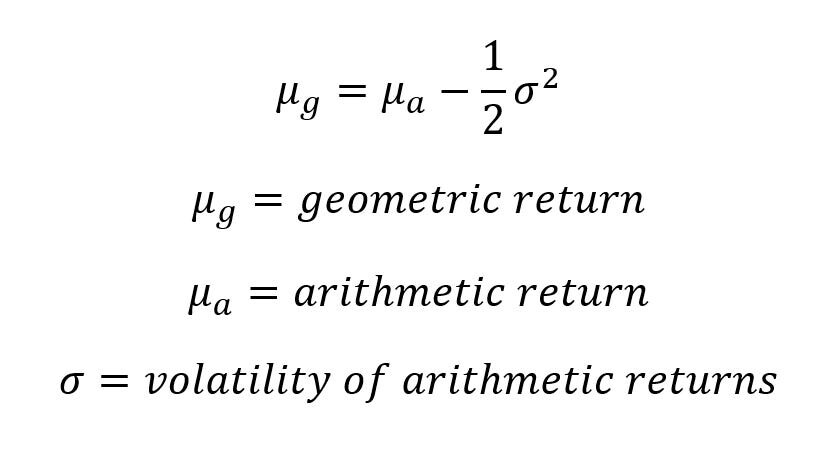
What diversification helps with isn’t particularly in growing my_a but in reducing sigma a lot: By using market-weight portfolios you reduce each stock’s individual “idiosyncratic risk” and what remains is the “systematic risks” you cannot further reduce by diversifying. Holding that remainer is what you get paid for. See Modern portfolio theory - Wikipedia
2 Likes