Well that question you still need to answer for yourself, as you need to decide between VWRA and VALL.
Are there long-term comparison charts of FTSE All-World and FTSE Global All-Cap?
Well that question you still need to answer for yourself, as you need to decide between VWRA and VALL.
Are there long-term comparison charts of FTSE All-World and FTSE Global All-Cap?
At the cost difference of VWRA vs VALL there is no reason to choose VWRA, it literally costs double.
Only if vwra would be cheaper there would be decision to make imo. Even at the same cost, you should choose the mire diversified approach.
+CHF hedged if possible 
Would it be worth to switch around 600K of VWRD to VALLD or whatever the dist ticker is going to be - or should I just keep what I have and invest the inflows into VALLD
“VALLD” gives the max market coverage with less TER.
There is though some cost like selling/buying spread, broker fee and potential FX fees and stamp duty. If the cost is minimal then I would definitely switch.
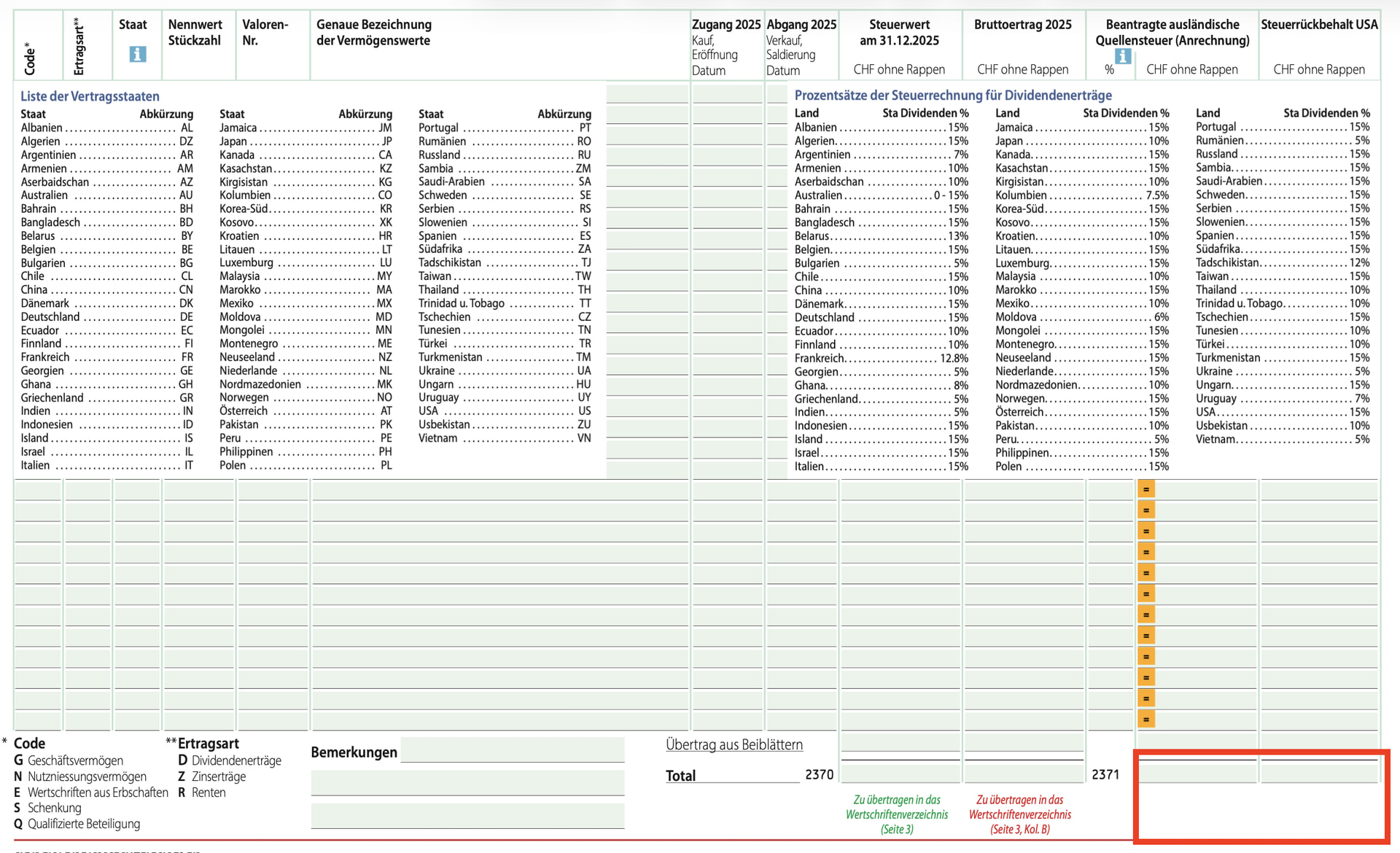
But if we compare to VT, which has like 0.01% less TER and allows DA-1, isn’t it correct that the performance would be 0.205% less yearly?
As the withheld dividend tax drag should roughly be something like 15% tax multiplied by 65% US stock multiplied by 2% dividends = 0.195%
Adding the 0.01% TER and we’re at 0.205% per year. Or is that math wrong somehow? That’s about 1k/year for 500k invested.
If that stands, makes me feel like I should continue with VT for another decade or so before changing strategy.
No one claimed that VALL/D was overall cheaper than VT.
People are exchanging
OK, a decision between VALL and XALL then. Still somehing that has to be decided, and deciding for or against small caps should come first before any fund provider/cost considerations anyway.
For market-cap based passive investing, why would you exclude them, unless for product availability or cost?
Probably less. You effectively get back the tax on the US-domiciled companies’ dividends, but dividend from the rest of the world is taxed within ETF, and in both cases is lost forever. If you cannot fully reclaim withholding tax on VT distributions, then VALL would likely be tax-wise better.
The dividend yield of US stocks is low, around 1,1% now. So using VALL you pay 1,1%x15%x63% = 0,104%. The ex-US companies have much larger dividend yield.
The break even is at roughly 34% DA-1 claim - so, roughly one third, and VT is cheaper (ignoring estate tax, paperwork, spreads and stamp duty, one does not have with VALL. Cost-only means TER + withholding you don’t get back).
I wouldn’t  I bemoan VALL’s lack of frontier markets!
But the mere fact that so many SC-less (FTSE All-World) and EM-less (MSCI World) products exist, shows that even when following a passive approach, inclusion of EM and SC is not so clear-cut.
That’s what I meant with “availability”. My question wasn’t purely rhetorical: Once you can get the 99% coverage at the same cost or cheaper, what would be reason to stick with the 85%-only option?
Will Vanguard eventually further reduce the TER of their hitherto flagship VWRD or are they fine with people switching massively to the new VALL?
They won‘t probably change the TER. There are many countries in which you will pay capital gain tax if you sell VWRD.
They will just keep it and use VALL als new position (this would be my way to go as well).
They have already cut the TER two times : 0.22% > 0.19% > 0.14% (now). I’m not sure that they will cut it again.
In my opinion, people who have already VWLR/VWRA will stay with it and continue to invest in it or keep it and invest new money in VALL. Newcomers will tend to invest in VALL because it seems to be THE CORE ETF to invest globaly and they will eventualy take a home biais or a biais in anything else (technology, robot, EM, other).
Personaly, I will switch from VT to VALL once it will be possible to buy it in CHF. Not sure if I will take the distributing or the accumulating one.
I think they are:
It‘s higher, as the full DA-1 claim gets taxed, regardless of how much you get back, as far as I remember.
Lets use last years yield figures for VT and VTI
And assuming ex-US is roughly equal wht wise between Ireland and US.
US dividend yield is roughly 1.15% (holy shit it got low)
-> ex-US: 3%
VT yield: 1.85%
VALL yield would be (all else equal) 1.85% - 15% x 1.15% = 1.68%
Net after marginal tax 25% = 1.68% - 0.42% = 1.26%
So maximum you can save with VT is 62% x 15% x 1.15% = 0.107% → taxed at marginal rate additionally! Lets say 25% (many will be higher) → 0.08% left over max advantage with 100% DA-1
Lets say you only get 50% of DA-1, that is however on the full 1.85% x 15%, meaning 25% x 1.85% gets deducted -0.46%
So you get
1.85% - (50% x15%x1.85%) - 0.46% = 1.25% net after tax yield with 50% of DA-1.
So you need at least 50% of your DA-1 back at 25% marginal tax rate to just break even with VT.
So unless you get close to 100% of your DA-1, I don‘t think one should bother with VT over VALL.
I don’t think that’s true. If I look at the DA-1 form of Zurich, the DA-1 claim amount does not have to be entered in any other form of the tax declaration.
I‘ll personally go with VTI (100% US dividends claimed) and the ucits-version of VXUS. I think that‘s the ideal approach ignoring estate tax and IRS.