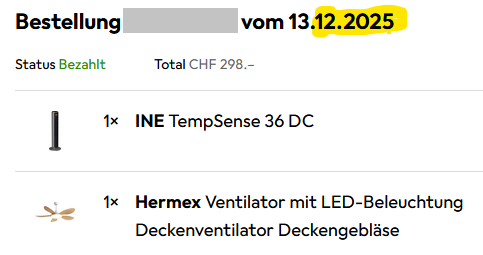
more expensive that closing shades, but not more than changing windows etc.
I also believe that in future AC will be standard, mainly in urban centers where after few warm days you don get a fresh breeze at night. And this years heat wave came early, I think we never had one this early.
Also AC run when we have or will have energy overproduction from PV. Thats why Kt Berne parliament decided to be less restrictive with AC if the house has PV.
I completly get that shades, trees etc are also very important. But you cant put shade on a entire house. Also with rising Deltas from inside to outside temperature rel. humidity becomes an obstacle - AC can handle this.
That said for attic apartment with bad isolation it’s a lot worse, afaiu it’s not uncommon to have the apartment be hotter than outside temperature during the day (the surface exposed to the sun is huge).
It’s hotter 24/7, and especially at night. I’m in that case, and we barely go below 30 at 8 am (the cooler time of the day in the flat).
Thermal inertia is huge and airflow essentially inexistent, despite having through windows.
Just got a baby, so I finally caved in to a portable AC (but not a split unfortunately, I only have slanted roof windows and no balcony so nowhere to put the external unit).
But you need to run it all night, otherwise temperature shots up in under 1h and you’re back to high 20s.
What about placing some of those XPS insulation panels between windows and blinders? I would have space for 120mm think ones. Would they make a difference? I have windows (double glass, ~30 years old) around 2x1.5m in the rooms. We keep the blinders shut and thick curtains inside, but it was still 29c yesterday evening…
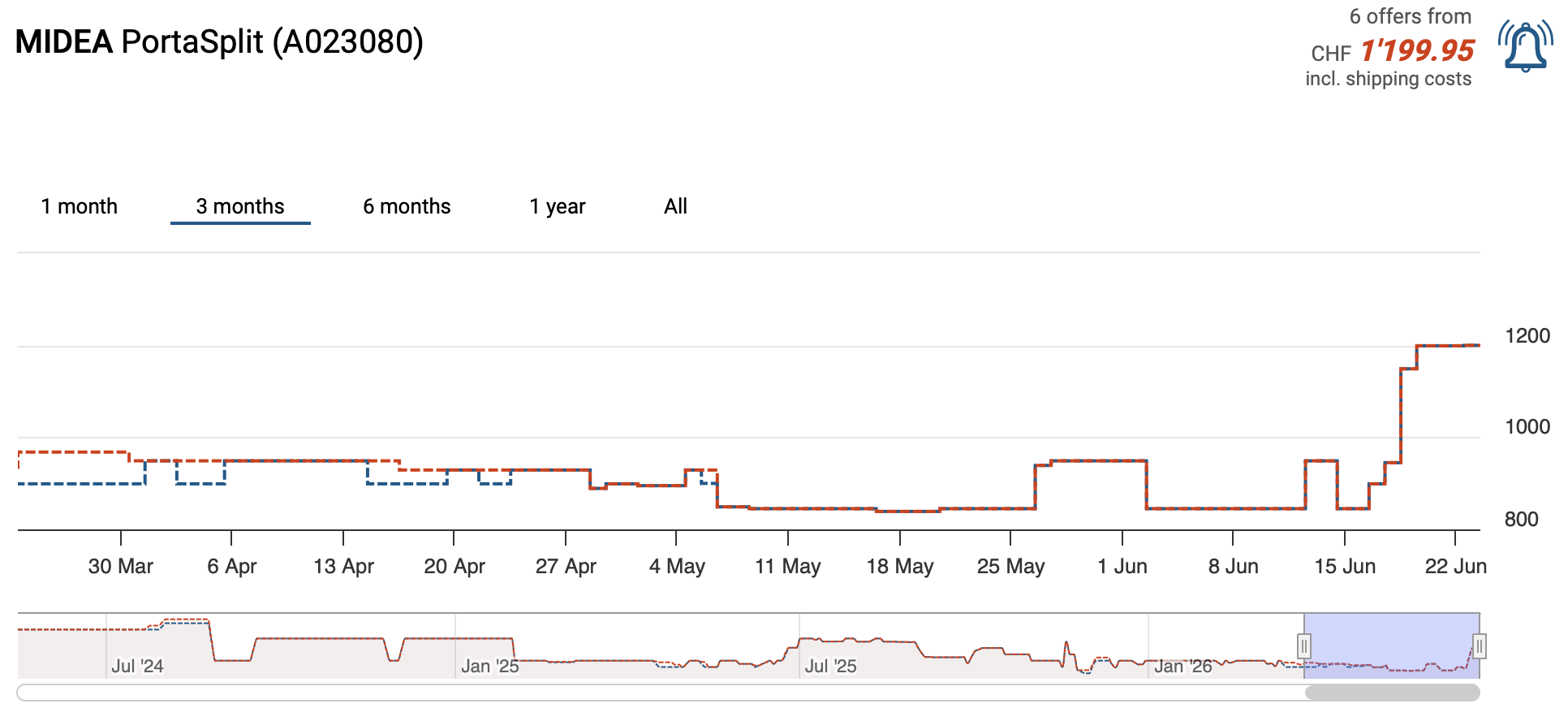
You can mount the Midea Porta Split there. They have a really nice engineered mounting bracket for that. And it’s a non-permanent solution, so no landlord issues.
I agree with the broader point that AC cannot be the only answer, and that badly managed cooling adds heat locally, increases electricity demand and can contribute to emissions. But I think we should distinguish between wasteful use and necessary use.
Globally, space cooling is around 7% of electricity use and roughly 3% of greenhouse gas emissions when refrigerants are included. Industry is much larger, around 24% of global emissions. So AC has an impact, but it is not remotely in the same category as heavy industry.
And practically, what should someone do when their home is 31°C even at night, with 60% humidity? That feels closer to 35°C for the body. At that point sweating becomes less effective, sleep and recovery are impaired, and the risk of dehydration, heat exhaustion and cardiovascular strain becomes real, especially for vulnerable people but not only for them.
So I do not think the answer should be “people should not use AC”. The answer should be: use it responsibly. Efficient units, sensible temperature settings, priority for overheated homes and vulnerable people, and combine it with insulation, shading, ventilation, solar and long term building adaptation. Keeping a bedroom at a survivable temperature during tropical nights is not the same as cooling poorly designed buildings to 20°C all summer.
Dumb question. Have you tried to measure the difference between dirty blinds and clean ones? I wonder if the difference is higher than 1-2 C, but probably won’t change the temperature inside the house.
Everyone is telling you about how exterior blinds is the best solution. I work from home and spending the day in the dark isn’t pleasant at all. I’ll take AC.
We already have floor heating, but plan to switch from gas to heat pump (air-water) in the coming years- is it something you have to ask on top or is it part of the system? And does it work well to cool down? Any risk with condensation for exemple?
You want a heat pump which can do passive cooling. Some of the brands have one modell all incl, other brands have seperate models for heating only and with passive cooling.
Condensation can be an issue, but I believe the heat pumps does the math itself and stopps cooling when there is a risk
Fair enough, logical flaw on my side. Guess the AC can remove warm air, but walls etc. keep emitting.
To be fair, you can also skip $$$ on a AC because you’ve got a $$$$$ house with passive cooling and natural shade
On a different note, skimmed some SRF-article summarizing research that fragrances (like menthol, mint), colors (blue, turquoise, incl. light temperatures) and sounds (natural ones) can lower the perceived temperatures.
Mit dem Lesen und der Teilnahme an diesem Forum bestätigst du, dass du die Forum-Richtlinien gelesen hast und damit einverstanden bist sowie den Haftungsausschluss auf http://www.mustachianpost.com/de/ akzeptierst.