Now that summer is approaching, does anyone have practical experience in adding / upgrading the cooling in an existing building?
I picked-up some terms, already and started looking into them. Does anyone have practical experience or can confirm my first understanding or what’s possible in term of results and cost? Or in short, what’s worth it?
Add geo / free-cooling to the heat pump (brine-water) / floor heating: Circulate cold-water, bringing down temperatures 2-3° across the house, at a cost of maybe 3k?
Add air-to-air heat pump to indoor ventilation: Added on top of existing unit to provide additional cooling of incoming air at 5-10k? What’s the actual effect?
Normal AC (multi-split?): In- and out-door unit(s) for strongest and fastest cooling, but likely biggest installation effort and cost? 10k or rather 20k? Likely needs permit?
Any other options to consider? I don’t like the idea of stand-alone cooling units that stand around indoors or are noisy. The first 2 options above sound enticing, as they seem to use existing pipes and ducts and don’t add any disturbance in the rooms. But is there a measurable effect?
With automated Venetian blinds and sometimes manual ventilation in the mornings, the house in question stays reasonable comfortable most days, but does heat-up eventually after some hot days.
While this would obviously be for comfort, does the tax lady accept some of these as energy-saving investments?
Don’t know about exact permit needs, I’d guess your solution 3 would need it if the outside units are visible from a public road, plus some canton want you to ask for permission before installing climatisation (and they could refuse), plus the commune might have also restrictions…
Solution 1 gives me the impression that it’ll take longer to react (cooling down the floor itself, I guess you have a heat pump with geothermal) but nothing visible.
Solution 2 should work faster and I like the appeal of using the existing ventilation, but you’ll need an extra unit somewhere.
Went through the minergie docs the other day, esp for older buildings I think external sun protection is the first critical bit. (It can avoid a lot of heat to begin with)
Yes, the ventilation has a bypass function, it’s set to automatic. In the current heat, I switch the whole thing off during the day.
Blinds are outside, of course.
No solar panels, yet, but it’s still on the maybe-later list. Maybe it’s time to get new offers and see if it’s a good business case, now. I think the roof isn’t a big issue heat-wise, though. At least there’s no higher temperature on the top floor.
If I get it right it’d be installed and connected on top of the regular unit. I doubt it’s very fast or strong, even compared to the heat-pump option which at least covers the whole area. For that one, I also assume it’s slow and steady and can only achieve so much.
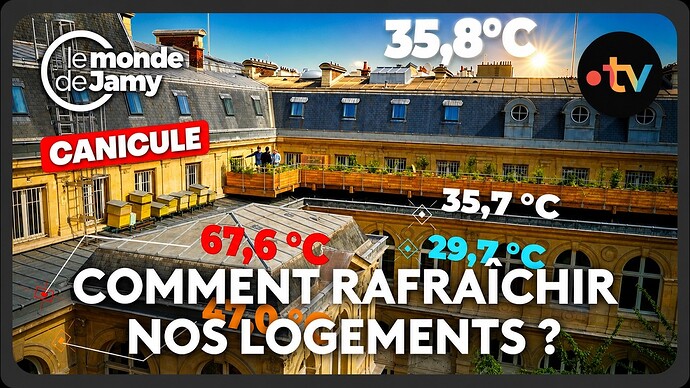
Fair enough. Besides blinds and a marquise, adding something outside is actually another little project Still in decision, can’t decide between simple shade sail and fancy pergola. But that’d aim at more shade outside, less to “protect” inside.
Prio 1: add shade where possible. Best are trees etc because of the evaporation.
Cooling with Brine heat pump is superb. But limited, because of the relative humidity. When you cool down warm air you will have a higher relative humidity which can feel warmer even if in Degree Celsius is lower. Comfort Ventilation system with enthalpy heat exchanger can help.
AC (split) not only cools down with high efficiency but also drys the air. Unfortunately in many cantons it is hard to get the permit due to energy saving legislation. In BE we are waiting for some changes if the electricity comes from PV.
Dont buy cheap mobile Monoblock AC. For urgent use better buy a mobile split AC.
I believe cooling of houses/appartments will be one of the mayor topics in next 5 years. If one is doing renovation, I always recommend preparing channels for cooling pipes etc. to install AC cist efficient and nice
from a renter’s perspective: I tried alot, given the limitations of not owning the place:
IoT Temperature sensors (Sensirion SHT 4x board + bluetooth) inside & outside (mind elevated temperatures when the sun shines on the sensor => 2 outside sensors north & south) to measure whether my machinations have any effect.
then successfully discussing the landlord to put some isolation into the otherwise hollow wall
consistently using the “markise” for maximizing shadow on the south side
open all windows all night (except for storm/ heavy rain), close them and blinds throughout the day
i was experimenting with reflective foil #1 and #2, with some measurable effects but nothing conclusiv yet
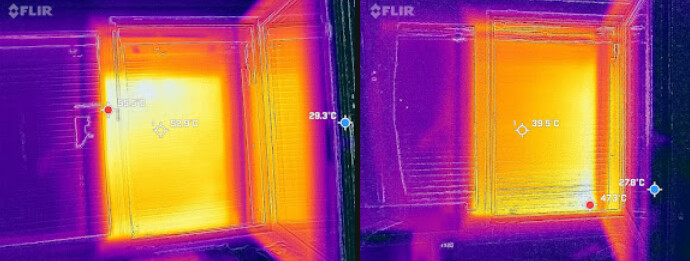
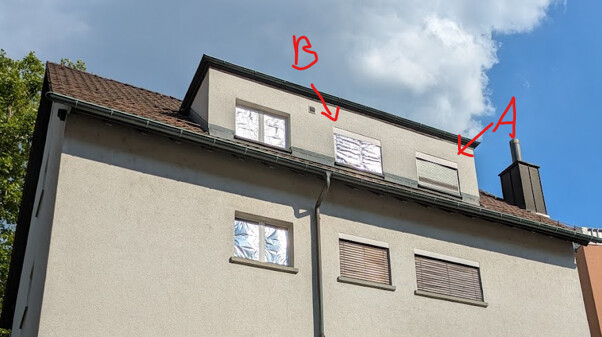
building dirt-cheap cardboard-aluminum-foil-blinds for those windows that dont have blinds at all. massive difference, best bang for the buck overall (unmarked window on the image below)
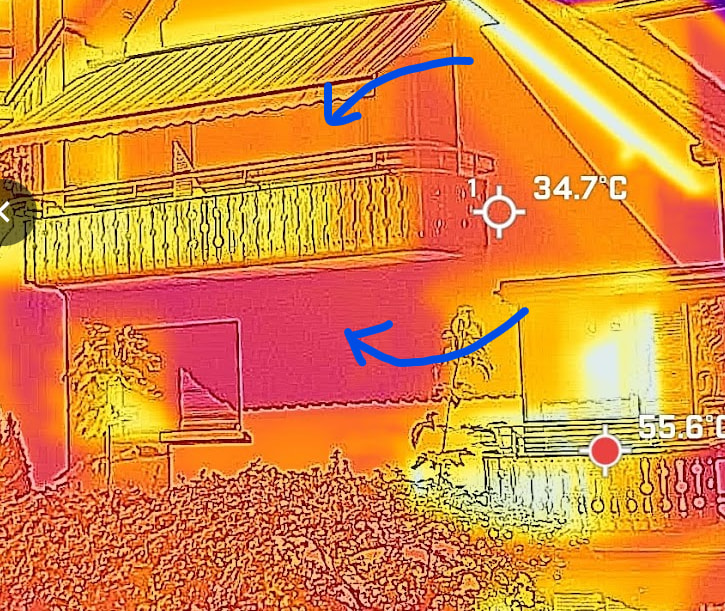
adding #1 on the outside of outside blinds => made the blinds drop from 55°C (left/ A) to 40°C (right/ B). Overall effect unknown, as this is “outside” behind the window glass
playing with the though of outfitting other parts of the (accessible) facade with reflective foil. lol today we had a big summer thunder storm. no clou how my foil would have survived that
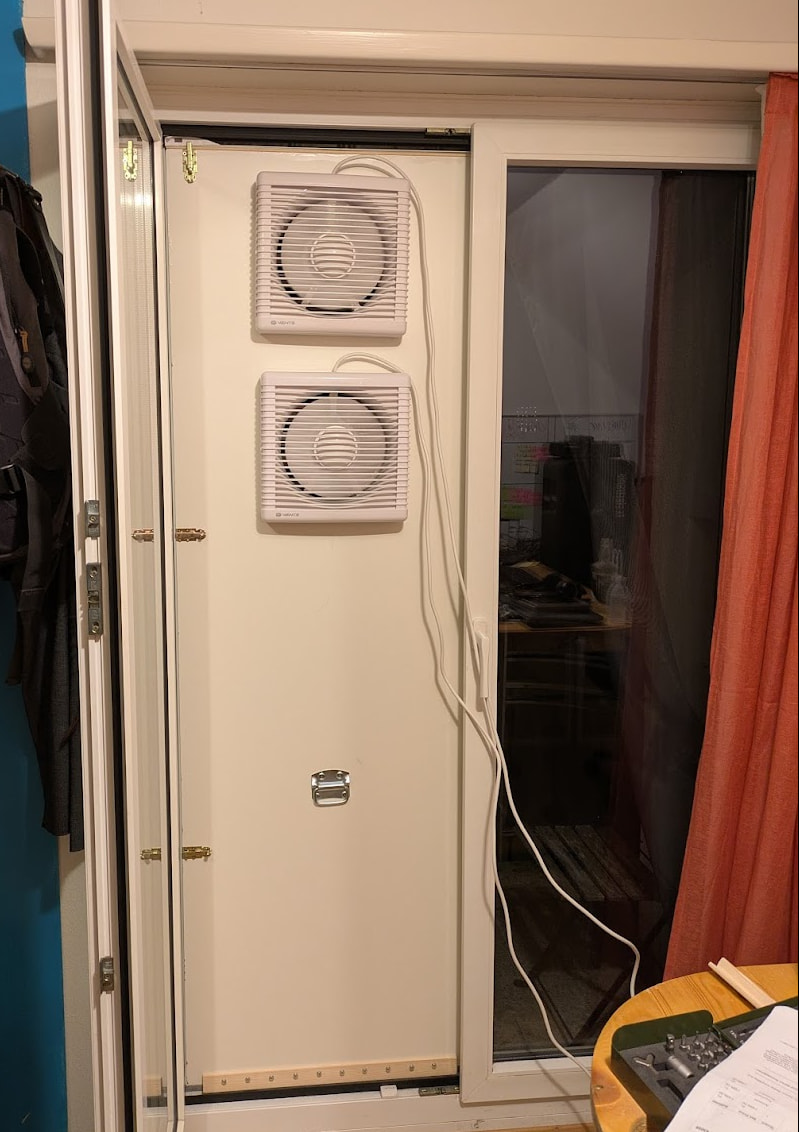
building a forced convection ventilation. Failed due to not having a measurable effect on the flat’s temperature after alternating nights with and without forced ventilation
built 2 inserts for 2 balcony doors with in total 4x this ventilator with total ~1600 m3/h
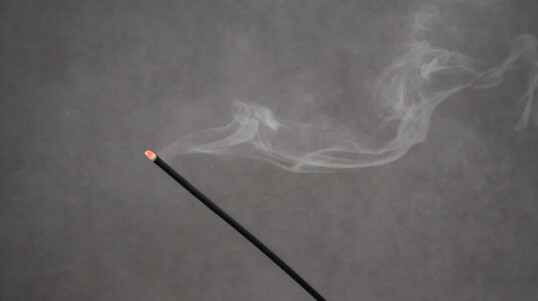
still pondering if i should go bigger here. I am convinced forced convection is effective. however my DYI highly scientific air flow visualizer (a incense stick) revealed (to my utter surprise as thermohydraulic engineer) that this ventilation just moves the cold air layer at the floor, despite the ventilators being at ~2m height.
now comes the game changer: ceiling ventilator. absolutely amazing. my partner is delighted
despite all i ordered a AC device that is legal in zurich without permission/ application, to at least cool down the sleeping room before going to bed to hopefully ~25°C, if not lower. cant wait to install it.
[Edit:] Requirement from the city for installing an AC include “airtight building hull”, “good insulation”, “automatic sun blinds”, and more. None of those are given in my case. they would require substantial renovation works. the landlord is not up to it.
the city of zurich offers a free consultation on the topic, geared towards home owners. I went, but it didnt add anything to what I knew already
Project that I did not execute on:
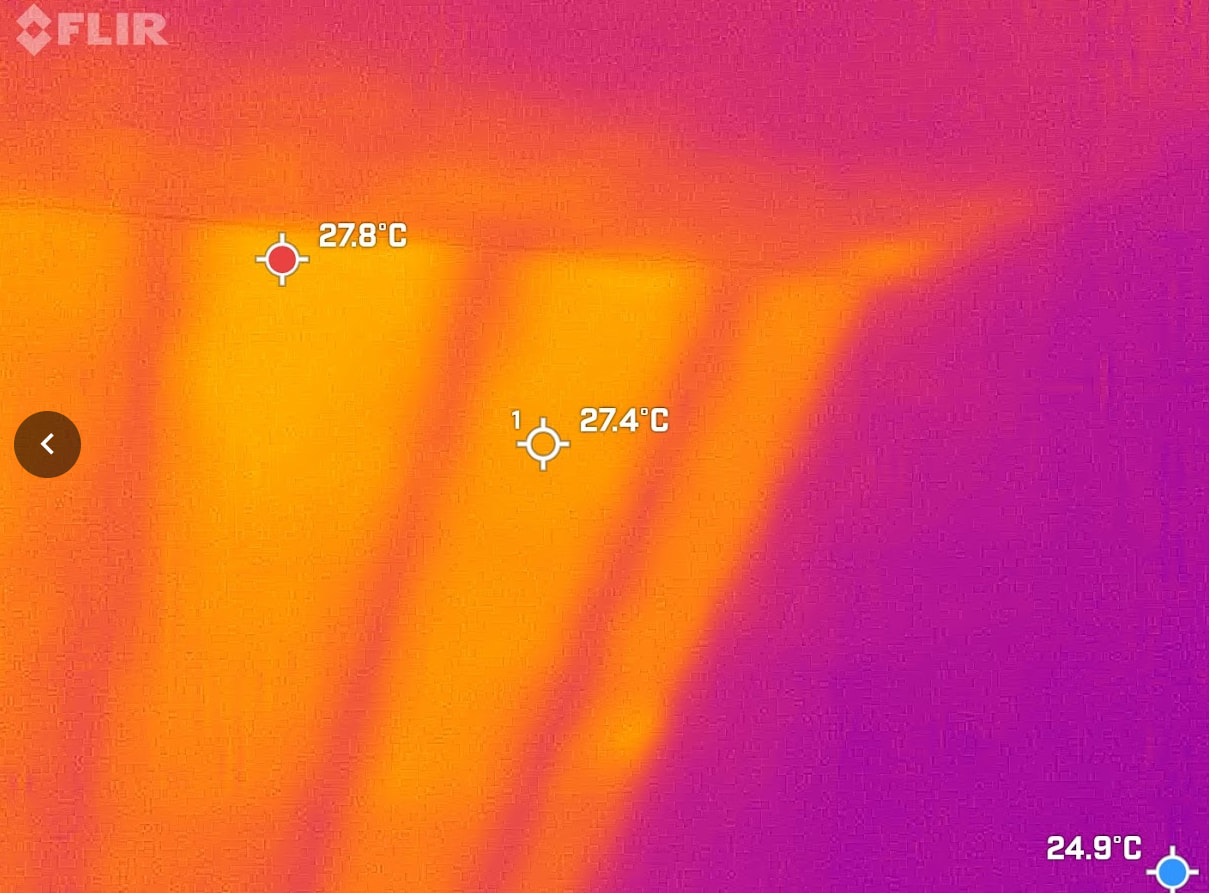
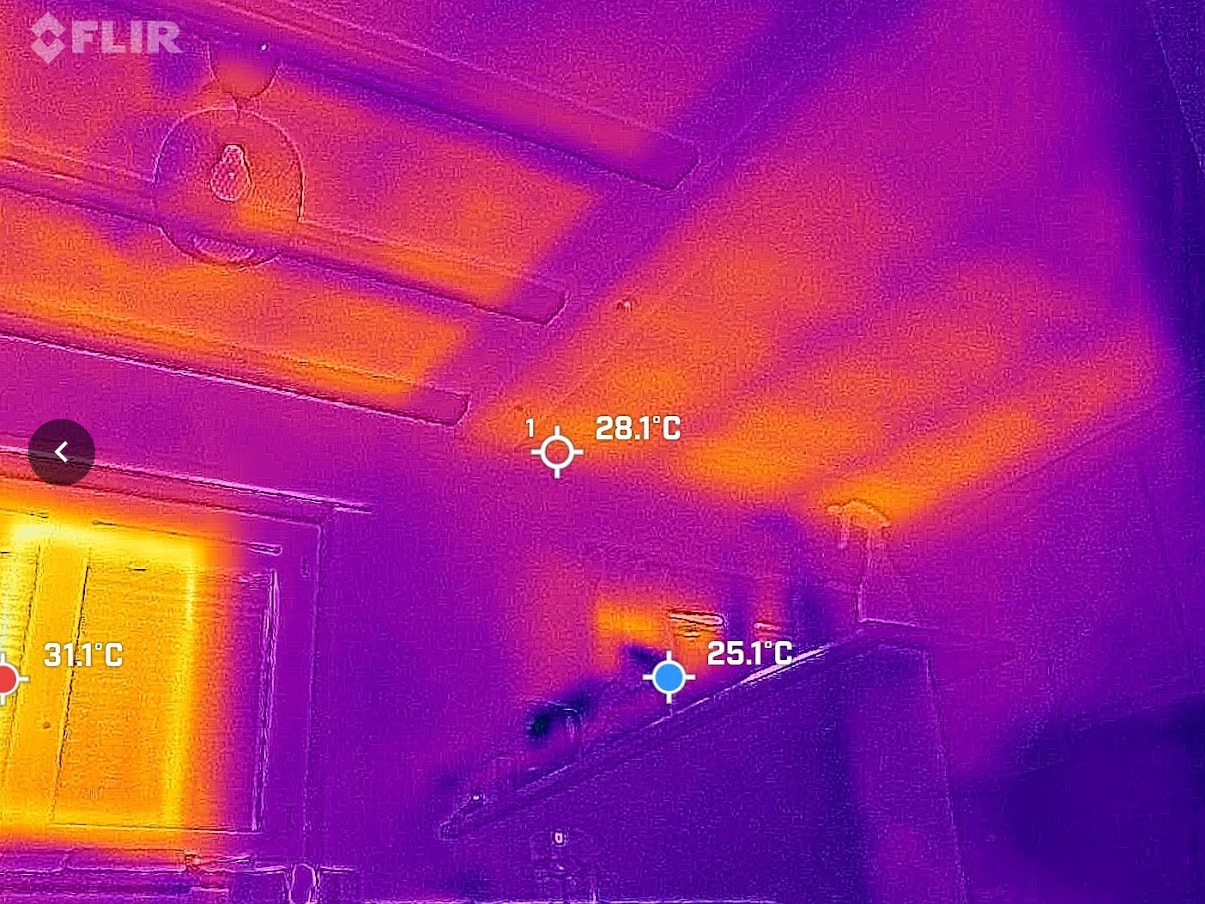
adding ~10cm of styrofoam insulation at the inside of the flat, where the infrared camera shows the hottest areas (clearly due to the sun heating them up)
adding reflective foil to those areas from the outside. would require me to walk a very steep rooftop.
overall, basic physics & thermo-engineering:
remove sun radiation gives about 1kW of heat ingress per m2. single most effective way to remove heat from the system. ideally via reflection, but white instead of dark already helps
remove heat whenever it does on its own → maxed out nighttime airing. oropax if the neigbors dont behave. watch for storms in the middle of the night in case you dont want to flood your flat
mosquito nets help vs any flyers but reduces natural convection slightly
FWIW, I don’t think it’s impossible to get a proper AC installed, but esp. as a renter, you must be one of those people who like navigating paperwork (landlord + permit). (The permit is mostly about noise control + iirc making sure that the basics have been done in terms of thermal isolation).
From what I remember, there were some people sharing experience about that at my previous workplace.
Heat was a huge issue in our old rental appartment - it was superbly isolated so warm during the winter but during the summer it would be unbearable for 5-6-7 days. I bought a portable airco, not ultracheap (1000 CHF or so) and would put that in the bedroom, blast it full chill mode for 30 minutes prior to bedtime, then go to bed with the thing switched off (it was noise) and would be fine.
Was very worried when we were building our new house with a flat roof and considered airco but did not go that route (expensive, takes up lots of space, etc.) - what worked
Solar panels on roof
TAB system in roof (cold water runs through pipes during summer
External shades keeping sun from shining in the house
The house is built against the mountain so there’s natural cooling from the earth
Floor heating/cooling
Large tree on one side of the house
400 meters altitude = more wind cooling things down
…all of the above not so easily fixable in an existing place, but what ALSO worked for us is we installed mosiquito doors with at least 1 large window/door in EVERY room. As a result, we can leave things open with zero annoyance of mosquitos coming in - this was perhaps the best investment we made! Also during the day it allows the wind to blow through the house.
We’ve been more than happy with how comfortably cool the place is.
I just put up dirt cheap mosquito nets this morning. Looking forward to leaving windows open tonight.
Next I might try one of those AC split units for 700-1000 chf
For people living in Zurich, the city offered me to be visited by an expert regarding planting trees to improve shading, plus 50% of the costs of planting such trees. Have not followed up yet on that.
Nice post! I use an external window shutter to block sunlight from reaching my windows. As soon as the outdoor temperature drops below the indoor temperature at night, I open the windows. I keep the west-facing windows open in the morning, but I have a hard time figuring out when to close them. Which IoT temperature sensors did you get?
Not OP, but I have installed Aqara (indoor) sensors along with Home Assistant. Initial setup is a bit expensive, but each sensor is only 15 or so. Plan is to expand the setup once I move into the new house. Currently living in a rented attic flat with only roof windows which is pretty hellish right now.
I haven’t installed any outdoor sensors, I piggy back on https://weathermap.netatmo.com/ since there’s a couple right next to me.
Anyway, it’s not like I have any automatic blinds (or any external blinds for that matter ), so there’s no automation to create there. I just keep the windows open all day long, because otherwise it’s an oven and even hotter than outside.
ZigBee only has far as I can tell. I bought them on Digitec I believe, probably can get them for much cheaper from some China shop.
I agree with the “relative” expensive part, even with going with the “no setup/thinking required” Home Assistant green, it was only 200 or so with the ZigBee receiver. Just not the cheapest option if you only want a couple of temperature sensors.
Goal for me is to expand the automation part once I have more toys to play with.
FYI: Apple HomePod and HomePod mini have a temperature and humidity sensor built-in, so you can ask Siri how warm your living room is, for her to then misunderstand you and tell you the capital of Topinambur.
haha id have a lot of fun. depending on the cost/benefit of course, but likely some solar-driven air conditioning. probably most of what you read in my post but somewhat more professional / holistic. Also trees.
certainly a “Erdsonde” (drillhole) for cool water in summer an warm in winter, and have this flow through my house to give a nice temperature
We have a row house, and the top floor gets very hot during the summer. Last year, we bought a standard AC ( ~CHF 5K), and it has been a real life-changer.
Mit dem Lesen und der Teilnahme an diesem Forum bestätigst du, dass du die Forum-Richtlinien gelesen hast und damit einverstanden bist sowie den Haftungsausschluss auf http://www.mustachianpost.com/de/ akzeptierst.
 Still in decision, can’t decide between simple shade sail and fancy pergola. But that’d aim at more shade outside, less to “protect” inside.
 let’s see how durable this is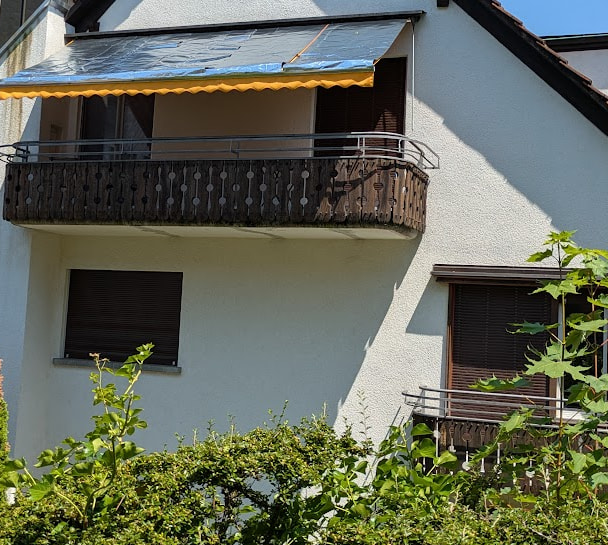
 ), so there’s no automation to create there. I just keep the windows open all day long, because otherwise it’s an oven and even hotter than outside.