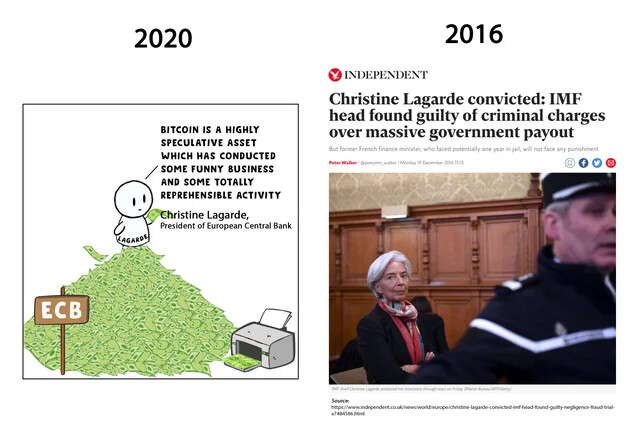
Why would you say something like that?
Bitcoin is like the worst thing you would use for illicit activity. It is documented forever and can be traced.
In 2020, the criminal share of all cryptocurrency activity fell to just 0.34% ($10.0 billion in transaction volume).
According to the UN, it is estimated that between 2% and 5% of global GDP ($1.6 to $4 trillion) annually is connected with money laundering and illicit activity. This means that criminal activity using cryptocurrency transactions is much smaller than fiat currency and its use is going down year by year.
this is about crypto in general (where some coins may offer a huge level of privacy)
so illicit btc use is extremly minimal.
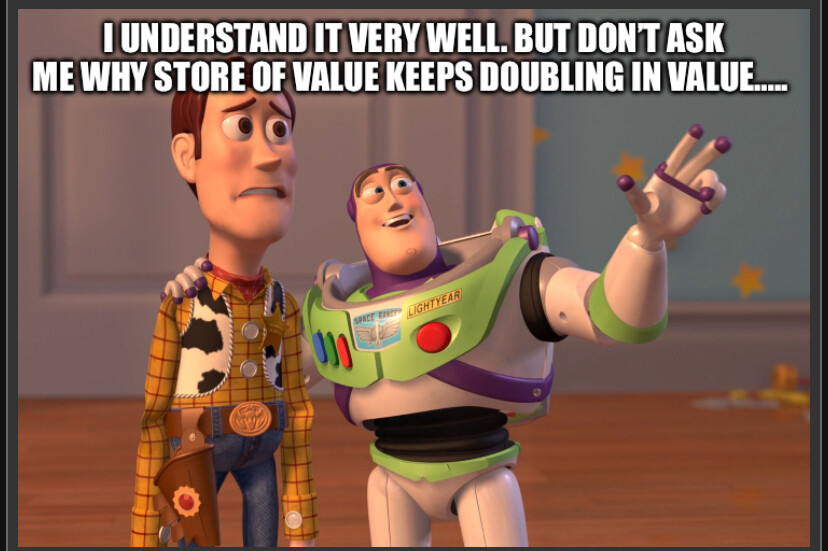
Bitcoin : Deflation (fixed amount of BTC), Public database, decentralized, 100% in control of you funds (nobody can freeze your cold wallet)
vs
Fiat : Inflation (unlimited printing), centralized, controlled by government (they can freeze your account)
Yes individual transactions can be traced, but you can’t tell me you don’t know of e.g. all the ransomware attacks where people have to pay in Bitcoin.
Now before all the pitchforks are held against me, I’m of course aware that there are many other ways to do shady business with convoluted fiat-money-constructs as well.
sure, this may happen.
But honestly, BTC is really unsuitable for this. The coins are identifiable, none of the exchanges will accept it. So you cannot really cash in.
other cryptos are very suitable for this, like monero. basically untracable.
Thank you very much for the link - those numbers are explaining probably the price increase, as the market needs to buy Bitcoin, especially when you know that since the halving only 450 BTC are “produced” per day.
Well, last week we had 3 sats/vB… now 19.
The spikes we got 300 and more were because of the shitcoins on bitcoin blockchain. Imho, as any shitcoin, the hype is over (still see the data in mempool tough).
ETF have not that much transactions: eg IBIT uses coinbase and they make few transactions to blackrock wallet after the closing bell… I suppose.
I would actually like to see the fees higher. Gives me confidence that the miners will stay in the game when block rewards are slashed further and further.
If all transactions only occur on 2nd layer or on exchanges, how will they earn and keep hashrate high enough to secure the network?
And as another user said with the price going up so does the reward. If price goes down, some miners will leave but the difficulty also goes down so it’s always in an equilibrium (this is coded in the protocol to keep a block at roughly every 10min). If price collapses (like, really collapses), difficulty will also collapse and it will become easier to “hack” the protocol, but by that point there’s isn’t much value to be lost anyway.
Also the Bitcoin network is orders of magnitude more secure than it needs to be. In fact you can argue that security is just a byproduct of mining and not the other way around. The main goal of mining is exactly in the name, it’s a mathematically designed way to release new bitcoin into the network to maximize decentralization. If everything had been mined then early adopters would make bank (even more than they already do) and the reputation of the protocol would be in shambles. This is what a lot of shitcoins do, and a big red flag.
What i dont understand is the hard figures on that…
Lets imagine for example the block reward would disappear today, the transaction volume remains on the same level as today and we want to keep the hasrate at least on this level. Where would the bitcoin price need to be so that miners earn the same dollar amount?
I look at the last block with 3.35 fees+reward for the miner. 0.225 were fees only or about 6.7%.
I scale this with the “old” price or approx 60k.
Works out to about 900k.
This means that we need to reach at least a bitcoin price of 900k (in real terms) once the block rewards disappeared in 2140.
Does the calc make sense?
I guess the price seems within reasonable possibility.
Mit dem Lesen und der Teilnahme an diesem Forum bestätigst du, dass du die Forum-Richtlinien gelesen hast und damit einverstanden bist sowie den Haftungsausschluss auf http://www.mustachianpost.com/de/ akzeptierst.