Thats a very valid point. I guess it comes down why people DCA lump sum. If it helps to get started in the first place instead of waiting for a better time I guess it makes sense to overcome this psychological barrier.
For the fun of it I run a historical simulation looking at the different scenarios Lump Sum v.s DCA (500k, 2 years, monhtly DCA, reinvest dividends, no tax considerations) since VT existence (2008) (honestly I haven’t checked it thoroughly, so let me know if you see issues or I’m missing something)
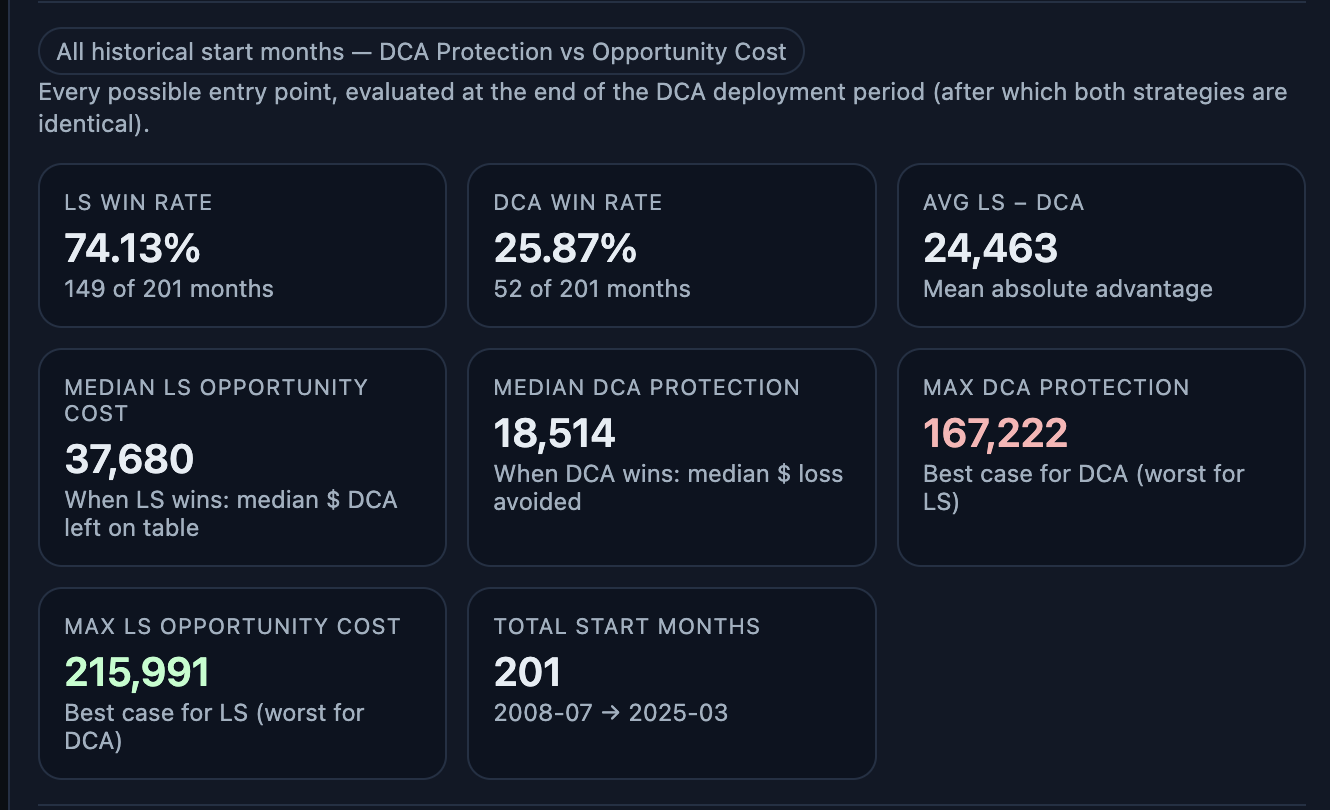
Interestingly the max opportunity cost (215k) of not investing the lump sum seems higher than the max protection DCA (167k) provided. - Note this is not max draw down but in relation to the end capital after the DCA phase (2 years).
In 3 out of 4 cases Lump Sum Wins with a median opportunity cost of 37k USD. Which is in line with research findings.
That would mean, if you value opportunity cost (missed gains) the same as losses - which would be rational - while not common with human psychology (loss aversion) - Lump Sum seems to be much “saver” ..