Bagger and capital gains tax

Hello there

I am new to this site and this forum.

I am middle aged already. I am well educated, but I always have difficulties finding a job, I have long periods of unemployment, and I am not happy in the jobs I do. This led to chronic depression.

When I arrived to Switzerland the second time, I had very little capital left, I had eaten much of my grandmother’s inheritance.
I however managed to save substantial amounts while working, I have a semi-frugal lifestyle, and to rebuild a capital.

I usually invest all my money, all in a single stock. So far, I have never picked a wrong stock. I do value investing. I feel comfortable this way. I instead lost money when I tried to diversify. I simply need to learn when to sell.

My plan is to make a hit with the stock I currently own, to then be FIREd and to focus on my well-being. Whether it’s a 2-bagger or a 4-bagger, and when, that’s another question.

I am concerned about the taxes. Capital gain taxes.
What happens with point 3 (Main Income) if I do a 4-bagger over the next 2 years?
How should I handle it to avoid the capital gain tax?
What if I reinvest all my gains?
I currently have alternative income sources, for the next 2 years.

If I get capital gains taxed, I’ll have to search another stock after this one, hoping it works, it will delay things a lot.

What happens when I leave Switzerland?

What happens if I use some of these capital gains to finance a house? In Switzerland or abroad?

You normally don’t get taxed in caoit5gains in Switzerland so you should crystallize the gains before leaving.

tenor

(P.S. Don’t feed the troll/spammers)

7 Likes

To not create a new post, and as it is related.

Let’s say, I invest such an amount and I make a bagger, a 4-bagger, over a couple of years. Let’s be pretentious.

How does it match with the 3rd criteria for private investors?

What do we call capital gains? Realised gains,or vitual gains from year begin to year end?

What if I reinvest all these gains in stocks again?

Yes, I am an all in person. Do I sleep well? Well… it’s my choice.

This has been discussed multiple times on the forum already. The criteria are a “safe-harbour” clause: as long as you don’t match any, you are safe from being classified a professional trader.
But the inverse is not true, just because you breach one clause does not mean you’re immediately classified a professional trader. You have to look at the intent of the law.

The goal is to be able to tax people who replaced (most of) their job with trading, are making consistent profit over the years, and generally are living off their gains. Like, you know, if you were an actual trader.

You getting insightful/lucky with a single stock and making banks, whilst presumably still having a job off which you actually live from, is in my opinion very far from the case above. You’re closer to someone that bet it all at the casino and got a windfall.
Also, if they give you the status, the tax office will probably be wary of your luck running out and then you would be able to deduct your losses.

Let’s take the best case scenario: your stock grew so much that you can sell it all and stop working for the rest of your life. You sell everything and reinvest it in some broad market/dividend ETF (or whatever) and quit your job. You’re now in breach of clause 2 and 3.
Are you at risk? Yes, you’re no longer protected by the safe-harbour clause. And yet I would argue the risk is so small as to be insignificant. If you can sleep at night with being all-in in a single stock, you should not have troubles there.

What do we call capital gains? Realised gains,or vitual gains from year begin to year end?

Not an expert, but for me it’s realised gains since it’s talking about income. Actual money you can use to live off (if we disregard things like Lombard loans).

What if I reinvest all these gains in stocks again?

If you simply rebalance your portfolio once in a while, nothing to worry about. If you start playing around, regularly buying and selling stocks, and making a profit, that’s where troubles start happening.

All of this are simply my opinions.

Just checked, I have 14 multibagger in my portfolio.

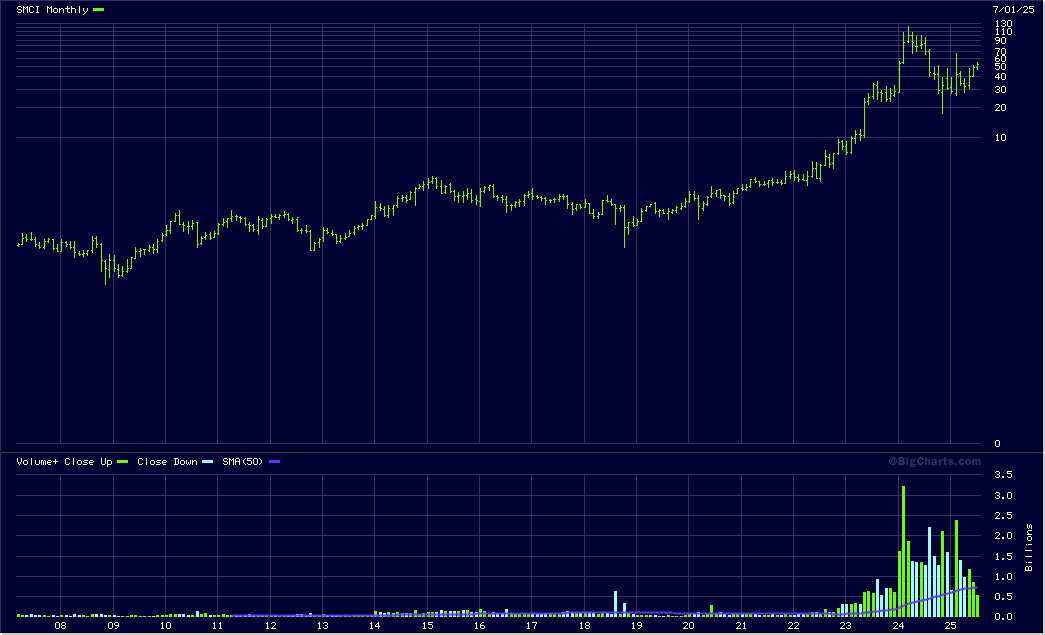
One year the taxman wanted to have proof why my estate got that high without almost declaring any income. It was Supermicro Computer which did multiply my entry price with 21(!). Nice.

I did send the proof in form of a broker statement and I was not taxed as professional. At least not until now…

3 Likes

We’re in a prolonged bull run driven by well known companies. Anyone investing in anything well known a couple of years ago should have a couple of those.

1 Like

Any idea from somone if i would be categorized as an professional trader if i buy the dip (VT) with my margin account and sell for example later on to reduce / repay the loan?

I do that, but VT is probably not a good idea. I do it with dividend stocks while the dividend must be bigger than the debt interest.

i thought buying right before or focusing on the dividend doesn’t really work as a strategy because the dividend payout is already reflected in the share price. On the dividend day, the price typically drops by about the amount of the dividend, so you don’t actually gain anything by just buying for the payout. If you‘re doing this long term the share price is again relevant. As it would be in my VT „buying the dip“ strategy, or am i wrong? So what‘s the point if the share that you bought drops but you get the dividend that‘s more than the interest rate?

That is because the taxman wants his share. And because of Kreisschreiben 36. And because it is simply good business.

Tbh on interactive brokers VT dividend may just be higher than margin interest for a bit.

Where do you see this? When I look for dividend yield of VT it’s 1.7% where margin interest for 100k is 5.8%.

They might be comparing CHF margin vs USD dividends.

Yeah chf margin. It does get you currency risk and the chf might appreciate against the dollar given lower inflation/interest, but afaict that doesn’t count for the tax rule.

You could do of course take out margin in CHF and get CHDVD for example with a dividend yield of something around 4%, or just get the underlying companies. However, taking margin for shares is always risky and need to be part of your strategy. Even if tempting with low margin rates I would think it very carefully if you go for it.

You can also just have VT and have the margin debt in CHF. Of course international stock has some currency risk, but remember it is not really the exchange currency that matters.

Fully agreed on margin being risky, I was only saying CHF margin interest is low enough so you likely dont run afoul of any of the kreisschreiben 36 rules by using CHF margin with VT.