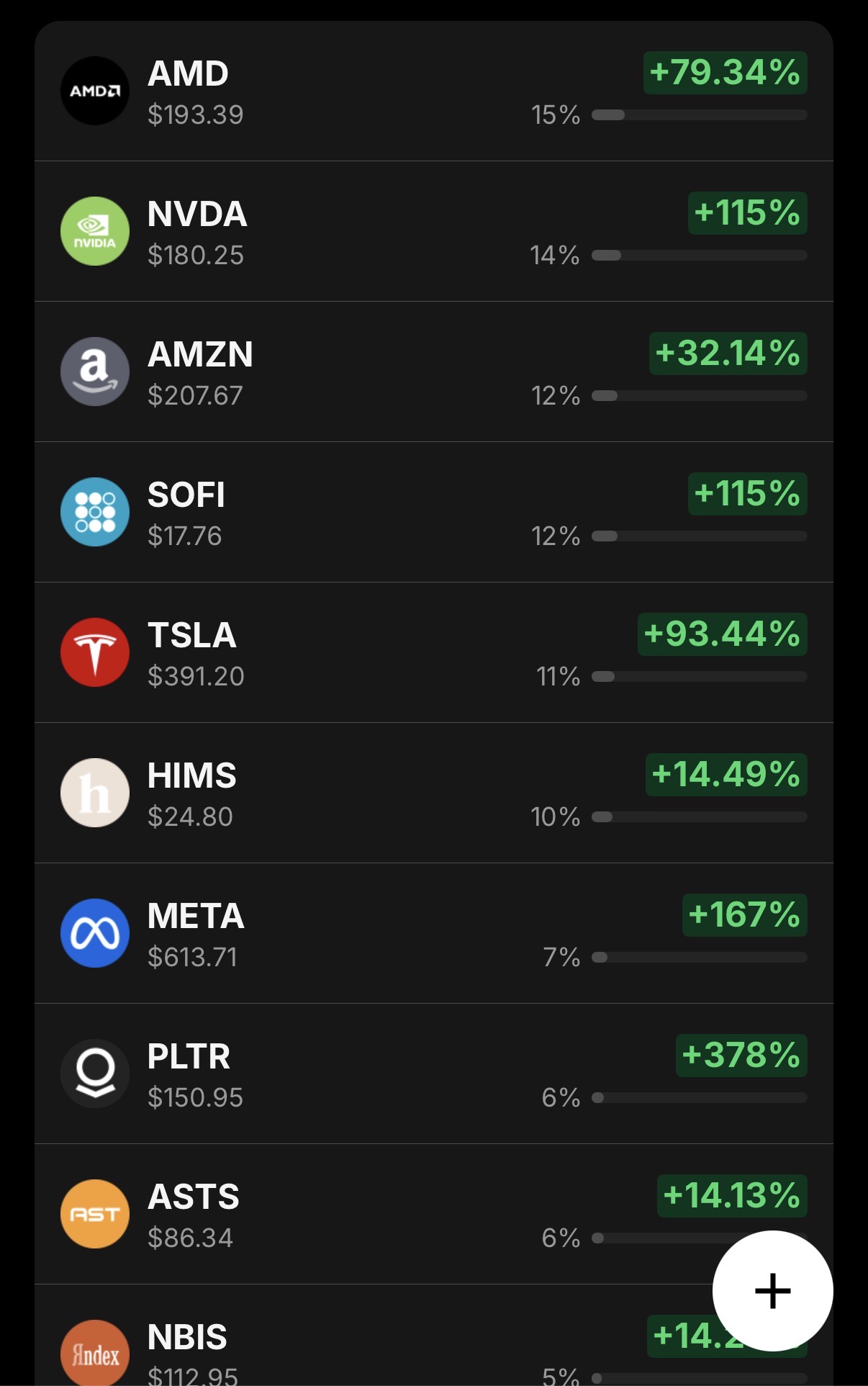
Any Stockpickers out there?

I think they are just making it a separate business division. Not spinning off

Sir, this is a Wendy’s… or shall I say, a FIRE Forum?

Thank you for bringing DCF to the table. I was not offended, just amused at your comment. You’re asking for the “present value of discounted future cash flows” to justify stock picks. If I’m not mistaken, this is just a vanilla DCF, which doesn’t work for every single company. It is great for a standard manufacturer, but completely breaks down when valuing complex structures, like financial hybrids or highly cyclical conglomerates.

Since you asked why my narrative of “number go up” applies to the companies I’ve invested in, let me explain the thesis and why a standard DCF might not cut it.

Trading Houses 2768 (Sojitz) & 8053 (Sumitomo)

  • Highly diversified, cyclical trading companies. 2768, for instance, is heavily exposed to the automobile sector, but it’s hedged beautifully with chemicals.

  • Their cash flows are tied to global commodity cycles. Running a standard DCF at the top of the cycle will tell you they’re a great buy. Doing it at the bottom will tell you to sell right before a massive run.

  • For the valuation, I look at the balance sheet. 2768 has a lot of cash, decent ROE, and was trading below book value when I bought. Even now, I’m paying normal multiples for a fundamentally good company. Same for 8053.

Mega Bank 8306 (MUFG)

  • A globally competitive mega-bank well-positioned to benefit from the normalization of Japanese interest rates.

  • You cannot run a vanilla DCF on a bank. Cash is their inventory. You have to go with a Dividend Discount Model or an Excess Return Model.

Deep Value Auto Trap 7267 (Honda)

  • Yup, a value trap 101 with a book value of roughly 0.56. The market is not confident in their EV transition, and the aerospace division is burning through cash. So, this is just a bet that they’ll continue delivering value with their global motorcycle dominance. I collect my ~4% dividend yield, and if they somehow manage to compete with Mitsubishi or SpaceX on rockets, that’s just a bonus.

  • Honda is no standard auto manufacturer (none of the Japanese ones are); they operate a massive financing arm issuing car loans. This is one of those financial hybrids I mentioned at the start.

Macro Catalyst

  • I believe the JPY can lose some more value against the CHF before interest rates catch up, so I’m leveraging the yen to finance the trade.

  • There’s massive momentum in Japan right now. They introduced a new tax-free investment account (Shin NISA). This, combined with the return of actual inflation, is going to force retail households to exit their 20-year-old cash positions and move into equities. Furthermore, the TSE is actively pressuring local companies to exit their cash positions and return that money to shareholders.

In any case, this is just theory by a random guy on the internet who has a tiny portfolio and doesn’t know anything about the economy or the markets. Truthfully, I think you’ll get everything you need to know by looking at my avatar.

P.S. If you’re genuinely curious about how other people in this community handle these types of valuations without defaulting to a rigid DCF, there’s a great blog post by a fellow forum member that breaks down a much more adaptable framework here: My framework for investment returns

3 Likes

I would be. Sadly, I don’t have any real future cash flow figures to base the discounted calculation on as my crystal ball isn’t working properly.

1 Like

In other news: AES decides to sell itself for 17% lower than current stock price.

Thanks for that. I really appreciated losing 17% for no reason. :confused:

1 Like

wait, wouldn’t that be subject to shareholder vote which would likely reject? How does that work?

edit: oh stock was higher than “normal” due to speculation on potential acquisition price.

3 Likes

No need for that condescending tone. In fact, thinking about stocks in terms of their valuation only is overly simplistic - not thinking of asset prices in terms of supply and demand.

And no, also in the long term asset prices do not necessarily approach their dcf value. Just look at gold for the most obvious example.

A 70.5 million painting is a speculative collectible, not a traditional financial asset. Because art generates no cash flow and lacks intrinsic value, its pricing is entirely subjective. This opaque valuation is exactly why the high-end art market is frequently utilized as a vehicle for tax optimization or money laundering.

Trying to bring us back on topic, maybe @CashFlow, you could share some companies you are looking at/investing in and give a bit of narrative on what you find attractive about them?

Maybe question your primer that stocks are are a completely different type of assets, free from any irrational market behaviour.

Anyways, i am logging out of this discussion for the sake of my mental wellbeing.

2 Likes

Actually, exercise for the reader:

HubSpot (HUBS) is a growing company. Model out their P&L and create a DCF valuation.

Is that a software from the 2020s? A thing you could buy on subscription with the promise of being up to date forever while providing eternal ARR for the company selling it?

I think it was called Sash. Or Saaf. Sass. That’s it. Sassy? Sash. Ah SaaS! Software as a Scam.

1 Like

FWIW. I asked AI to value for me and it came up with:

** TOTAL ENTERPRISE VALUE: $26,051 Million **

— Sensitivity to Discount Rate (WACC) —
WACC 10%: $32,927M
WACC 11%: $29,104M
WACC 12%: $26,050M
WACC 13%: $23,557M
WACC 14%: $21,482M

Which is plausible. The lowest is about 70% higher than current enterprise value.

Ah, yes, I knew there was someone who would focus us back on the topic!

Oh wait, I could just share some of my recent buys and talk my book …? Please buy them also and drive up the price already!

My highest conviction ones YTD are below.

Prudential Financial Inc.

Prudential is just a bet on the ‘Silver Tsunami’—the math of Baby Boomers being financially locked into retirement products for life. If you actually run a DCF, the value isn’t in some growth fantasy; it’s in the Adjusted Book Value and a dividend that’s been hiked for 18 years straight. The market is so obsessed with the credit cycle that it’s basically giving you PGIM (their $1.4T asset manager) at a massive discount. You’re getting paid a ~5.8% yield to sit and wait while the stock trades for less than the assets on the books. It’s a boring, cash-heavy machine that people are ignoring because it doesn’t make for an exciting headline.

Altria

Altria is the ultimate litmus test for whether someone actually understands cash flow or just follows headlines. If you run a DCF, you’ll see the market is pricing in a total collapse that the numbers just don’t support; they’ve raised the dividend for 50+ years because their pricing power outpaces volume declines every single time.

You’re essentially buying a ~6.5% yield that’s backed by a record ~$5.4 in free cash flow per share and a management team that just retired 14% of the float over the last decade. The ‘smoke-free’ pivot with NJOY and “on!” is an optionality play, but the real thesis is the relentless $8 billion they return to shareholders annually. People are so busy worrying about the end of smoking that they’re missing the fact that you’re buying a perpetual cash machine at a 30% discount to its intrinsic value. It’s the kind of ‘hated’ stock that makes for a terrible cocktail party conversation but a legendary portfolio stabilizer.

Those are the two I bought and that I would feel comfortable buying today. Please hide your disappointment about the lack of geopolitical or AI angles or that both are very boring. Both are undervalued and attractive and I’m willing to bet my entire … online account on this forum that both will still be around in ten years.

There you have it!

No, seriously, these are companies I own—Prudential with an average entry price of about $85, Altria with an average entry price of about $40—and that I added to as recently as this year.

No arguments from me for those picks.

I’ve been buying MO since 2018, but prefer a lower price.

Also, BTI which was my biggest position for a while which I bought at sub-$30 prices.

Managed to buy IMB at 1250 and Japan Tobacco at 2365.

I’d like lower prices before buying tobacco again.

I also don’t agree with you that these are perpetual dividends stocks. I value them only for 10 years of cashflow (as a safety measure). Younger generations should be getting healthier and I fear sales eventually falling.

PRU I had my eye on for a while but only started buying in 2021. I would be happy to buy now, but prefer to wait for better value.

2 Likes

Cleaned.

2 Likes

For those interested in PRU and other insurers, there’s an interesting odd lots podcast where they interviewed a state regulator.

He’s been sounding the alarm that many insurance companies have been bought up by private equity who are using them as a captive buyer for their products. On top of that, they have shifted to low regulation jursidictions and transferred liabilities without a corresponding amount of assets which could lead to a massive blow-up in the future.

2 Likes

Portfolio down >1% again today. The most annoying thing is that everything is down except for the 3 stocks which I wanted to buy today (CRM, GDDY, HUBS) which are up around 5% :frowning:

1 Like

How is my SAASpocalypse adventure going?

Ticker Change
CRM -0.6%
GDDY -9.6%
FDS -8.6%
ACN 4.5%
IT 11.7%
RELX 16.9%
MORN 16.8%
ADP 7.2%
TRI 28.0%
HUBS -0.1%

Note that top 3 were already pre-existing holdings so a large chunk of the loss is attributable to pre-casaastrophe purchases.

(and yes, I still bought the 3 stocks I’d planned even though they’d gone up 5% on the day just to spite me)

EDIT: saw this article on PE looking at SAAS as a target.