MSCI World is an index tracking the developed markets.
VT tracks the FTSE Global All Cap Index, which adds emerging markets and has more exposure to mid and small caps.
Judging by the divergence in returns you are mentioning, it is likely that the MSCI World UCITS ETF you are following (whichever one it is) is accumulating, while VT is distributing. That would mean that the former would display total returns, with dividends reinvested while the later displays price returns, without dividends being reinvested. You should self correct VT to add dividends reinvestments if that’s what’s happening and you want a fair comparison.
Unless it’s hedged, the currency in which the shares of an ETF are traded doesn’t really matter since you are predominantly exposed to the currencies of the assets within the ETF, which are mostly big international companies with returns all over the world, in a large basket of currencies. You still have to use the same currency to compare two different funds, otherwise, currency exchange fluctuations will impact the comparison.
Edit: iShares MSCI World ETF (URTH) is an ETF tracking the MSCI World index (albeit not UCITS compliant). Here’s how URTH and VT have fared since 2013, in USD, with dividends reinvested for both:
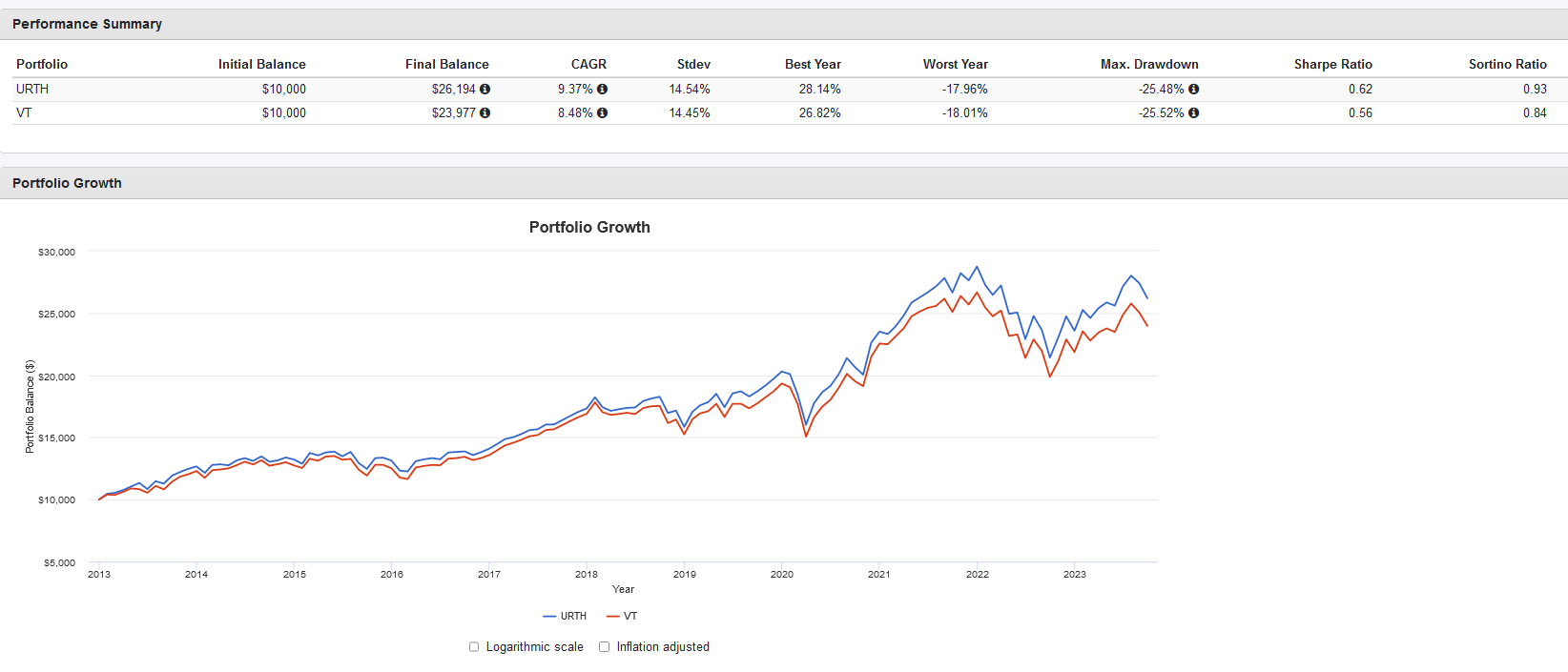
You can change the start and end dates using this link if you want to: https://www.portfoliovisualizer.com/backtest-portfolio?s=y&sl=6XI39O6tMBPlveJwY6O0GR
They’re pretty similar and I wouldn’t consider the difference as significant.