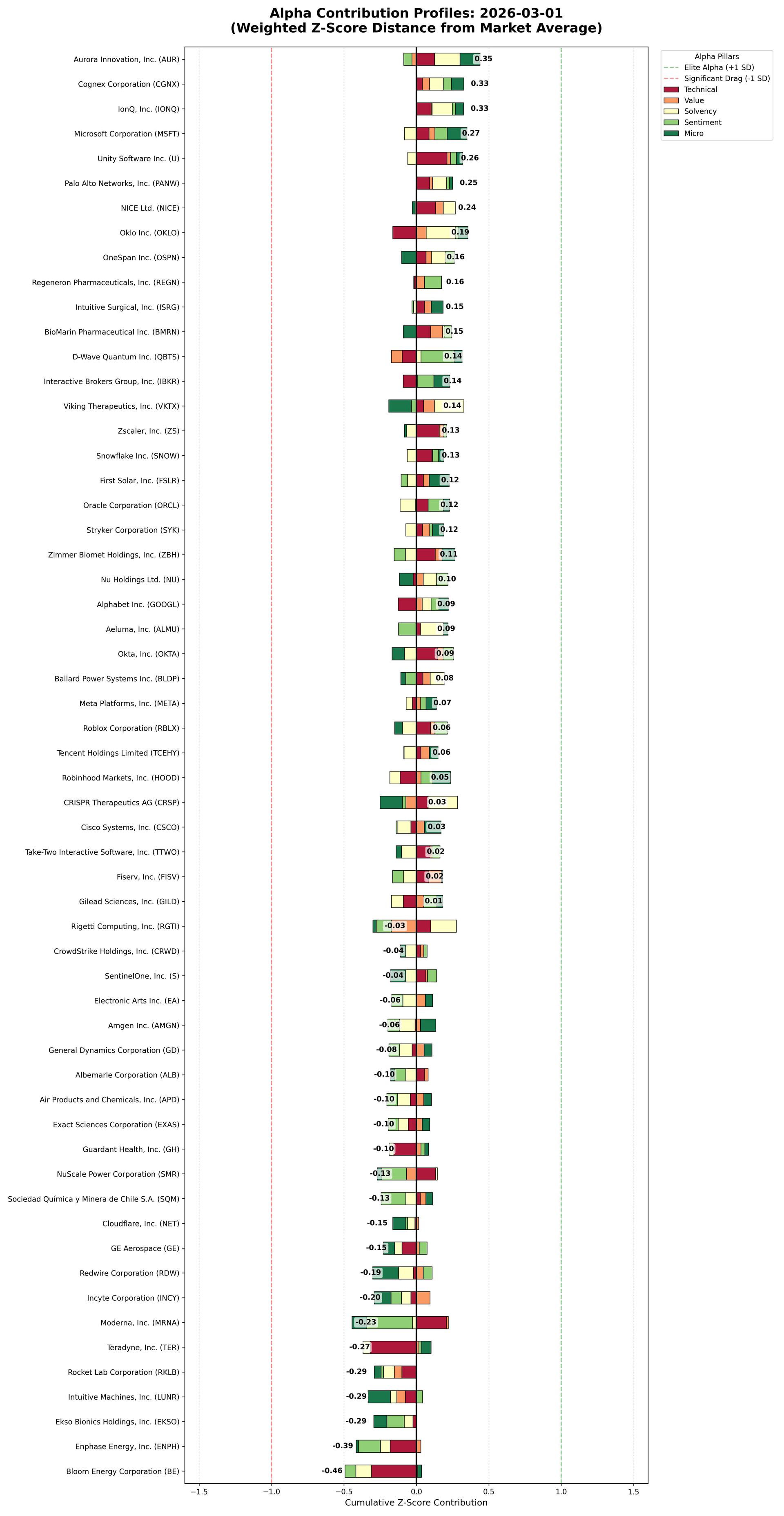
Bought again at 200 USD. Will buy more if it falls. Trying another exit at 300.
I like ASTS, ZETA and NBIS as speculative satellites
I’ll buy if it his 160
I am new here. Please apologies. I am interested in stock picking and I found this thread.
But this discussion sounds more like day trading, from what I read here?
Is there a another stock picking thread here for people more serious about it?
Welcome, you did a great start, came in unknown to a forum thread of ~1400 posts in a well established community and instantly insulted everyone with your current (and may I add, completely faulty) perception.
do you have questions that are more serious about stock picking?
Thanks for the feedback.
I wasn’t aware that everyone in this community—literally every single person in this thread, wow!—was so deeply wounded by my apparently “faulty” perception.
I’ve already apologized once, but I’ll do it again for good measure. Consider this an apology to everyone. Those of you who weren’t actually offended—if any—can just bank this as credit for the next time I inevitably step on someone’s toes.
Regarding serious stock picking… well, as it happens, I do have some serious questions.
- Are there any stock pickers here actually interested in the present value of discounted future cash flows, and the specific price they’re willing to pay for them?
- Based on that criteria, what are you currently picking?
- For those who couldn’t care less about fundamentals: if your strategy is just “price go up,” I’m not really interested. But since this is such an “inclusive” forum: why do you believe the NGU (Number Go Up) narrative applies to the specific tickers you’ve just grabbed?
To be fair, scrolling back up, I see some posts advocating for companies based on actual valuation. But there seem to be just as many recommending stocks based on nothing but pure market noise.
Look, the initial post is what lured me into this thread. But the recent “analysis”—just a list of tickers like abc, def, ghi and “buy at $X, sell at $Y”—is what triggered my sarcastic contribution.
There’s nothing wrong with technical entries and exits, but maybe try explaining the reasoning behind them instead of just saying “will buy more if it falls” or “exiting at [random dollar amount].”
Yes. They left though.
What if this is one of them, but they got bored outside the forum so decided to make a comeback in a new (more troll-like) role?
That would be a move. 
Missing some superscripts and footnotes but maybe a new style. Could be 
Hope has the same fastgraph subscription…
That’s a goofy move, why don’t you pay that yourself.
Edit: oh, well, btc.
“Every sat is sacred, every sat is good
and if a sat is vasted in your neighbourhood…”
(Monty Python)
Stock prices are determined by demand and supply, not valuations. The latter may feed into demand, but there are other often equally or even more important factors determining prices.
I think they are just making it a separate business division. Not spinning off
Sir, this is a Wendy’s… or shall I say, a FIRE Forum?
Thank you for bringing DCF to the table. I was not offended, just amused at your comment. You’re asking for the “present value of discounted future cash flows” to justify stock picks. If I’m not mistaken, this is just a vanilla DCF, which doesn’t work for every single company. It is great for a standard manufacturer, but completely breaks down when valuing complex structures, like financial hybrids or highly cyclical conglomerates.
Since you asked why my narrative of “number go up” applies to the companies I’ve invested in, let me explain the thesis and why a standard DCF might not cut it.
Trading Houses 2768 (Sojitz) & 8053 (Sumitomo)
-
Highly diversified, cyclical trading companies. 2768, for instance, is heavily exposed to the automobile sector, but it’s hedged beautifully with chemicals.
-
Their cash flows are tied to global commodity cycles. Running a standard DCF at the top of the cycle will tell you they’re a great buy. Doing it at the bottom will tell you to sell right before a massive run.
-
For the valuation, I look at the balance sheet. 2768 has a lot of cash, decent ROE, and was trading below book value when I bought. Even now, I’m paying normal multiples for a fundamentally good company. Same for 8053.
Mega Bank 8306 (MUFG)
-
A globally competitive mega-bank well-positioned to benefit from the normalization of Japanese interest rates.
-
You cannot run a vanilla DCF on a bank. Cash is their inventory. You have to go with a Dividend Discount Model or an Excess Return Model.
Deep Value Auto Trap 7267 (Honda)
-
Yup, a value trap 101 with a book value of roughly 0.56. The market is not confident in their EV transition, and the aerospace division is burning through cash. So, this is just a bet that they’ll continue delivering value with their global motorcycle dominance. I collect my ~4% dividend yield, and if they somehow manage to compete with Mitsubishi or SpaceX on rockets, that’s just a bonus.
-
Honda is no standard auto manufacturer (none of the Japanese ones are); they operate a massive financing arm issuing car loans. This is one of those financial hybrids I mentioned at the start.
Macro Catalyst
-
I believe the JPY can lose some more value against the CHF before interest rates catch up, so I’m leveraging the yen to finance the trade.
-
There’s massive momentum in Japan right now. They introduced a new tax-free investment account (Shin NISA). This, combined with the return of actual inflation, is going to force retail households to exit their 20-year-old cash positions and move into equities. Furthermore, the TSE is actively pressuring local companies to exit their cash positions and return that money to shareholders.
In any case, this is just theory by a random guy on the internet who has a tiny portfolio and doesn’t know anything about the economy or the markets. Truthfully, I think you’ll get everything you need to know by looking at my avatar.
P.S. If you’re genuinely curious about how other people in this community handle these types of valuations without defaulting to a rigid DCF, there’s a great blog post by a fellow forum member that breaks down a much more adaptable framework here: My framework for investment returns
I would be. Sadly, I don’t have any real future cash flow figures to base the discounted calculation on as my crystal ball isn’t working properly.
In other news: AES decides to sell itself for 17% lower than current stock price.
Thanks for that. I really appreciated losing 17% for no reason. 
wait, wouldn’t that be subject to shareholder vote which would likely reject? How does that work?
edit: oh stock was higher than “normal” due to speculation on potential acquisition price.
No need for that condescending tone. In fact, thinking about stocks in terms of their valuation only is overly simplistic - not thinking of asset prices in terms of supply and demand.
And no, also in the long term asset prices do not necessarily approach their dcf value. Just look at gold for the most obvious example.